
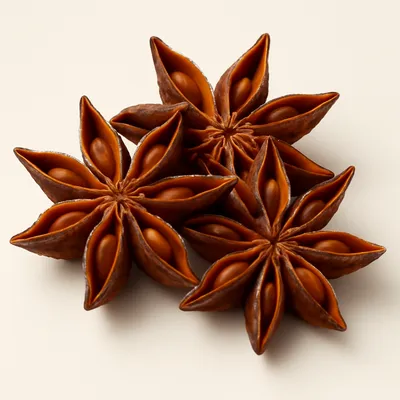
A Dongbei classic of meaty pork bones — usually the spine (脊骨), sometimes leg/marrow bones (棒骨) or ribs — blanched, then long-braised in a soy-and-spice 酱 broth built on Northeastern yellow-bean sauce (大酱) with star anise, Sichuan pepper, cinnamon, bay leaf, and often a little caramelized sugar for color. The bones simmer for one to two hours until the clinging meat is fall-off tender and saturated with savory, lightly sweet sauce. It is eaten by hand, gloves on, gnawing the meat from the bone and sucking the marrow — often with a straw for the big leg bones. Hearty, cheap, and communal, it is a fixture of Northeastern home kitchens and 大排档 alike.
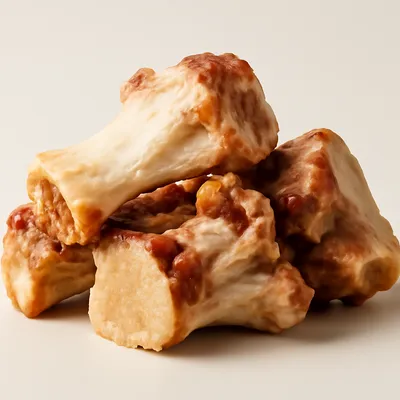




Sauce-braised pork bones are an everyday dish of the Dongbei (Northeast China) provinces, rooted in home and small-restaurant cooking rather than any single recorded origin; no inventor or date is documented. The dish makes a virtue of a cheap, bony cut: spine bones carry only modest scraps of meat, so they were inexpensive, and long braising in a heavily seasoned 酱 broth turns that little meat tender and flavorful and unlocks the prized marrow. It belongs to the same Northeastern 酱 / 炖 (sauce-braising and stewing) habit that runs through the region's big-pot cooking, built on the local fermented soybean paste (大酱) that anchors Dongbei flavor. The family of dishes is named by cut — 酱脊骨 (spine), 酱棒骨 (leg/marrow bone), 酱排骨 (ribs) — with the meaty, gelatinous spine bones the most popular.
The meat between the vertebrae pulls away in soft, gelatinous shreds, deeply browned and saturated with a savory, faintly sweet sauce carrying anise and pepper warmth; it should slide off the bone with a tug, never need a hard fight. The real reward is the marrow — rich, almost buttery, eased out of a split leg bone or sucked through a straw while it is hot. Lips get sticky from the collagen, which is part of the pleasure. Done well, the bones are tender all the way to the joint and the sauce has soaked in rather than just coating the surface. Done badly, the meat is dry and tight because the braise was rushed, or the broth is one-note salty without the rounded 酱 depth, and the marrow has cooked away.
Long, gentle braising is the whole technique. Pork bones are first blanched from cold water to drive out blood and scum, which keeps the final broth clean. Then they go into a 酱 broth — Northeastern yellow-bean paste plus soy, often a spoon of caramelized sugar (糖色) for color, and a spice bundle of star anise, Sichuan pepper, cinnamon, and bay leaf — and simmer for one to two hours. Time and steady low heat do the work: the abundant connective tissue (collagen) around spine bones slowly converts to gelatin, which is what makes the meat slip off the bone and gives the sauce its lip-sticking body, while the meat fibers stay moist because the heat is gentle. The fermented bean paste contributes glutamates and the deep, rounded 酱 savor; a long soak in the warm broth, ideally with a rest off the heat, lets the flavor penetrate to the bone. A pressure cooker can shorten the braise to under an hour but trades away some of the slow-built depth.
Variations
The dish is named by the cut: 酱脊骨 uses meaty, gelatinous spine bones (the most popular), 酱棒骨 uses the big leg/marrow bones prized for sucking marrow, and 酱排骨 uses ribs. Seasoning varies by household — the constant is Northeastern yellow-bean paste (大酱); cooks who lack it sometimes substitute another soybean paste, and many add fermented-bean or sweet-flour sauce, dried chili, or a splash of beer or baijiu. It sits among the broader Dongbei sauce-braised foods such as 酱肘子 (braised pork knuckle); pork-spine bones are also the base of the well-known Northeastern stew 猪骨酸菜 (pork bones with pickled cabbage), where the leftover bones and broth are stretched into a second dish.
On the Palate
Where Sauce-Braised Pork Bones sits in the Chinese flavor cloud
Ingredients
Serves 4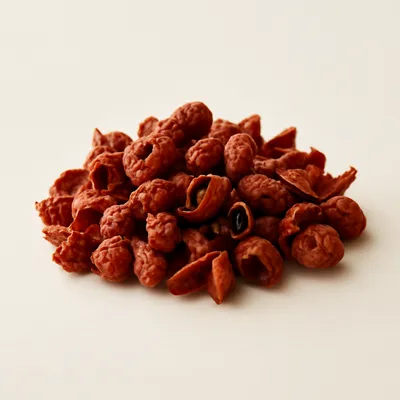



How it's made
7 steps · 30 min
- 115 min
Rinse meaty pork spine (or leg) bones and soak briefly to draw out blood; chop into large pieces if not pre-cut.
- 210 min
Blanch the bones from cold water, bringing to a boil and skimming off the blood and scum, then drain and rinse clean.
Watch outBlanch the bones from cold water and skim off every bit of blood and scum — leaving it clouds and muddies the braise.
- 35 min
In a pot, melt a little sugar into a caramel (糖色), or simply combine Northeastern yellow-bean paste, light and dark soy sauce, and water for the braising broth.
- 43 min
Add a spice bundle of star anise, Sichuan pepper, cinnamon, bay leaf, ginger, and scallion, plus a splash of Shaoxing wine, and bring to a boil.
- 590 min
Add the bones, cover, and braise over low heat for one to two hours until the meat is fall-off tender and the sauce has soaked in.
Watch outBraise low one to two hours until the meat pulls off the bone — the connective tissue needs that time to melt into the lip-sticking body of the sauce.
- 620 min
Turn off the heat and let the bones steep in the warm broth for a while to deepen the flavor; serve hot.
- 75 min
Eat by hand with gloves, gnawing the meat from the bone and sucking the marrow, using a straw for the big leg bones.
Archive tool suggestions — not reviewed
These legacy suggestions have not been evidence-reviewed and are not presented as required tools.


