Whole pig's trotters blanched to remove impurities, then slow-braised in a deep mahogany sauce of dark and light soy sauce, rock sugar, star anise, and Sichuan pepper until the skin turns lacquered and the meat falls easily from the bone. Served cold or warm, the quintessential Dongbei drinking-food—rich, gelatinous, built for the long table.
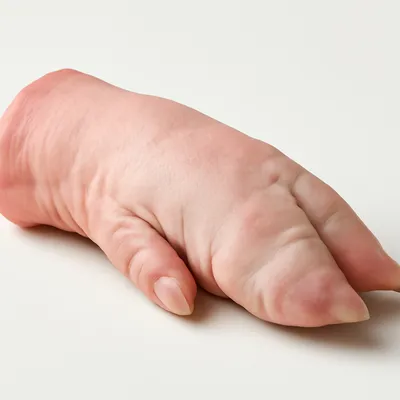



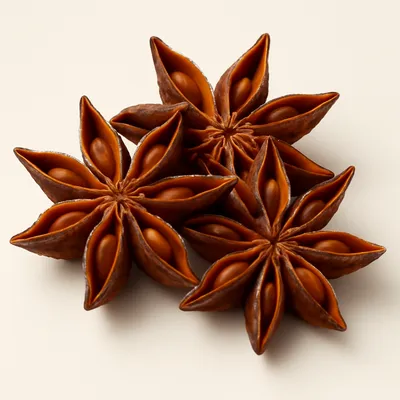
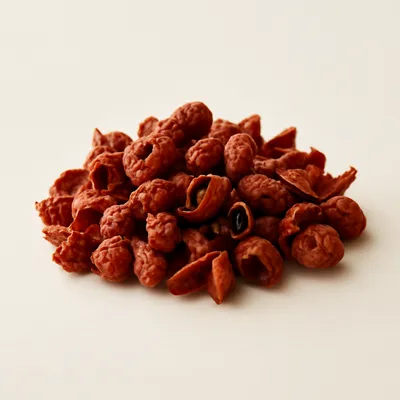
The sauce-braised meat tradition is a pillar of Dongbei winter cooking. With months of sub-zero temperatures providing natural cold storage, cooks developed a repertoire of sauce-braised preparations—braised pork knuckles, trotters, and hocks—that could be made in quantity, kept cold, and served throughout the winter without reheating. The technique draws on the Shandong sauce-braising tradition brought north by Chuang Guan Dong migrants, adapted with the heavier soy sauce, generous spicing, and rock-sugar glaze that define the Dongbei palate. The cold-plate version, sliced thin and arranged with a garlic-vinegar dip, has become a fixture of the northeastern banquet table.
Cold from the refrigerator: the skin is firm and almost glassy, yet yields like a cushion when bitten; beneath it the meat is dense and lightly saline, the gelatin cool and smooth on the tongue. Warm: the skin softens to silk, the collagen melts into a sauce that clings to every surface, and the heady spiced soy aroma fills the sinuses.
Pig's trotters are collagen-dense: skin, connective tissue, and periosteum contain Type I and Type III collagen. At sustained braising temperatures of 85–95 °C, the triple-helical collagen strands unwind and partially hydrolyze into gelatin peptides over 1.5+ hours. On cooling, these peptides re-aggregate into a cross-linked gel matrix, giving the cold trotter its characteristic jelly-like firmness. The braising liquid's Maillard chemistry—soy sauce amino acids reacting with reducing sugars from rock sugar—produces volatile aromatic compounds including furans and pyrazines that underpin the deep sauce aroma. Dark soy sauce's caramel colorants additionally coat the protein surface, producing the lacquered mahogany finish.
Variations
Five-spice version: adds clove, licorice root, and cardamom for a more complex aromatic profile. Sweet glazed version: doubles the rock sugar, finished over high heat to create a thick glaze. Jilin spicy version: Korean chili paste added to the braise. Cold-plate version: refrigerated, sliced thin, and arranged with a garlic-vinegar dipping sauce for the banquet table.
On the Palate
Where Soy-Braised Pig's Trotters sits in the Chinese flavor cloud
Ingredients
Serves 4


How it's made
7 steps · 20 min
- 160 min
Split 2 pig's trotters in half lengthwise (or keep whole); soak in cold water 1 hour, changing water twice, to draw out blood.
- 210 min
Place trotters in a pot; cover with cold water; bring to a rolling boil; boil 5 minutes; drain and rinse under cold water, removing any residual hair or impurities.
- 35 min
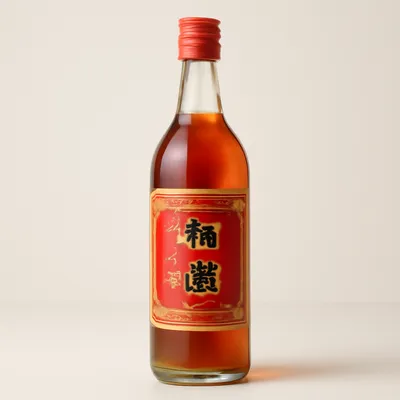
Combine the braising liquid in a heavy pot: 3 tbsp light soy sauce, 2 tbsp dark soy sauce, 1 tbsp Shaoxing wine, 30g rock sugar, 4 star anise, 1 tsp Sichuan pepper, 1 cinnamon stick, 2 bay leaves, 4 ginger slices, and 4 cups water.
- 45 min
Add the blanched trotters to the braising pot; bring to a boil over high heat; skim any foam.
- 590 min
Reduce to a low simmer; cover and cook 1.5 hours, turning trotters halfway through, until the skin is deeply colored, soft, and a chopstick passes through easily.
Watch outBraise low until a chopstick slides through the skin with no resistance — the collagen has to melt to gelatin, so rushed heat leaves it rubbery and tough.
- 610 min
Uncover; increase heat to medium-high; reduce the braising liquid 10 minutes, basting the trotters, until it thickens to a glossy glaze.
Watch outReduce the liquid, basting, until it thickens to a glossy glaze that clings — watery sauce won't coat, and the shine is the sign it's ready.
- 725 min
Remove from heat; let rest in the liquid 20 minutes before serving warm, or refrigerate 4 hours and serve cold with a garlic-vinegar dipping sauce.
Archive tool suggestions — not reviewed
These legacy suggestions have not been evidence-reviewed and are not presented as required tools.



