
Mountain of ribbon-flake shaved milk-ice piled with sweet red bean paste (pat), chewy injeolmi rice cake cubes, condensed milk, and seasonal fruit — Seoul cafe summer centerpiece.
Patbingsu's origin trace back to the Joseon court's bingo (royal icehouse) tradition — blocks of winter river-ice stored underground for summer. The modern dessert form emerged from the 1890s onward: a Japanese way of topping crushed ice with chilled sweet red bean arrived during the Japanese occupation era, and the shaved-ice-with-red-bean pairing took hold on the Korean peninsula. Once ice-making technology spread, bingsu became a popular street treat — a 1921 newspaper counted over 400 ice/bingsu shops in Gyeongseong (Seoul). Red bean was the original topping; the elaborate cafe versions with fruit, ice cream, and cereal date to the 1990s-2000s Korean cafe boom.
Traces back to the Joseon court's bingo (royal icehouse) tradition of winter river-ice stored underground. The modern dessert form emerged in early-1900s Seoul when sugar and condensed milk arrived through Japanese-occupation trade. Freeze milk instead of water and the shaver lifts paper-thin curls — micro-fat globules are why it eats cold-creamy instead of slushie-grainy.
Spoon goes in and the ice collapses to nothing on the tongue — not crunchy crushed-ice, but powder-snow that disappears cold and creamy from the milk frozen into it. Then comes the contrast: the soft-grainy red bean paste, sweet but not cloying because the beans still taste of beans; the chewy resistance of injeolmi, dusted with the toasty soy flour. If your patbingsu eats like a slushie or the rice cake is rock-hard, the ice was crushed not shaved and the tteok wasn't refreshed.
The texture rule: shaved milk-ice (uyu-bingsu) must be ribbon-flaked, not granulated. Freezing milk instead of water creates micro-fat globules that the shaver lifts off as paper-thin curls — these melt cold-creamy on the tongue. Crushed cubes give a grainy slushie. Build order matters too: pat goes on first while the ice is still cold and structural; condensed milk last so it doesn't sink and turn the bottom into soup before you eat it.
Variations
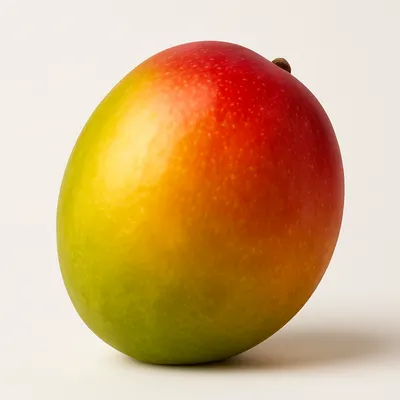
Pat-bingsu (red bean, the original); injeolmi-bingsu with rice cake and roasted soy flour; mango-bingsu (post-2000 cafe wave, Sulbing's signature); melon-bingsu cuts a half-melon into the bowl; misugaru-bingsu uses multigrain powder.
On the Palate
Where Patbingsu sits in the Korean flavor cloud
Ingredients
Serves 2








How it's made
5 steps · 15 min active + 25 min waiting
- 15 min
Day before: pour 500ml whole milk + 30g sugar + pinch salt into a shallow freezer pan. Freeze solid, at least 8 hours.
- 215 min
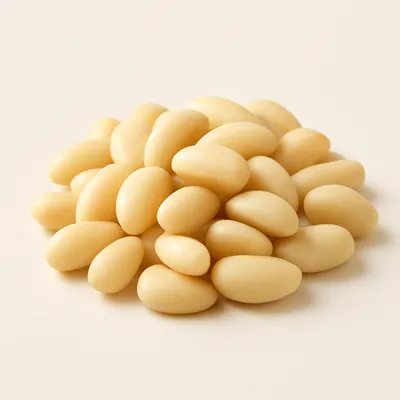
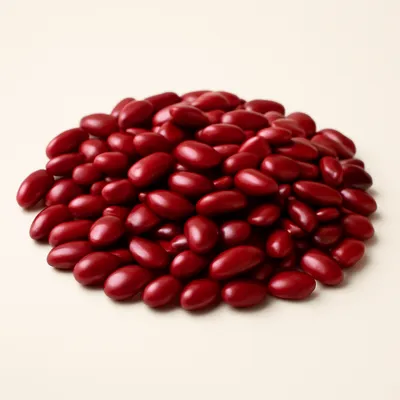
Make pat (sweet red bean): simmer 200g cooked red beans with 80g sugar and 50ml water for 15 minutes until thick but still showing whole beans. Cool. Texture should hold a spoon trail.
Watch outFreeze the sweetened milk rock-solid, at least 8 hours — a soft block shaves into wet slush, not ribbon flakes.
- 35 min
Cut 100g injeolmi (steamed glutinous rice cake) into 1.5cm cubes. If firm from refrigeration, microwave 10 seconds to restore chew. Dust lightly with roasted soybean flour (kongkomul).
- 43 min
Run the milk-ice block through a bingsu shaver — or scrape with a sturdy spoon — into a mounded pile of fluffy ribbon flakes in a chilled wide bowl. Do not crush.
Watch outShave the block into a fluffy mound of ribbon curls — don't crush it, crushed ice goes grainy like a slushie.
- 52 min
Top centre with 4 heaping spoons of red bean paste. Scatter injeolmi cubes around. Drizzle 30ml condensed milk over the whole pile. Add sliced strawberries or mango if in season. Serve with two long spoons immediately.
Watch outAdd the condensed milk last so it stays on top — poured early it sinks and turns the bottom to soup before you eat.
Archive tool suggestions — not reviewed
These legacy suggestions have not been evidence-reviewed and are not presented as required tools.


