Pea-sized glutinous rice-flour balls — some plain, some tinted pandan green, butterfly-pea blue, or taro purple — floating in warm coconut-pandan syrup, often with a poached egg added at the table.
Bua loy means floating lotus, named for the way the rice balls bob to the surface as they cook. The dish has been documented in Central Thai household cooking since at least the early 20th century, often made in family kitchens for weekend evenings. The egg-poached variant, bua loy khai wan, is the older form; the multicoloured plain version became standard later as natural dyes from pandan, butterfly pea, and taro were absorbed into home cooking. It's standard at temple fairs and celebrations, often served alongside the gold-egg-yolk auspicious sweets, though it is not one of the canonical nine.
「Floating lotus」 — named for the way the rice balls bob to the surface as they cook. Salt is the unsung hero; without the pinch in the syrup the coconut tastes one-dimensional. Boil-then-shock gives the balls a non-sticky outer skin so they sit cleanly in the soup.
Warm not hot — Thai sweet soups are served at body temperature so the coconut stays smooth and the chew of the rice balls is pronounced. Each ball is springy outside, soft-tacky inside; the bigger ones split between your teeth in two clean halves. The broth is salt-edged, lightly palm-sugar-sweet, deeply scented from pandan. The egg version is jolting on a first try — a runny yolk pooling into coconut soup — but it's the traditional way. White, green, blue, and purple balls scattered through cream make it look like a marble.
Salt is the unsung hero — without the pinch in the syrup the coconut tastes flat and one-dimensional. The kneading water has to be warm, not hot: hot water gelatinizes the surface starch and you can't shape the balls; cold water and the dough cracks. The boil-then-shock step is what gives the balls a non-sticky outer skin so they sit cleanly in the syrup; if you boil them directly in coconut milk the surface starch leaches out and the soup turns gluey.
Variations
Bua loy khai wan (egg-poached, the older form); five-color bua loy (pandan green, butterfly-pea blue, taro purple, beetroot pink, plain); Northern-Thai bua loy fak thong (with pumpkin); royal-court version pairs it with thong yip and met khanun for nine-sweet trays.
On the Palate
Where Bua Loy sits in the Thai flavor cloud
Ingredients
Serves 4




How it's made
5 steps · 45 min active + 15 min waiting
- 115 min
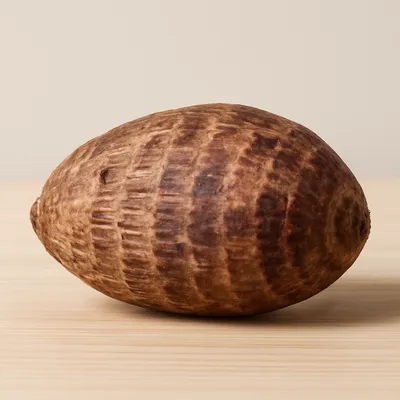
Make four small doughs: in each bowl combine 50g glutinous rice flour with about 35ml warm liquid — plain warm water for white, pandan juice for green, butterfly-pea infusion for blue, mashed steamed taro plus warm water for purple. Knead each until smooth and pliable, like soft modelling clay.
Watch outKnead with warm — not hot — water; the dough should feel like soft clay that holds a shape without cracking. Too hot and the surface gels and won't roll; too cold and it splits.
- 220 min
Roll each colour into long ropes about 8mm thick on an unfloured board, then pinch off pea-sized pieces and roll them into balls between your palms. You should end up with around 200 small balls. Keep them on a tray under a damp cloth.
- 38 min
Bring a large pot of water to a rolling boil. Drop in the balls in batches; when each ball floats to the surface, give it 30 more seconds, then lift with a spider into a bowl of cool water. They are now cooked and won't stick.
Watch outWatch each ball surface — give it 30 more seconds after it floats, then shock in cool water; this sets a non-sticky skin so they don't glue together in the syrup.
- 45 min
In a clean pot heat 500ml coconut milk, 100ml water, 80g palm sugar, 4 knotted pandan leaves, and a generous pinch of salt over medium heat. Stir until sugar dissolves; bring to a gentle simmer for 3 minutes — do not let it boil hard or the coconut splits. Pull out the pandan.
Watch outKeep the coconut at a lazy simmer, never a hard boil — the moment it rolls fast the coconut splits into oil and grit. Small bubbles at the edge, that's it.
- 54 min
Drain the balls and add them to the warm coconut syrup; let them steep 2 minutes to absorb flavour. Optional: crack a whole egg into the simmering pot and let it poach 2 minutes for the bua loy khai wan version. Ladle into bowls and serve warm.
Watch outEnsure the egg is added gently to avoid breaking the yolk.
Archive tool suggestions — not reviewed
These legacy suggestions have not been evidence-reviewed and are not presented as required tools.