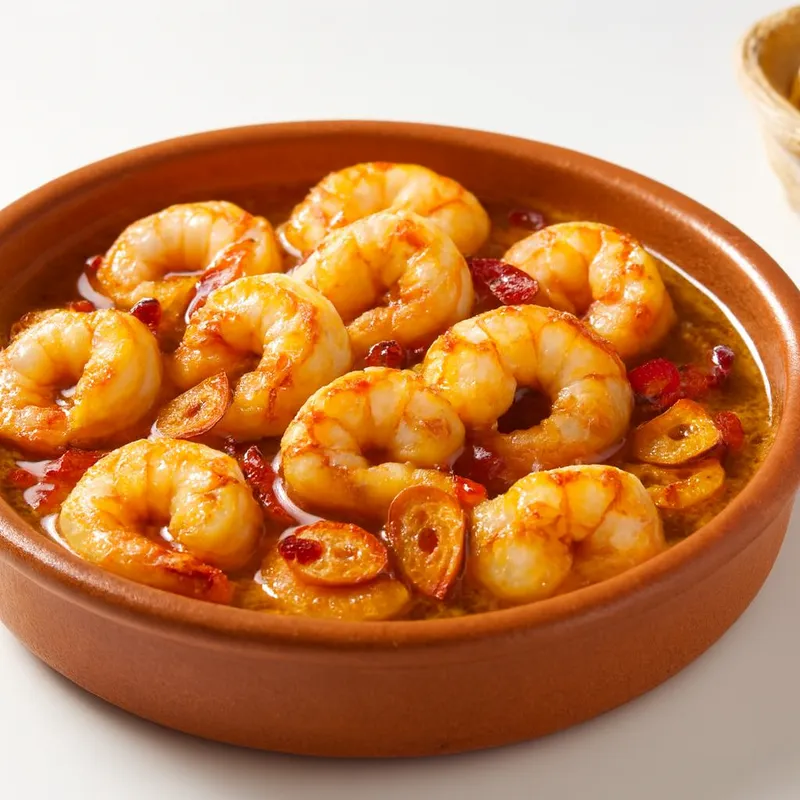



Tortillitas de camarones are documented in Cádiz from the early 19th century, when the city's salt-flat shrimp catch (camarón is the tiny sand shrimp of the Bahía de Cádiz) was abundant and cheap. Chickpea flour is the Iberian giveaway — many southern Spanish fritter batters use harina de garbanzo, a Phoenician/Carthaginian inheritance the Moors reinforced. The dish migrated north through Sevilla and is now associated with both cities, though Cádiz cooks claim primacy and their shrimp source.
Documented in Cádiz from the early 19th century, built on the Bahía de Cádiz salt-flat shrimp. Chickpea flour is the Phoenician/Carthaginian inheritance; the 50/50 chickpea-wheat ratio is the Cádiz formula. Water flashes to steam at 180°C and blows holes through the disc — the lace is the dish's signature.
A jagged irregular disc, gold and translucent at the edges where the lace formed, more solid at the centre where the shrimp clustered. First crack is shatter-crisp; second bite the centre is denser and shrimp-iodine sweet. Tiny whole shrimp give pinpoint salt-and-sea bursts. Eaten in 90 seconds at a Cádiz bar with a glass of cold manzanilla. A heavy, bready, pancake-thick fritter means too much wheat flour or warm-water batter — Cádiz cooks pride themselves on the holes.
The lace-making mechanism: a thin batter (water-to-flour ratio ~1.7:1) hits 180°C oil and the water flashes to steam, blowing holes in the disc as the chickpea flour proteins set around them. Wheat flour alone makes a continuous pancake; chickpea flour alone is too crumbly. The 50/50 blend is the Cádiz formula. Cold rest matters because the shrimp release water — taste-test the batter after the rest, not before, when adjusting salt.
Variations
Casa Balbino in Sanlúcar de Barrameda is the canonical pour with manzanilla; El Faro de Cádiz runs a thicker version; Sevilla bars use larger shrimp; Huelvan camarón blanco produces a sweeter, lacier disc.
On the Palate
Where Tortillitas de Camarones sits in the Spanish flavor cloud
Ingredients
Serves 4


How it's made
6 steps · 25 min active + 25 min waiting
- 15 min
Mix 100g chickpea flour (harina de garbanzo), 100g all-purpose flour, 1 tsp salt, and 1 tsp sweet pimentón in a bowl. Whisk in 350ml ice-cold water until you have a thin, pourable batter — it should run off the whisk in a stream, not ribbons.
Watch outCold water keeps the gluten from developing — warm water makes the fritters chewy not crisp.
- 24 min
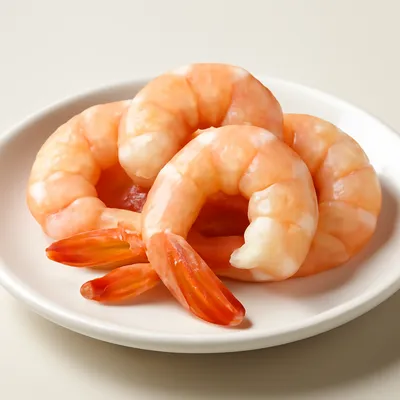
Stir in 200g raw tiny shrimp, whole and unpeeled (camarones — about 1cm long; if you can only find larger shrimp, chop them small). Add 4 finely sliced scallions and 3 tbsp finely chopped parsley.
Watch outWhole shrimp with shells is correct — they're tiny, the shells fry crisp and add the iodine note.
- 325 min
Rest the batter 25 minutes in the fridge — the shrimp release liquid and salt the batter from inside.
- 43 min
Heat 2cm of olive oil in a wide skillet to 180°C. The oil must be at temperature before you start — too cool and the lace doesn't form.
Watch outUse a thermometer or test with a drop of batter — it should sizzle violently and float in 2 seconds.
- 512 min
Stir the batter (the shrimp settle), then ladle 60ml at a time into the oil from a low height — the batter spreads on contact and the edges erupt into lace within 5 seconds. Fry 1.5 minutes per side. Don't crowd — 2 fritters at a time max.
Watch outIf the fritter is round and thick, your batter is too viscous — thin with another tablespoon of ice water.
- 61 min
Drain on a rack. Serve immediately, sprinkled with flaky salt. They lose their crackle within 5 minutes — eat them at the bar, not at the table.
Watch outNever stack — steam softens the bottom one. Spread flat on the plate or rack.
Archive tool suggestions — not reviewed
These legacy suggestions have not been evidence-reviewed and are not presented as required tools.