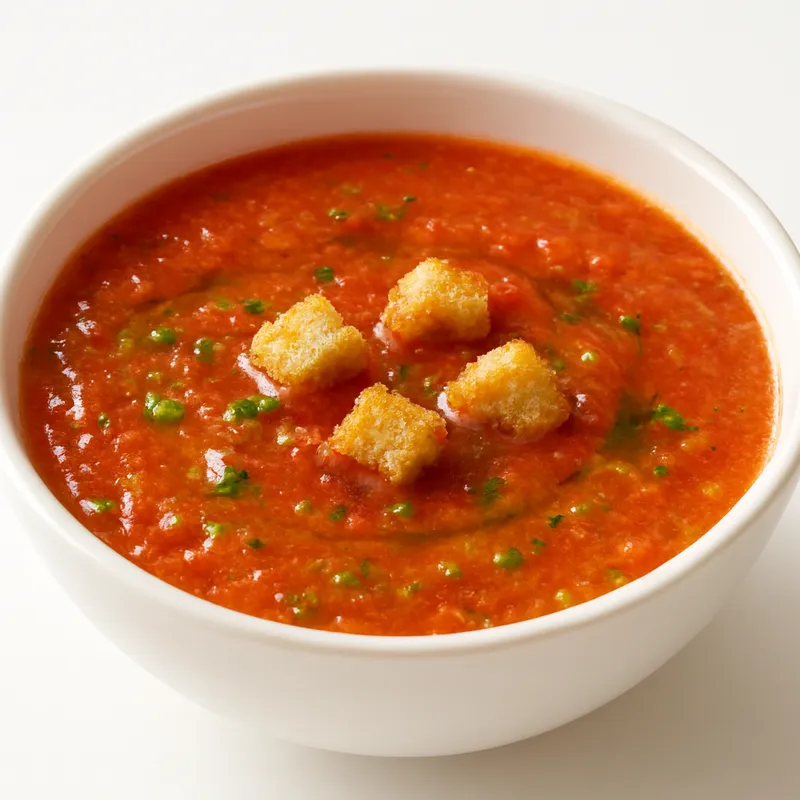
Pixín a la Sidra is the canonical pairing of Asturias's two coastal staples: monkfish from the Cantabrian Sea and sidra natural, the still hard cider made from local apple varieties. The dish belongs to Asturian fisherman cookery — pixín is the local name for monkfish, considered an inferior fish until the 20th century when chefs revalued it. Cider as a cooking medium is older, traceable to medieval Asturian monasteries that produced cider for daily use long before wine became affordable in the region.
Asturian fisherman cookery using the two coastal staples: monkfish from the Cantabrian Sea and sidra natural, the still hard cider. Cider's 0.4-0.6% malic and acetic acid denatures collagen on the fish surface without curdling. Sparkling cider doesn't work — carbonation drives off the aromatics.
An amber broth carrying soft potato slices and white monkfish medallions, bound by sweated onion. Smell first — apple and smoked-sweet paprika. The fish is firm but yielding, almost lobster-like in texture; the cider broth tastes faintly tart, faintly bitter, never sweet. You scoop broth onto bread between bites. Sweet cider versions are wrong; a proper one shows the cider's edge.
Sidra natural carries 0.4-0.6% malic and acetic acid — enough acid to denature collagen on the fish's surface and tenderize without curdling. Sparkling cider would not work: the carbonation drives off most aromatic compounds during the boil. The off-heat pimentón step is also load-bearing: paprika's red colour comes from carotenoids that scorch above 130°C, which is why every Asturian sauce calls for pulling the pan first.
Variations
Cudillero coastal version with hand-cut potato; Avilés runs heavier on onion; Oviedo restaurants finish with a clam-and-prawn garnish; some sidrerías de llagar deliberately use the cidery they pour from for a closed-loop pairing.
On the Palate
Where Pixín a la Sidra sits in the Spanish flavor cloud
Ingredients
Serves 4How it's made
5 steps · 30 min active + 5 min waiting
- 15 min
Cut 800g cleaned monkfish tail into 3cm medallions. Pat dry and season with salt. Dust very lightly in flour — just enough to dry the surface.
Watch outIf still wet, the fish steams instead of searing and the broth turns cloudy.
- 24 min
Heat 4 tbsp olive oil in a wide cazuela or sauté pan over medium-high. Sear monkfish 30 seconds per side — pale gold, not browned. Remove to a plate. The fish is only 30% cooked at this stage.
- 310 min
Lower heat to medium. Add 2 large onions thinly sliced, cook 8 minutes until soft and translucent. Add 3 garlic cloves minced, cook 1 minute. Pull pan off heat and stir in 1 tbsp sweet pimentón — off-heat is mandatory or the paprika scorches and turns bitter.
Watch outPimentón scorches in 10 seconds on direct heat. Always off the burner.
- 413 min
Return to medium heat. Pour in 400ml Asturian sidra natural (still cider) and 200ml fish stock. Add 500g waxy potato peeled and sliced 5mm thick. Simmer uncovered 12 minutes until potatoes are tender and broth has reduced by a third.
Watch outSidra natural is still and slightly sour — do not substitute sparkling cider, the bubbles boil off and leave only sweetness.
- 56 min
Slip the monkfish back in along with any juices from the plate. Spoon broth over each piece. Cover and simmer 4 minutes — the fish should be just opaque at the centre. Scatter chopped flat-leaf parsley. Rest 2 minutes off heat. Serve in the cazuela with bread for the broth.
Watch outMonkfish overcooks past opaque — it turns rubbery in 60 seconds.
Archive tool suggestions — not reviewed
These legacy suggestions have not been evidence-reviewed and are not presented as required tools.
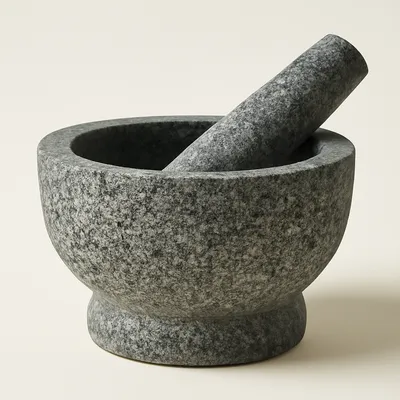
The simplest tool in any kitchen: a heavy bowl and a club to bash things in it. Different cuisines use different stones — Thai cooks pound green papaya in a tall granite mortar (krok hin); pesto Genovese requires the soft-pored Carrara marble; Indian masalas grind down on rough basalt. The bash-don't-cut motion releases volatile oils that a blade keeps sealed in the cell wall.
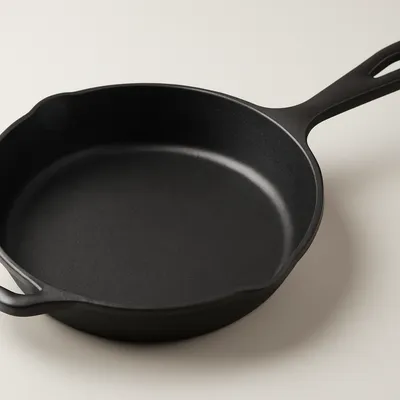
A heavy, single-piece cast iron pan, 25-30 cm across, weighing 1.5-2.5 kg. Once preheated, the thick mass holds 230°C+ even when a cold steak hits the surface — that's the secret to a deep crust. A well-seasoned skillet (multiple thin layers of polymerized oil baked into the iron) is essentially nonstick, gets better with use, and lasts a century. Lodge skillets from Tennessee have been in continuous production since 1896.

A round, shallow, glazed terracotta dish, 18-30 cm across with sloping walls, used for tableside-served Spanish tapas — gambas al ajillo, almejas a la marinera, callos, fideuà. Clay's slow heat retention keeps olive oil at the perfect 80-90°C garlic-confit zone for prawns without scorching, and the wide shallow profile lets liquids reduce while keeping protein lightly moored at the bottom.