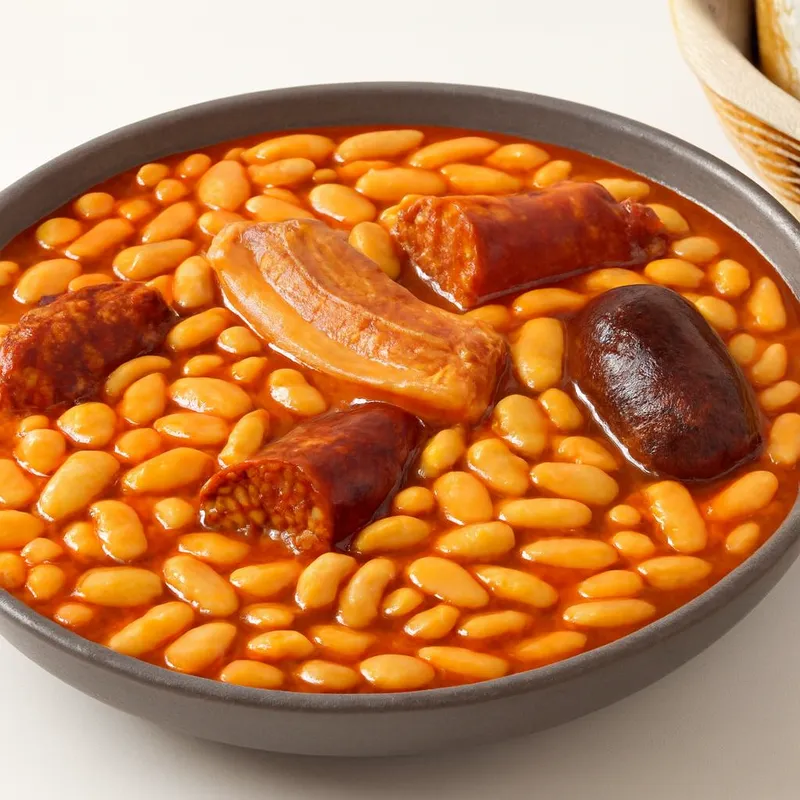
Cantabrian mountain stew — white beans, collard greens (berza), chorizo, morcilla, ham bone, and ear of pig — the northern interior's heavy winter pot.
Cocido Montañés is the cocido (one-pot stew) of the Cantabrian uplands — the mountainous interior of Cantabria, on the wet Atlantic slope between Castilla y León and the sea. It is the cousin of cocido madrileño and cocido maragato but built on what the mountains gave: collard greens instead of cabbage, white beans instead of chickpeas, and the slaughter-day pork products of small farmsteads. Eaten as the midday meal of farming and herding families through the long winter.
Cantabrian uplands cocido — collards instead of cabbage, white beans instead of chickpeas, slaughter-day pork from small farmsteads on the wet Atlantic slope. Pimentón goes in only at the end via a refrito; direct simmering scorches it and the broth goes pale.
Cream-thick beans the size of a thumbnail, broth gone deep amber from chorizo's pimentón fat, the greens turning slick and almost spinach-soft. The morcilla bleeds rice-and-onion crumbs into the bowl. Eaten in two rounds — first a soup spoon through the broth and beans, then a fork through the sliced meats with bread. A real montañés is heavy enough that a small bowl is enough; if it feels watery, the cook didn't simmer it long enough or used too lean a pork belly.
The technique is the same as all cocidos: low and slow without aggressive boiling, so the beans stay whole and the broth stays clear. Pimentón goes in only at the end via the refrito — direct simmering scorches it. Chorizo's red fat is what colours the broth; using a low-quality lean chorizo gives a pale, weak cocido. The two-course plating (broth then meats) is structurally important: each component holds its texture instead of all collapsing into one bowl.
Variations
Cocido lebaniego from Liébana is built on chickpeas (the garbanzo de Potes) rather than white beans, drops the morcilla, adds a relleno (egg-bread dumpling), and is served in three courses; cocido madrileño uses chickpeas and serves three courses; cocido maragato in León plates meats first; Galician pote gallego is the wetter neighbour with grelos.
On the Palate
Where Cocido Montañés sits in the Spanish flavor cloud
Cook it low and slow so the white beans stay whole and the broth stays clear, and bloom the pimentón only at the end in the refrito — simmered directly, paprika scorches and turns bitter.
Ingredients
Serves 6





How it's made
6 steps · 1 hour active + 12 hours waiting
- 1720 min
Soak 400g dried alubias blancas (Spanish white beans, ideally caparrón or judión) in cold water 12 hours overnight. Drain.
Watch outSkip the soak only if you're using fresh beans — dried unsoaked beans never soften right.
- 290 min
Place beans in a large pot with 1 ham bone, 1 piece of cured pork ear (oreja), 100g pork belly (tocino), and cold water to cover by 5cm. Bring slowly to a simmer; skim grey foam. Add a splash of cold water to 'scare' the beans — this prevents skin splits. Simmer 90 minutes.
Watch outBring the beans up slowly and skim the grey foam; the splash of cold water when it simmers keeps the skins from splitting.
- 330 min
Pierce 2 chorizos and 2 morcillas (Spanish blood sausages) with a fork to keep them from bursting. Add to the pot. Simmer 30 more minutes.
Watch outPrick the chorizo and morcilla before they go in, or they burst and cloud the broth with fat.
- 425 min
Meanwhile, blanch 500g collard greens (berza) in salted water 5 minutes; drain; chop coarsely. Add to the pot for the final 20 minutes of cooking.
- 55 min
Make the refrito: heat 3 tbsp olive oil in a small pan; fry 4 sliced garlic cloves until pale gold; pull off the heat; stir in 1 tsp pimentón dulce. Pour over the pot. Stir gently.
Watch outFry the garlic only to pale gold, then pull the pan off the heat before the paprika goes in — hot oil scorches it in seconds.
- 65 min
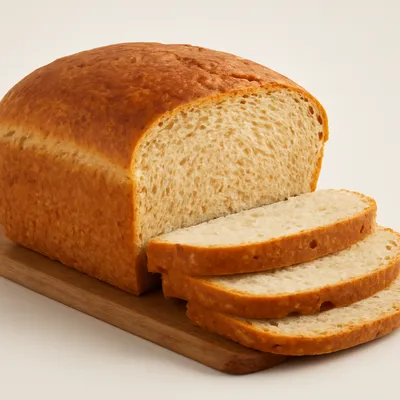
Slice the meats. Serve in two courses Cantabrian-style: first the broth with beans and greens, then the sliced meats on a platter — chorizo, morcilla, pork belly, pork ear. Crusty bread alongside.
Archive tool suggestions — not reviewed
These legacy suggestions have not been evidence-reviewed and are not presented as required tools.