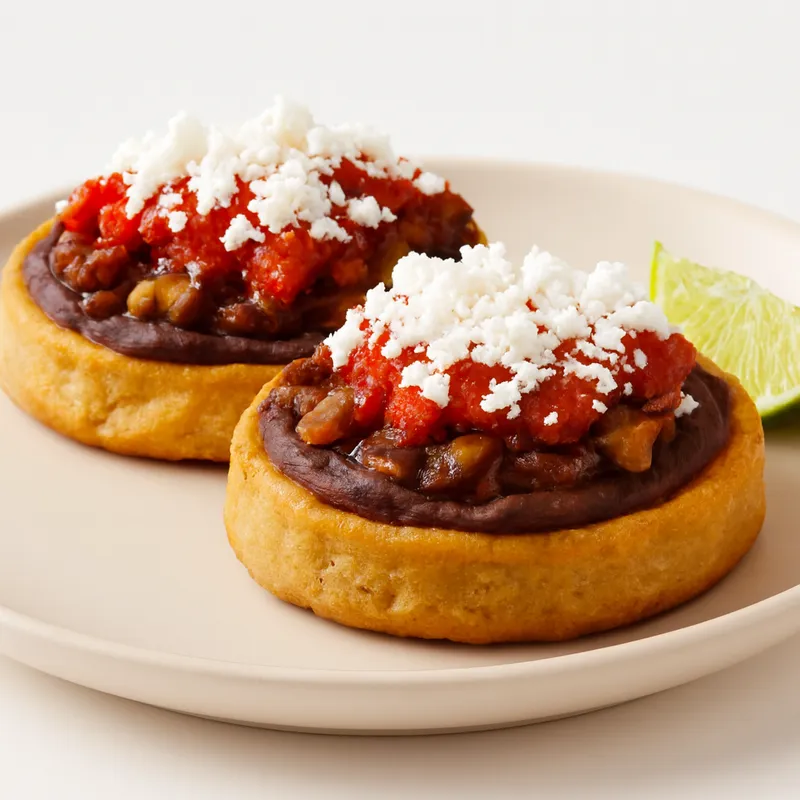
Thick Mexican corn masa bases with pinched edges, fried and topped with beans, meat, salsa, and crumbled cheese.


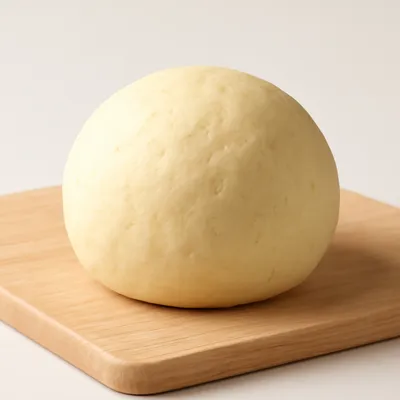


Originated in central and western Mexico as a colonial-era rural snack, with earliest records in Michoacán, Jalisco, and the Mexico City basin. The name likely comes from Nahuatl "tzopitl," meaning "pinched/poked." Regional names vary — "sopes" in Jalisco, "picadas"/"pellizcadas" in Veracruz, "memelas" in Oaxaca — meaning "pinched ones," describing the hand-formed rim.
Thicker masa cake with pinched-up edges — the rim holds beans, salsa, crema, and queso fresco from running off. Central Mexican market food. The pinching has to happen while the disc is still warm or the masa cracks.
A thick masa disk, palm-sized, with a pinched lip running the rim — an edible bowl. Fried briefly, then topped with refried beans, shredded meat, salsa verde or roja, lettuce, crema, crumbled cheese. Bottom is crisp, interior soft and corn-heavy. The pinched edge isn't decorative — it dams the toppings so juices stay on the disk.
The dough must be cooked twice — first on a dry comal until firm, then pinched while still hot (cool masa cracks instead of pinching), then briefly fried. This double-cook gives the bottom its crisp shell while the interior stays tender. A single bake-and-fry collapses the structure; the rim won't hold and the disk becomes a tostada with a thicker base.
Variations
Sopes (Mexico City, round, pinched rim); huaraches (Mexico City, oblong, sandal-shaped, no rim); tlacoyos (oval, stuffed with beans before grilling); gorditas (split open and stuffed); picadas (Veracruz, with salsa baked in).
On the Palate
Where Sopes sits in the Mexican flavor cloud
Cook the masa disk twice: firm it on a dry comal first, then pinch the rim while it's still hot (cool masa cracks instead of pinching up), then fry it. That double-cook is what gives a crisp shell over a tender inside — skip a step and the rim won't hold and it flattens into a tostada.
Ingredients
How it's made
5 steps · 35 min
- 15 min
In a mixing bowl, combine masa harina with water to form a dough. Knead until smooth and pliable, about 5 minutes. Divide the dough into small balls, about the size of a golf ball.
- 25 min
Flatten each ball into a thick disk, about 1/2 inch thick. Pinch the edges upward to form a small rim around each disk.
Watch outPinch a rim tall enough to hold a pool of filling — press up a real wall, not a faint lip, or the toppings slide off later.
- 310 min
Heat a skillet over medium-high heat. Place the masa disks on the skillet and cook until lightly browned and firm, about 2 minutes per side. Remove and let cool slightly.
Watch outOn the dry comal you're just setting the disk firm, not browning it deeply — a couple of minutes a side until it holds its shape.
- 48 min
In a separate pan, heat oil over medium heat. Fry each sope until golden brown and crispy, about 2 minutes per side. Drain on paper towels to remove excess oil.
Watch outFry until the base is golden and crisp, then drain on paper — the bottom should crackle while the top stays soft enough to bite.
- 57 min
Spread refried beans over each sope, then top with crumbled cheese, shredded lettuce, chopped onions, salsa, and a dollop of sour cream. Add any meat or additional toppings as desired.
Archive tool suggestions — not reviewed
These legacy suggestions have not been evidence-reviewed and are not presented as required tools.
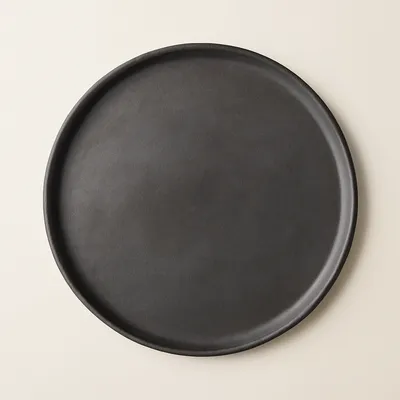
A flat round griddle of steel, cast iron, or unglazed clay, 30-50 cm across, the workhorse of the Mexican kitchen. It sits directly over a flame to toast tortillas (the puff happens in 30 seconds when the heat is right), char chiles for moles, blister tomatoes for salsas, and warm reheated leftovers. Clay comales (especially from Oaxaca) season with each use and impart a faint smoky tang that no metal version can fake.
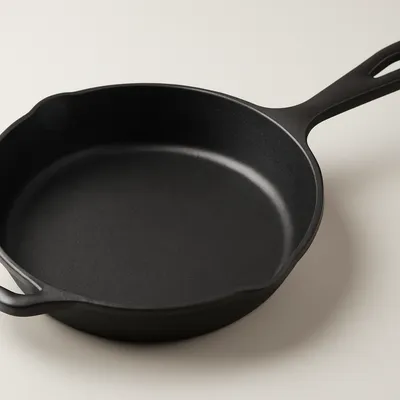
A heavy, single-piece cast iron pan, 25-30 cm across, weighing 1.5-2.5 kg. Once preheated, the thick mass holds 230°C+ even when a cold steak hits the surface — that's the secret to a deep crust. A well-seasoned skillet (multiple thin layers of polymerized oil baked into the iron) is essentially nonstick, gets better with use, and lasts a century. Lodge skillets from Tennessee have been in continuous production since 1896.