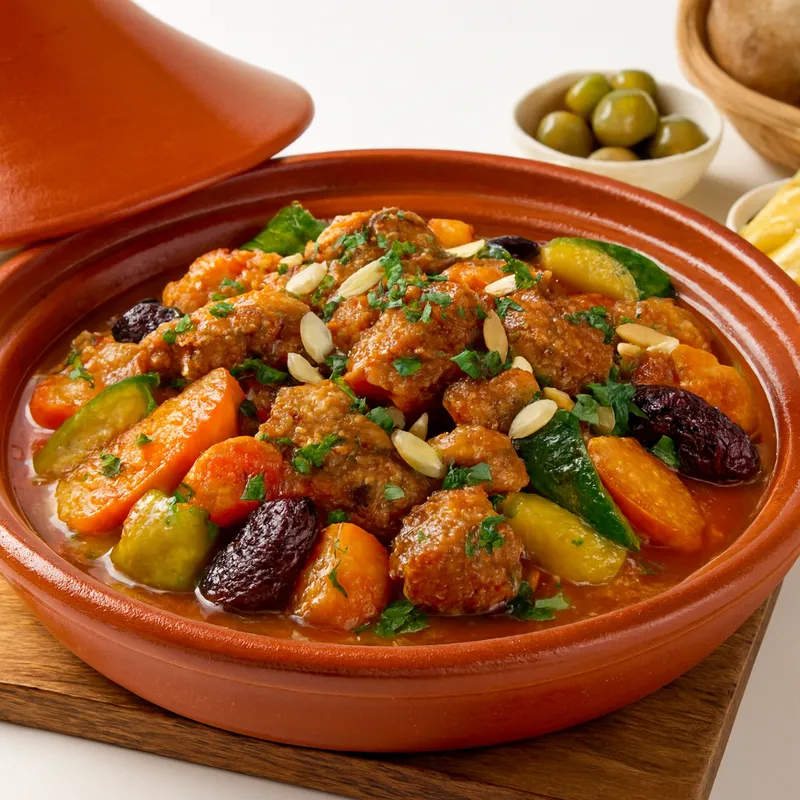
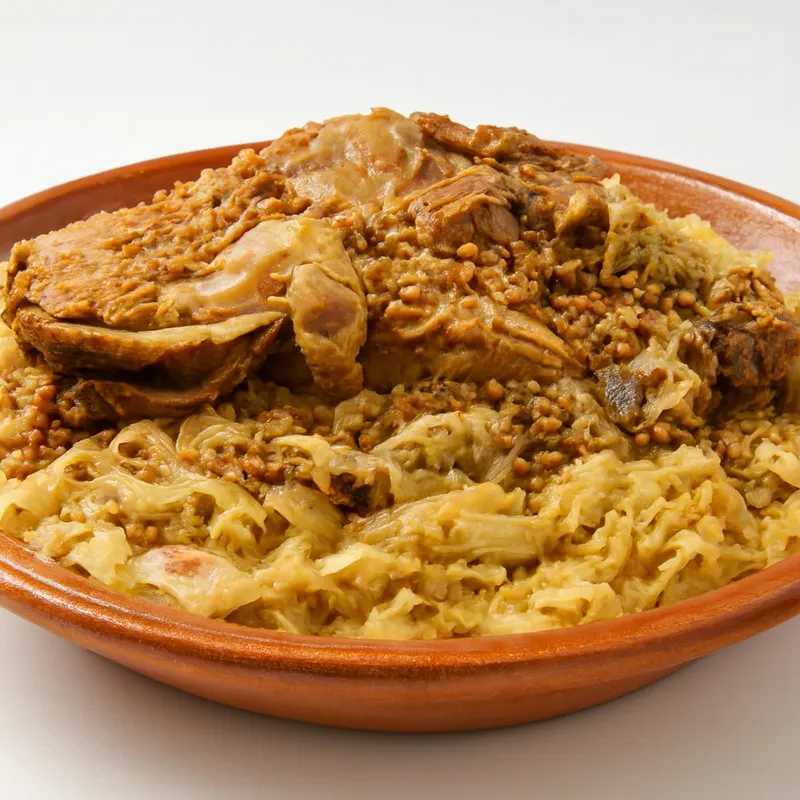
Quince was brought to Morocco by the Andalusian Moors and rooted deep in Fez's imperial cuisine. The autumn quince tagine pairs the fruit's tart-floral fragrance with lamb shoulder, saffron, ginger, cinnamon, and a sweetness of honey at the finish. Served with crusty khobz to mop the sauce.
Lamb tagine with whole quince halves — the quince turns from pale yellow to deep ruby as it cooks in the lamb juices, taking on sour-sweet notes. Royal Fes table dish.
Quince is high in tannins and pectin and is hard and astringent raw, so it must be cooked long. The extended braise softens the fruit and releases pectin that naturally thickens the sauce, while the flesh's tannins and pigments oxidize and undergo Maillard browning, turning pale yellow to deep ruby; the honey added at the finish lightly caramelizes into the sweet-savory glaze.
Variations
Fes version uses lamb and quince; Marrakech version uses beef and quince; modern Casablanca version uses chicken and apples — three fruit-and-meat traditions.
On the Palate
Where Tagine de Coings sits in the Moroccan flavor cloud
Ingredients











How it's made
5 steps · 2 hours
- 119 min
Brown 1 kg lamb shoulder cubes in olive oil with 2 chopped onions in a heavy tagine or Dutch oven, 8 minutes.
Watch outGive the lamb a proper brown before the liquid — this crust is the backbone of the sauce.
- 24 min
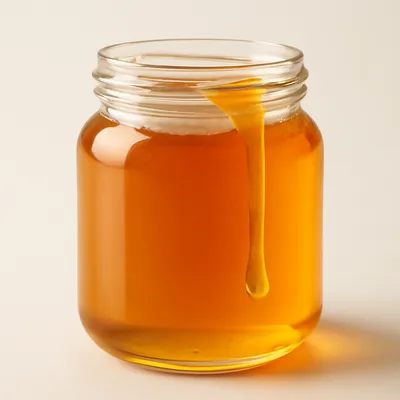
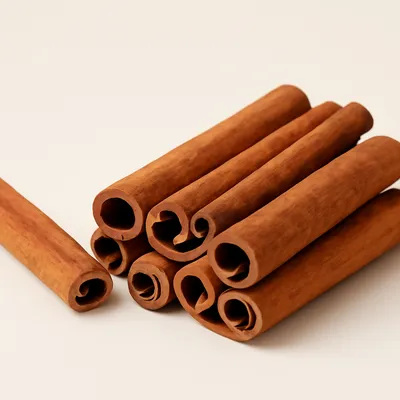
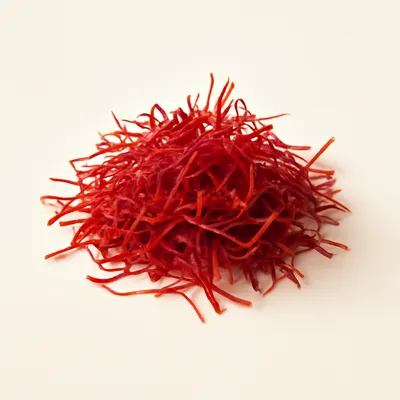
Add 4 minced garlic cloves, 1 tsp ground ginger, 1 tsp saffron threads, 1 cinnamon stick, salt, pepper. Stir 1 min.
- 358 min
Add water to half-cover, simmer covered 75 minutes until lamb is tender.
Watch outKeep it at a bare simmer until the lamb pulls apart easily and the liquid reduces to a glossy sauce — top up with a splash of water only if it threatens to dry out.
- 431 min
Meanwhile peel and quarter 3 quinces, removing cores. Sauté in 30g butter with 2 tbsp honey 8 minutes until caramelized.
Watch outSauté the quince gently until the edges turn amber and glazed but the pieces still hold their shape — mushy quince falls apart in the tagine.
- 58 min
Add the quinces to the tagine for the last 15 minutes. Adjust salt. Sprinkle toasted sesame and chopped parsley before serving.
Watch outFold the quince in for just the last stretch so it warms through and glazes without collapsing.
Archive tool suggestions — not reviewed
These legacy suggestions have not been evidence-reviewed and are not presented as required tools.

A two-piece earthenware vessel from North Africa: a flat round base and a tall conical lid. The cone is the engine — steam rises into its narrow apex, condenses against cooler clay, and drips back down onto the meat below. With a tablespoon of water at the start, a tagine slow-braises lamb shoulder for 3-4 hours over low charcoal embers, the meat self-basting in its own evaporated juices.

A heavy enameled or bare cast-iron lidded pot, 4-7 liters, with thick walls and a snug lid. The mass evens out hotspots; the lid traps moisture for braising. Sears on the stovetop, then transfers to a 150°C oven for 3-4 hours of even, contained heat — the structural difference between a beef bourguignon that comes out luminous and one that turns to gray mush. Le Creuset and Staub are the celebrated versions; an old American Wagner is functionally identical.