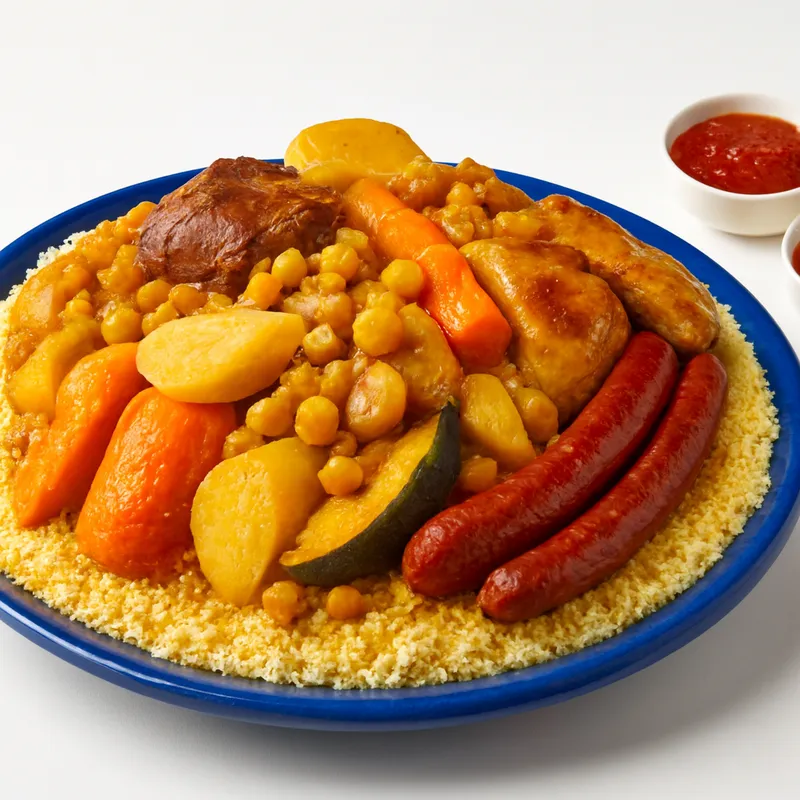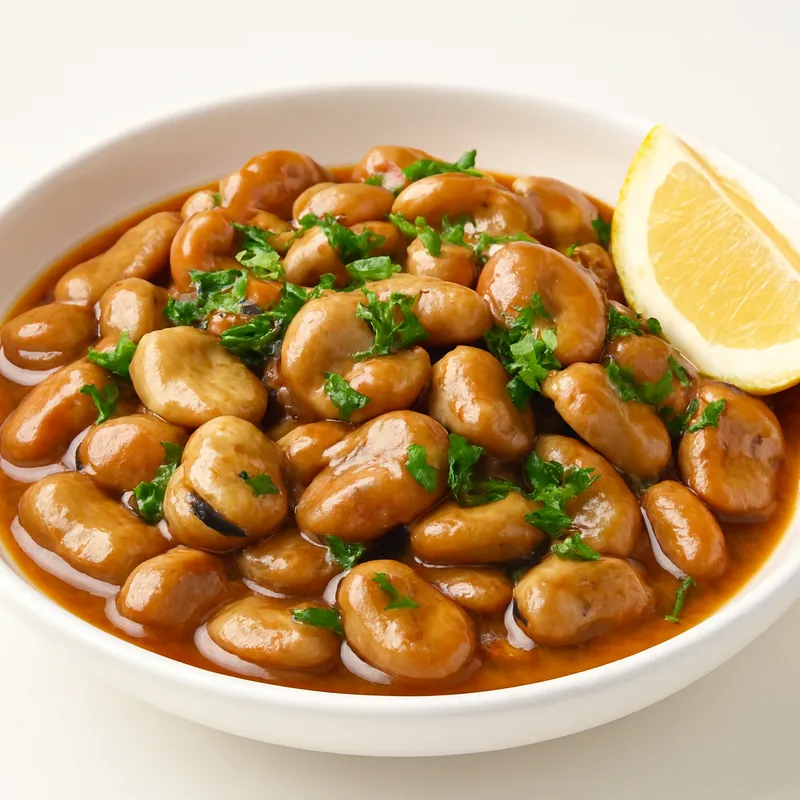

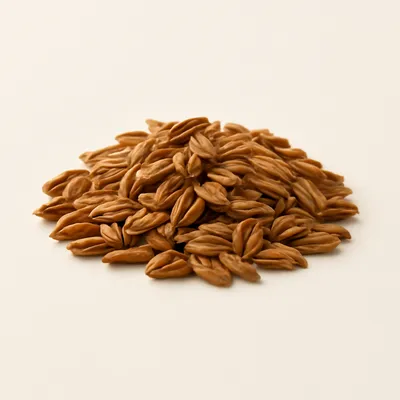



Berber in origin, going back at least 2,000 years — couscous granules predate the Arab arrival in North Africa. The earliest written reference is 13th-century Andalusian. The Friday-lunch ritual is specifically Moroccan and Tunisian, tied to Jumu'ah prayer; families gather after midday prayers and the platter is communal. The seven-vegetable variant (couscous bidaoui) is a Casablanca-Rabat tradition, while the south does it with one or two vegetables and more meat.
Berber granules predate the Arab arrival in North Africa by centuries; earliest written reference is 13th-century Andalusian. The seven-vegetable couscous bidaoui is a Casablanca-Rabat tradition tied to Friday Jumu'ah lunch. Triple-steam, never boil — each pass swells the grain another 30%.
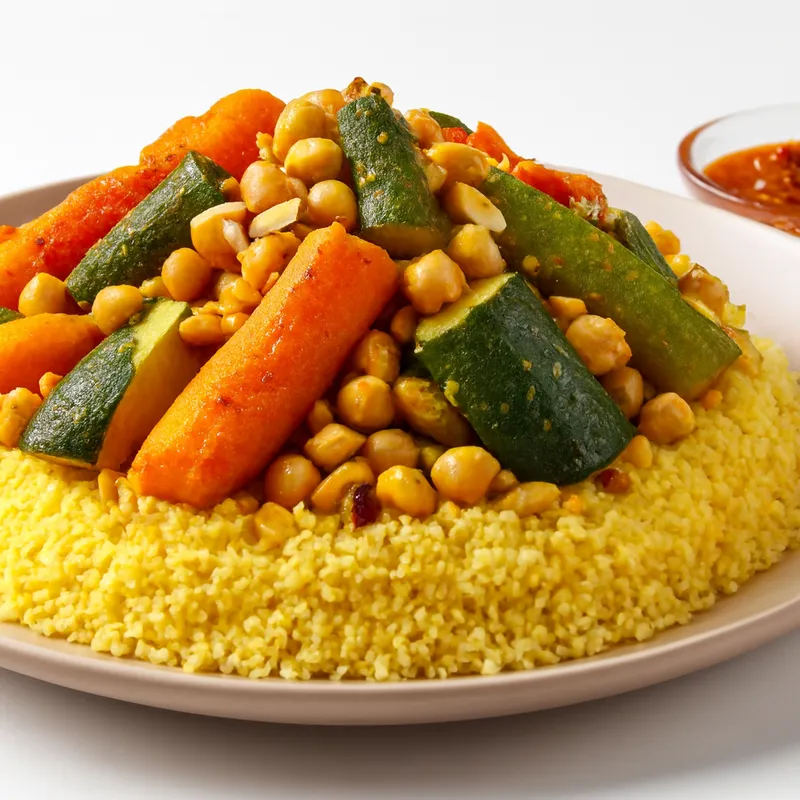
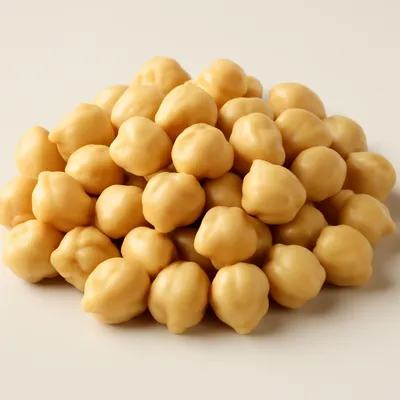
A mound of pale-yellow steamed semolina at the center of a wide platter, surrounded by carrots, turnips, zucchini, pumpkin, and chickpeas arranged in a halo, broth ladled over the grain just before serving. Each grain stands separate — never sticky — because it's been steamed three times, not boiled. Eaten with a spoon (urban) or by hand-rolling small balls (traditional). Friday lunch food across Morocco; the broth is poured at the table, and a side bowl holds harissa-thinned-with-broth for those who want heat.
The triple-steam is what separates real Moroccan couscous from the boxed instant version. Raw granules go into a couscoussier (a perforated steamer over a stew pot) for 20 minutes, get tipped out, oiled and rubbed by hand to break clumps, rested, then steamed again. Three rounds total. Each steam swells the grain another 30%, and the rubbing forces oil into every kernel so they cook separate. Five-minute instant couscous is one boil — the granule is hydrated but never properly expanded, which is why it tastes pasty.
Variations
Couscous bidaoui (Casablanca-Rabat, seven vegetables); couscous tfaya (Marrakech, sweet caramelized onion and raisin); couscous Souss (south Morocco, argan oil-finished); couscous belboula (barley grain instead of wheat, eastern High Atlas).
On the Palate
Where Moroccan Couscous with Vegetables sits in the Moroccan flavor cloud
Ingredients



How it's made
4 steps · 20 min
- 15 min
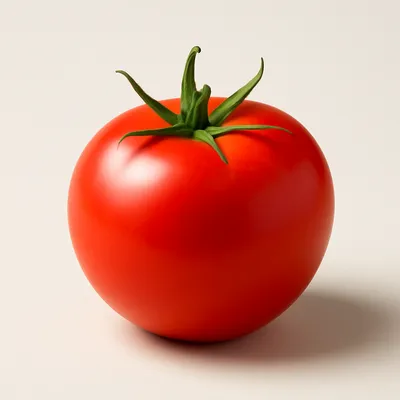
Heat olive oil in a large pot over medium heat. Add your choice of chopped vegetables and sauté until they begin to soften, about 5 minutes. The vegetables should start to release their aroma and color.
Watch outSauté the vegetables until they just start to soften and smell sweet, with a little color at the edges — that's the flavor base before the spices go in.
- 22 min
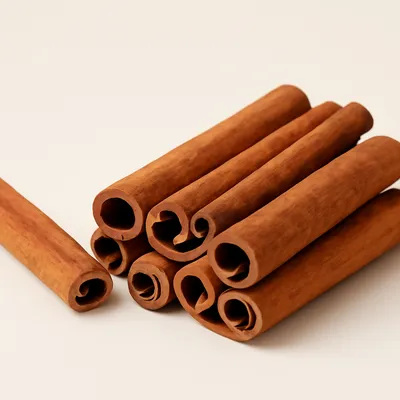
Stir in cumin, cinnamon, ras el hanout, and any additional spices. Cook for another 2 minutes until the spices are fragrant, enveloping the vegetables in their rich aroma.
Watch outCook the spices a couple of minutes until they turn fragrant and darken slightly; raw, dusty-smelling spice means they haven't bloomed yet.
- 310 min
Add couscous to the pot, stirring to coat it with the oil and spices. Pour in enough water to just cover the couscous, and bring to a gentle simmer. Cover the pot and let it steam for about 10 minutes until the couscous is tender and fluffy.
Watch outKeep it at a bare simmer under the lid; the couscous is done when the water's gone and the grains have swelled soft and tender.
- 43 min
Fluff the couscous with a fork and adjust seasoning with salt and additional spices if needed. Serve warm as a hearty side or main dish.
Archive tool suggestions — not reviewed
These legacy suggestions have not been evidence-reviewed and are not presented as required tools.