A Basque farmhouse dish from the French side of the Pyrenees, named for the Basque word piper (pepper). The form predates Espelette pepper's arrival — peppers came to the Basque country from the New World in the 16th century via Spanish ships, and Espelette specifically was cultivated in that valley from around 1650, AOC since 2000. The local cooking idea is older than the local pepper.
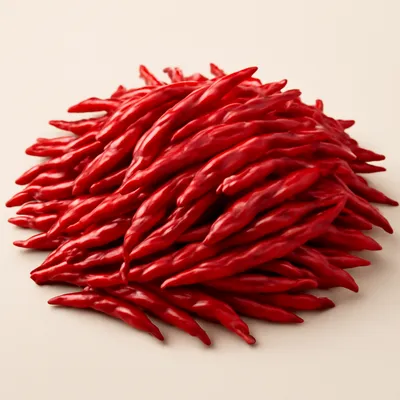
Named for the Basque word piper. Espelette pepper — cultivated in that valley since around 1650, AOC since 2000, ~4,000 SHU — works like Hungarian sweet paprika with depth, not like cayenne.
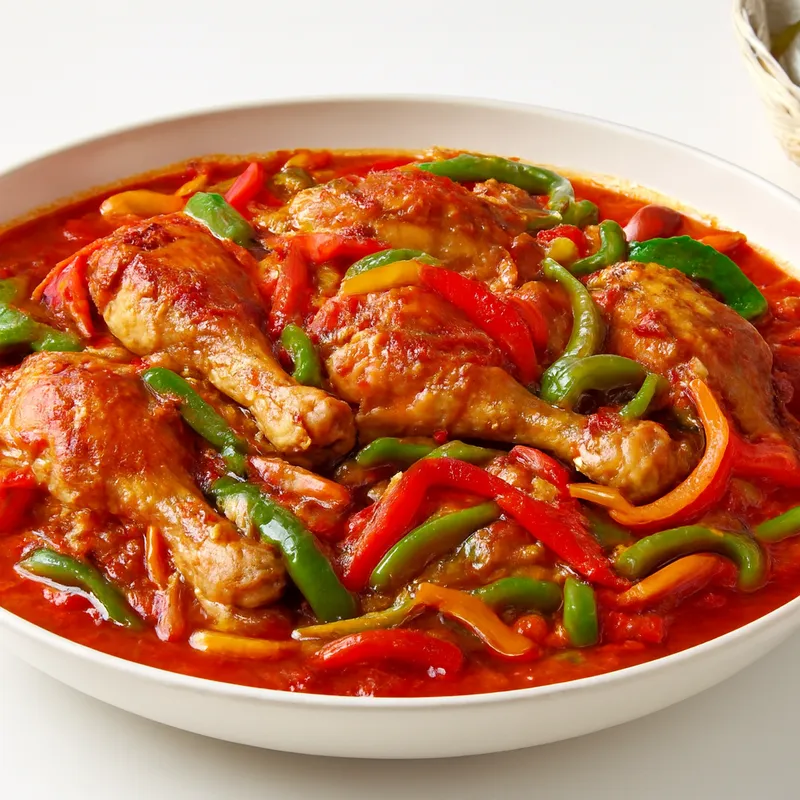
A pan of slow-stewed green and red peppers, tomato, and onion cooked down to a glossy, tangled mass — not quite a sauce, not quite a stew. Espelette pepper goes in for warmth, never raw chili heat. Often finished with scrambled egg folded through, or topped with bayonne ham. Served with bread, or alongside fish. The peppers should be soft enough to spread, but the dish must not turn to purée — visible strips of pepper are the marker.
Espelette pepper is mild on the Scoville scale — about 4,000 SHU — so it functions like Hungarian sweet paprika with more dimension, not like cayenne. That's why piperade tastes warm without burning. Cooks unfamiliar with the dish often substitute hot chili and overshoot the heat; the dish then loses its sweetness and reads like a generic ratatouille. Espelette also goes in late so its volatile aromatics don't burn off in the long cook.
Variations
Piperade basque finishes with scrambled egg folded through; piperade au jambon de Bayonne lays cured ham over the top off-heat; the Spanish-Basque pisto version pushes more zucchini and skips the egg.
On the Palate
Where Piperade sits in the French flavor cloud
Espelette pepper is the whole point and it goes in at a mild ~4,000 SHU — treat it like sweet paprika and add it late, so the dish stays warm and sweet instead of turning into a hot, generic pepper stew.
Ingredients




How it's made
5 steps · 28 min
- 15 min
Heat a generous splash of olive oil in a wide pan over medium heat. Add sliced onions and sauté until they turn translucent and their sweetness starts to fill the air, about 5 minutes.
Watch outOnions should go glassy and smell sweet, with no browning — keep the heat gentle.
- 28 min
Introduce the sliced bell peppers and minced garlic to the pan. Stir gently and cook until the peppers soften, releasing a sweet, earthy aroma, about 8 minutes.
Watch outAvoid browning the garlic, as it can turn bitter and overpower the dish.
- 310 min
Add the chopped tomatoes and a pinch of Espelette pepper. Let the mixture simmer, stirring occasionally, until the tomatoes break down and meld into a thick, aromatic sauce, about 10 minutes.
Watch outTomatoes should collapse into a thick, glossy sauce with no watery pooling before the eggs go in.
- 43 min
Crack the eggs into the pan, stirring gently to combine with the vegetables. Cook until the eggs are just set, creating a creamy, cohesive mixture, about 3 minutes.
Watch outPull the pan the instant the eggs look just-set and creamy — a beat later they're dry.
- 52 min
Season with salt and black pepper to taste. Fold in thin slices of Bayonne ham, allowing their flavor to infuse the dish, about 2 minutes.
Watch outFold the ham in off direct heat so it warms through but stays soft, not fried.
Archive tool suggestions — not reviewed
These legacy suggestions have not been evidence-reviewed and are not presented as required tools.