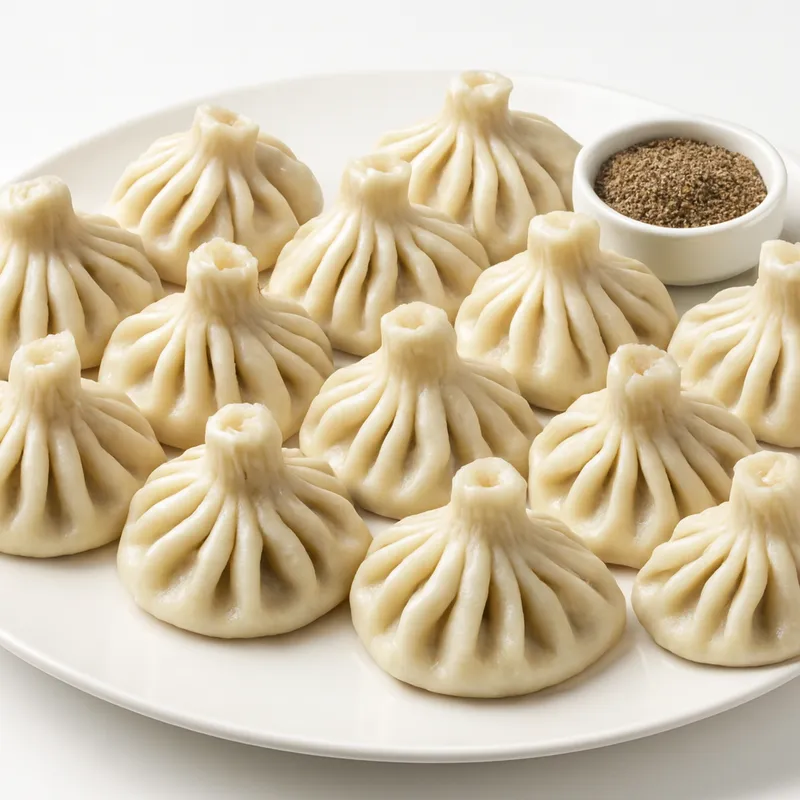
Georgian pleated soup dumplings filled with spiced meat and broth, eaten by hand with a twist of the top knot.


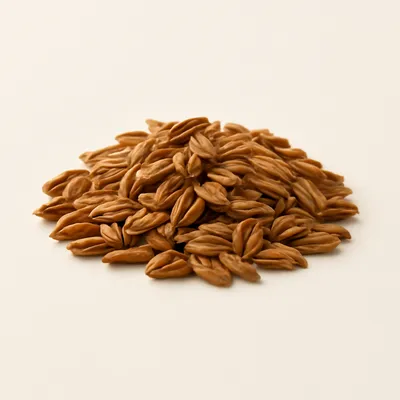


Originated in Georgia's mountainous Pshavi and Khevsureti regions, where it was a hunter's portable meal — wrapped to be eaten with hands without utensils on horseback or hiking. Highland khinkali (khevsuruli) is seasoned with cumin, onion, and chili; the urban Tbilisi version (kalakuri) instead adds fresh herbs like parsley and coriander. Eating khinkali is also ritualized: the kudi count on a plate is how Georgians track who's eating most — leaving 8 kudis means 8 dumplings consumed.
A Pshavi-Khevsureti hunter's ration: 18-20 pleats seal the broth in. Pick it up by the kudi knob, bite a hole, sip first. The kudi stays on the plate — it's the handle, not food.
Hold by the top knot, bite the side, and the peppery broth inside spills hot onto the tongue before the minced lamb shows up. The bottom knot stays uneaten on the plate.
The pleat counts (18-20 in the classical version) form an air seal that traps steam during boiling. Inside, the raw meat releases its juices and the added warm water or broth heats up, creating the broth-bomb effect when you puncture the side.
Variations
Pshavi-Khevsureti mountain khinkali use only lamb and never beef; Tbilisi street khinkali might mix pork and beef for cheaper cost — original highland versus modern city.
On the Palate
Where Khinkali sits in the Georgian flavor cloud
Ingredients



How it's made
5 steps · 55 min
- 110 min
In a large bowl, combine coarsely chopped beef, pork, and lamb with finely diced onion, minced garlic, and a blend of cumin, black pepper, and chili pepper. Mix until the spices and herbs are evenly distributed throughout the meat.
- 210 min
On a clean surface, mound the flour and create a well in the center. Gradually add water while mixing with your fingers, until a soft, elastic dough forms. Knead the dough for about 10 minutes until smooth and pliable.
Watch outKnead a full ten minutes until the dough is smooth and springy back — underworked dough tears at the pleats.
- 35 min
Roll out the dough to a thickness of about 2mm. Cut into circles using a round cutter or a glass, about 10 cm in diameter.
- 415 min
Place a spoonful of the meat mixture into the center of each dough circle. Gather the edges and pinch together to form a twisted knob, ensuring a tight seal to prevent the filling from leaking during cooking.
Watch outGather every pleat up and twist the top firmly shut, no gaps — this seal is what keeps the broth in.
- 515 min
Bring a large pot of well-salted water to a boil. Gently drop the khinkali into the water, ensuring they don't stick to the bottom. Boil until the dough is tender and the khinkali float to the surface, about 12-15 minutes.
Watch outThey tell you they're done by floating to the surface; the dough should feel tender, around 12-15 minutes.
Archive tool suggestions — not reviewed
These legacy suggestions have not been evidence-reviewed and are not presented as required tools.