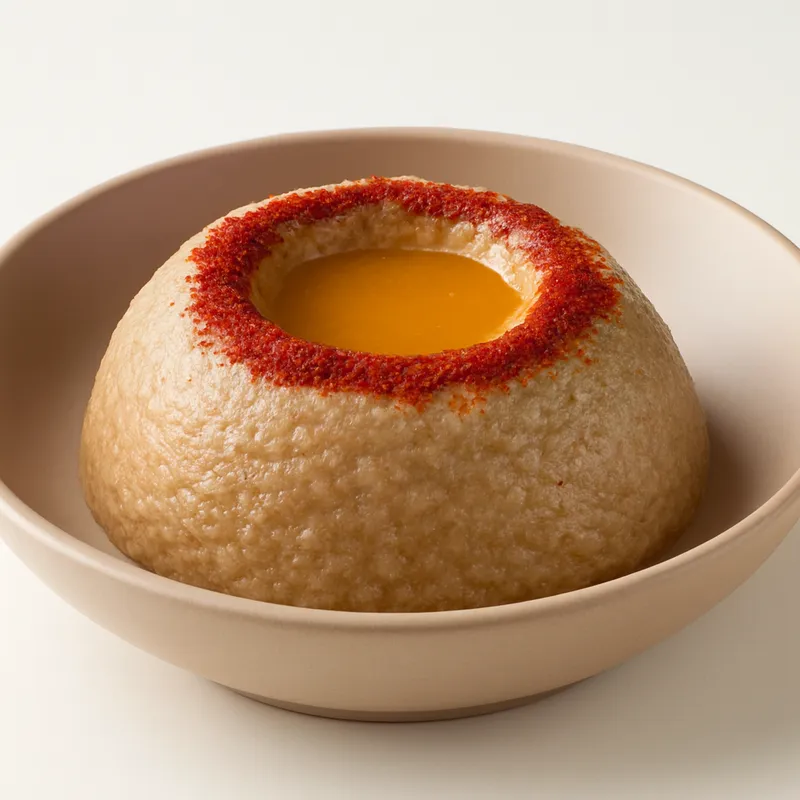
Tihlo originates from the historical Agame province in Tigray, northern Ethiopia (and is found in adjacent Eritrea, where it's also called 'tihlo'). The dish is distinct from the rest of Ethiopia in that it uses barley dough (not injera teff bread) as the starch carrier — the Tigray highlands grow barley more reliably than teff, so the cuisine evolved around it. Tihlo is served on a large communal platter: a mound of small barley balls in the center, with a bowl of hot spicy meat stew (typically tsebhi derho chicken or tsebhi sega beef) alongside; each diner uses a two-pronged wooden fork (shint'ar) to spear a ball and dip it into the stew, fondue-style. Said to have been the feasting food of the nobles of Tigray, it is now eaten as a side dish or snack and made for Tigrayan celebrations and Orthodox holidays.
Spear a tihlo ball with the two-pronged wooden shint'ar fork, dip it into the bowl of spicy chicken stew, and pop it in your mouth: the barley ball is dense, nutty-toasted, with the rough texture of grain hand-ground; the stew clings to the surface, berbere-red and spice-warm — some cooks fold a little pulse paste into the stew to soften the heat. Bite — the barley's roasted-grain depth balances the chicken stew's spiced complexity. Sip black tea on the side. This is Tigray celebration ritual, fondue-style.
Toasting barley before grinding develops Maillard browning compounds that give tihlo its distinctive nutty flavor — without toasting, the dough tastes raw-grain-bland. The coarse grind (vs fine flour) creates the chewy-grainy texture that's tihlo's signature: too-fine flour makes the balls gummy, too-coarse makes them crumble. The dough's stiff hydration (1:2 flour-to-water) lets it hold the ball shape without collapsing in the hot stew.
Variations
Tigray-classic original uses pure barley flour; northern-Tigray uses a barley-and-wheat mix (50/50); Eritrean tihlo is more nut-grain-toast-forward; some modern restaurants serve the dish with multiple stews (chicken-tsebhi + beef-tsebhi + lentil-shiro) surrounding the balls.
On the Palate
Where Tihlo sits in the Ethiopian flavor cloud
Ingredients
Serves 4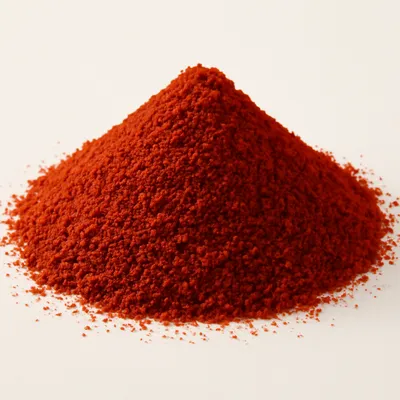


How it's made
5 steps · 40 min active + 20 min waiting
- 122 min
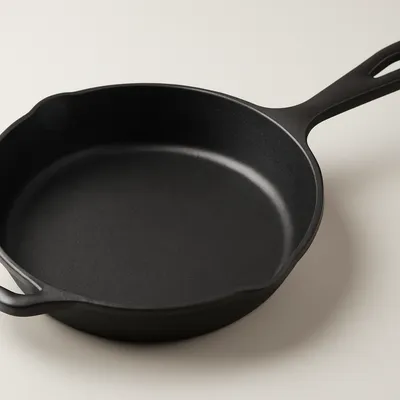
Toast 500g raw barley grains: in a dry heavy skillet over medium heat, toast 12 min, stirring constantly, until grains turn deep golden-brown and smell nutty-popcorn-like. Cool 10 min.
Watch outThe barley is toasted enough when it turns deep golden-brown and smells nutty and popcorn-like.
- 25 min
Grind toasted barley to a coarse flour in a food processor or grain mill — should resemble coarse cornmeal, not fine powder. Set aside.
- 313 min
Make stew (tsebhi derho-style): in a heavy pot, sauté 2 chopped onions in 4 tbsp niter kibbeh (or butter) until deep golden, 10 min. Add 4 minced garlic cloves + 2 tbsp grated ginger + 3 tbsp berbere spice mix; cook 3 min.
Watch outCook the onions in niter kibbeh until deep golden, not just soft — that colour is the stew's foundation.
- 425 min
Add 600g chicken thighs (cut into pieces) + 4 hard-boiled eggs (whole) + 500ml water + 1 tsp salt; simmer covered 25 min until chicken is tender and sauce is thick.
- 515 min
Make tihlo balls: in a bowl, combine the toasted barley flour with 250ml hot water (gradually) and 1 tsp salt. Knead 5 min into a stiff dough. Pinch off walnut-sized pieces, roll between palms into balls. Mound in center of a large serving plate. Pour the stew around the balls in a moat. Eat by pinching off pieces of tihlo and dipping into the stew, by hand.
Watch outKnead until the dough is stiff enough to hold a ball shape that won't slump in the hot stew.
Archive tool suggestions — not reviewed
These legacy suggestions have not been evidence-reviewed and are not presented as required tools.