



The format is ancient in the Ethiopian/Eritrean highlands. Teff (Eragrostis tef) — a tiny-grained cereal whose wild ancestor is now identified as Eragrostis pilosa — was domesticated in the northern Ethiopian highlands; estimates for when range widely, from roughly 6,000 to 3,000 years ago, but it is unquestionably an ancient crop several millennia old and remains genetically tied to the region. The communal injera platter is structurally bound to the Ethiopian Orthodox Tewahedo fasting calendar: lay observers fast at least 180 days a year (monks and clergy considerably more), going vegan on Wednesdays, Fridays and through Lent. The meat-free wats (lentil, collard greens, chickpea) are therefore not side-dishes but the whole plate — most often served as 'beyaynetu', a platter of 'a little of everything'.
Teff was domesticated in the Ethiopian highlands at least 4,000 years ago and grows nowhere else genetically intact. The 2-3 day fermentation is what makes the bread the utensil, the plate, and the last course.
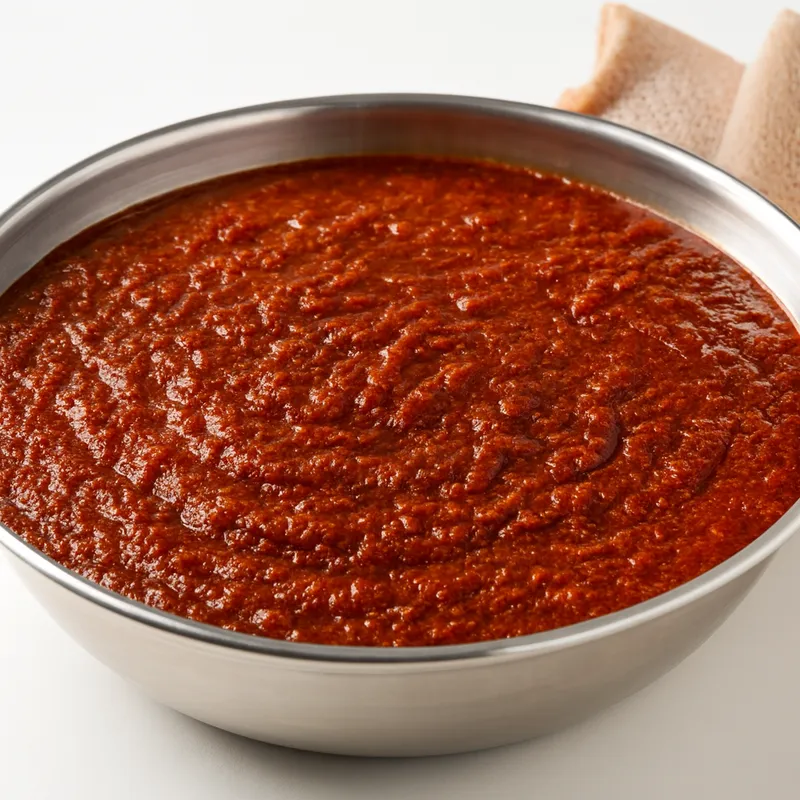
A platter the size of a tabletop: a single sheet of injera (gray, spongy, sour-tangy from teff fermentation) covers the tray, then mounds of wats — red doro wat, yellow misir alicha, green gomen, brown shiro, sometimes raw kitfo — are spooned directly onto the bread. You tear with the right hand only, pinching stew off the bread. Communal eating; the stained injera underneath is the last course.
Injera's fermentation is what makes the meal work — teff batter ferments 2–3 days, building the lactic-acid sourness that cuts the heavy butter and chili in the wats. The bread is also the utensil, plate, and final course (the layer under the food, soaked through, is called 'turn-over' and is eaten last). A non-fermented or rice-flour mock-injera changes the meal completely: nothing balances the niter kibbeh.
Variations
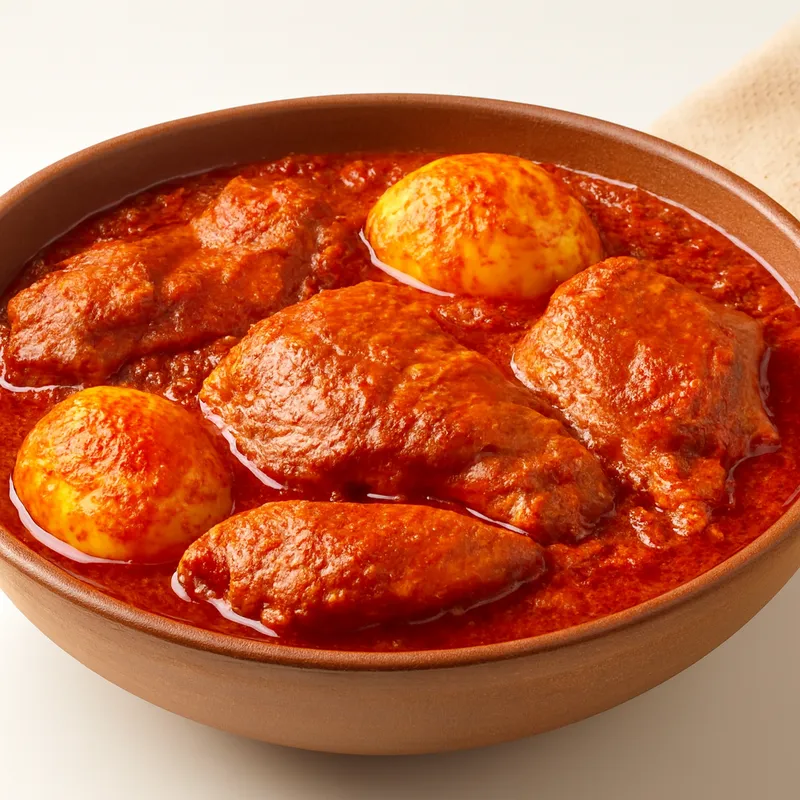
Doro wat (chicken with hard-boiled egg) is the Sunday flagship; misir wot (red lentil) and shiro (chickpea) carry the 180+ Orthodox fasting days; Eritrean tsebhi runs slightly milder on berbere.
On the Palate
Where Injera with Wat sits in the Ethiopian flavor cloud
Ingredients





How it's made
5 steps · 37 min
- 15 min
Begin by heating a large pan over medium heat. Melt the ghee until it shimmers, releasing its nutty aroma. Add finely chopped onions, stirring frequently until they turn golden and translucent, about 5 minutes.
Watch outOnion cooked in the ghee to golden and translucent — soft and sweet, no raw white bite left.
- 22 min
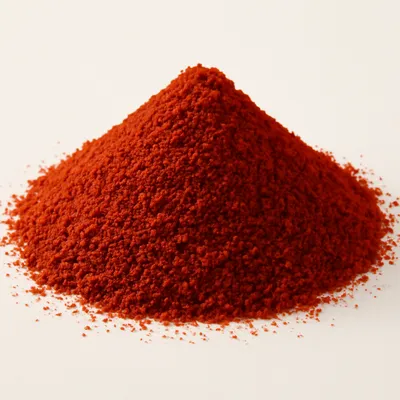
Add minced garlic and ginger to the pan. Sauté until their fragrance blooms, about 1 minute. Stir in the berbere spice blend, letting it toast briefly to deepen its flavor.
Watch outBerbere toasted in the fat just until it darkens and turns fragrant — a minute at most, pull back before it scorches.
- 38 min
Stir in chopped tomatoes and cook until they break down into a thick sauce, about 8 minutes. The mixture should reduce and meld together, becoming a rich, aromatic base.
- 420 min
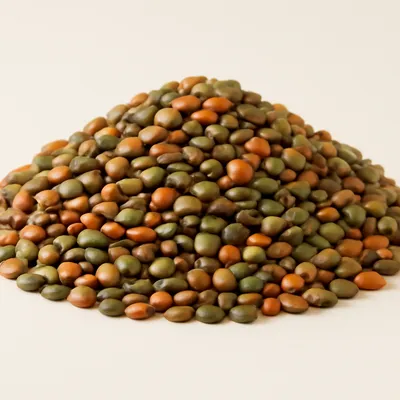
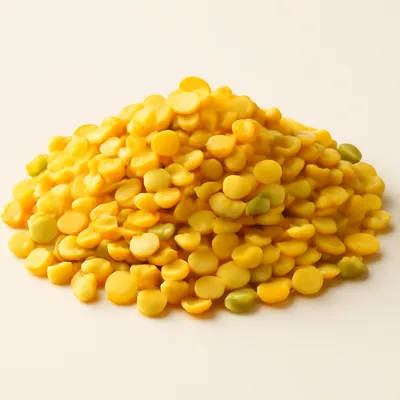
Add lentils and split peas to the pan, stirring to coat them in the sauce. Pour in enough water to cover them by an inch. Simmer gently, stirring occasionally, until the legumes are tender and the wat is thick and hearty, about 20 minutes.
Watch outLegumes simmered until tender and the wat has thickened to a rich, spoonable stew, not a soup.
- 52 min
Season the wat with additional spices to taste. Serve it hot, spooned generously over injera, allowing the bread to soak up the flavorful sauce.
Archive tool suggestions — not reviewed
These legacy suggestions have not been evidence-reviewed and are not presented as required tools.