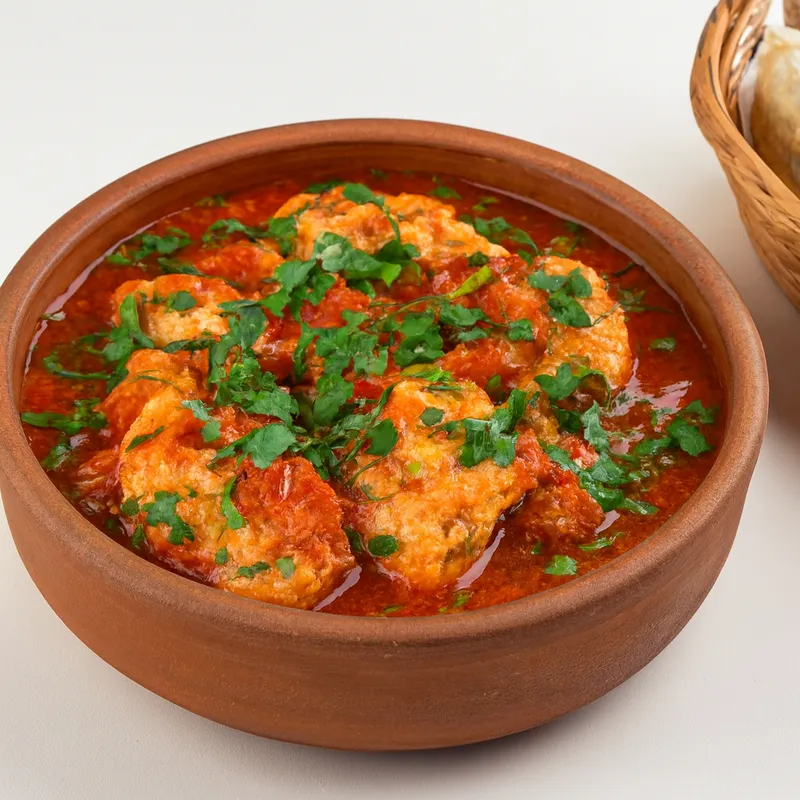


Originally a special-occasion dish across Ethiopia — tibs was historically what you cooked when a guest of honor arrived, since slaughtering and immediately cooking fresh meat was a form of respect. The dish has since become everyday restaurant food, but the high-heat, fast-cook method preserves the original logic: fresh meat needs minimal handling.
Originally what you cooked when a guest of honor arrived — fresh-slaughtered meat, minimal handling, hard heat. A Western induction stove at 350°F reads the result as braised, not seared, and the texture flattens.
Cubes of beef or lamb seared hard in niter kibbeh with onion, green chili (jalapeño in Western kitchens; a local Ethiopian green pepper at home), garlic, and a few sprigs of rosemary — served sizzling on a clay platter, often over a small charcoal brazier that keeps it cooking at the table. The meat should have hard-seared edges and a rare-medium center; if it comes out gray throughout, the pan wasn't hot enough. Eaten with injera, no utensils.
Several regional cuts: awaze tibs (with awaze chili paste), zilzil tibs (long strips), shekla tibs (served in the clay pot it cooked in), derek tibs (drier, no veg). The constant is intense direct heat — Ethiopian cooks use cast iron over open charcoal, hotter than most home stoves. A tibs cooked in a Western kitchen at 350°F induction reads as braised, not seared, and the texture flattens.
Variations
Awaze tibs (with awaze chili paste); zilzil tibs (long strips); shekla tibs (served in the clay pot it cooked in); derek tibs (drier, no veg, lamb default).
On the Palate
Where Tibs sits in the Ethiopian flavor cloud
Keep the heat brutally high so the beef sears and browns in minutes rather than stewing in its own juices — a low pan turns tibs into a limp braise instead of the fast-seared dish it is meant to be.
Ingredients


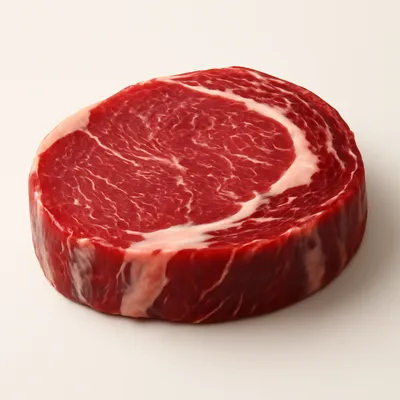

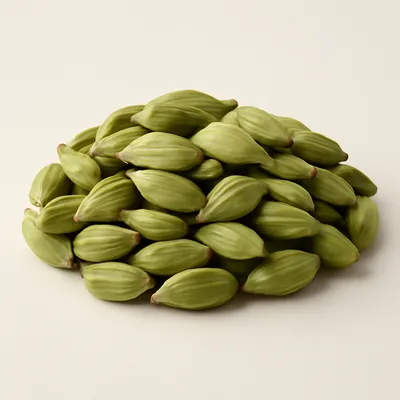
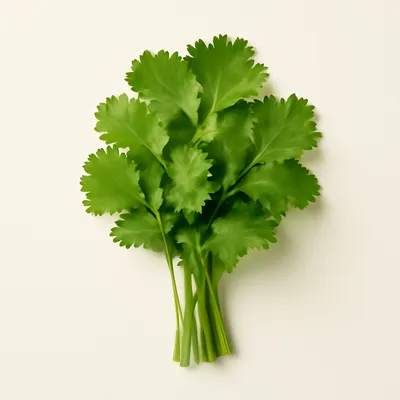

How it's made
5 steps · 22 min
- 15 min
Heat a large skillet over high heat until hot. Add ghee and let it melt until shimmering. Add beef cubes in a single layer, searing them until browned on all sides, about 5 minutes.
Watch outThe pan should sizzle loudly the instant the beef touches it; wait for a deep brown crust, not just grey, before turning.
- 24 min
Reduce heat to medium and add sliced onions, garlic, and ginger to the pan. Stir frequently, cooking until the onions are soft and the mixture is fragrant, about 4 minutes.
Watch outCook the onions until soft and translucent and the raw garlic-ginger smell turns sweet and fragrant.
- 36 min
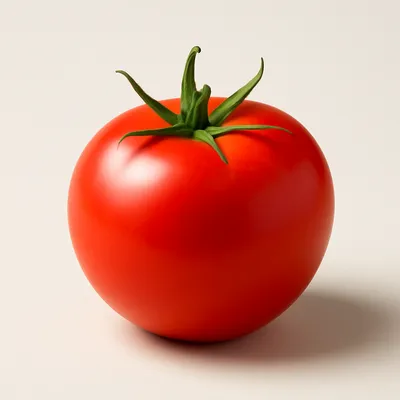
Add chopped tomatoes and rosemary, stirring to combine. Cook until the tomatoes break down and the sauce thickens, about 6 minutes.
Watch outThe tomatoes should collapse into a glossy sauce that coats the meat, not a watery puddle in the pan.
- 45 min
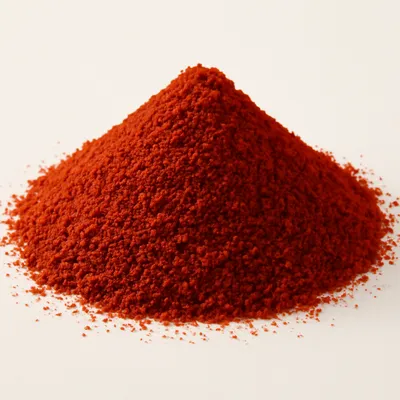
Season with black pepper and additional spices as desired. Let the tibs simmer gently for another 5 minutes to meld the flavors.
- 52 min
Serve the tibs hot, alongside injera, allowing the bread to soak up the rich sauce.
Archive tool suggestions — not reviewed
These legacy suggestions have not been evidence-reviewed and are not presented as required tools.

A heavy, single-piece cast iron pan, 25-30 cm across, weighing 1.5-2.5 kg. Once preheated, the thick mass holds 230°C+ even when a cold steak hits the surface — that's the secret to a deep crust. A well-seasoned skillet (multiple thin layers of polymerized oil baked into the iron) is essentially nonstick, gets better with use, and lasts a century. Lodge skillets from Tennessee have been in continuous production since 1896.
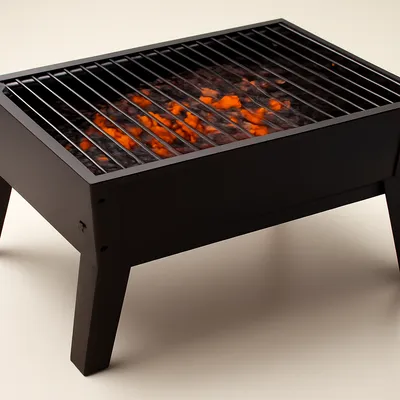
An open or hooded metal frame holding a bed of glowing charcoal embers, with a grate above. Charcoal burns at 700°C+ on the surface and emits short-wave infrared, which cooks proteins faster and with deeper Maillard browning than gas. Hardwood lump charcoal (oak, mesquite, fruitwood) lends its own smoke; cheap briquettes do not. Mastery is mostly heat zoning — direct over coals for searing, indirect off-coals for slow-roasting.

A round-bellied unglazed clay pot, 1.5-3 liters, with a domed lid and side handles, used for slow-cooking Chinese soups, claypot rice (煲仔饭), and stews. The clay's high porosity diffuses heat slowly so soups never come to a violent boil — flavor develops over 2-3 hours of low simmer. Cantonese claypot rice gets its prized crispy bottom (锅巴) from the same direct-flame stovetop heat that would crack a less robust pot.