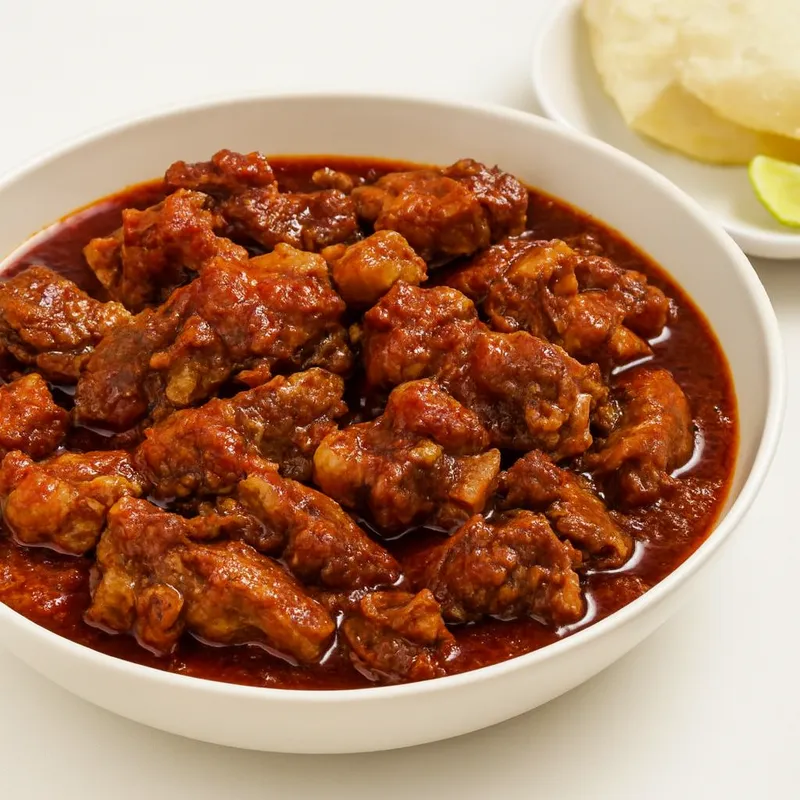
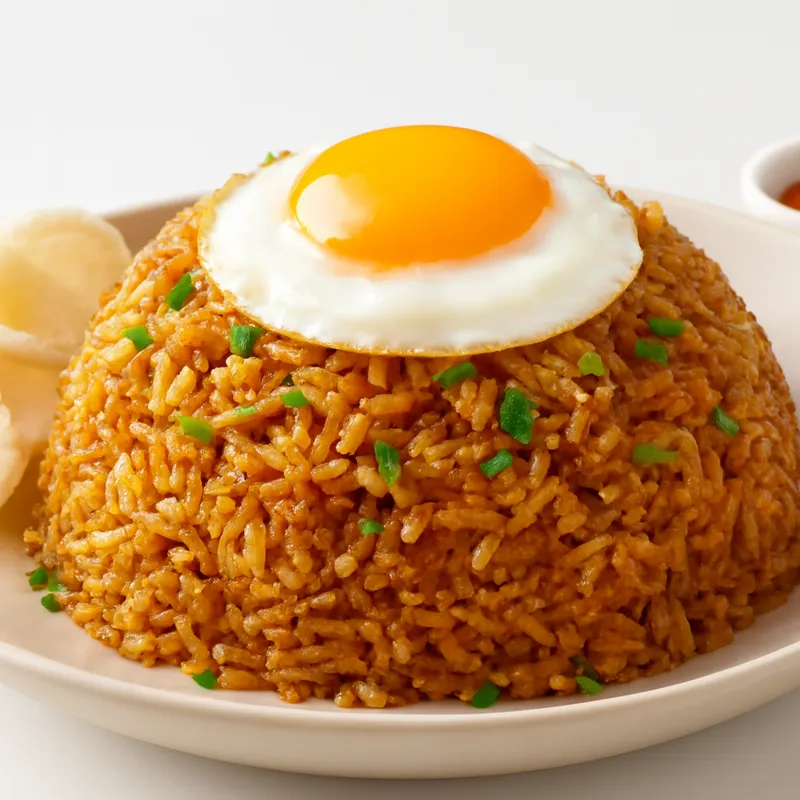
Indonesian dry-braised beef slow-cooked in coconut milk and a complex spice paste until deeply caramelized and tender.
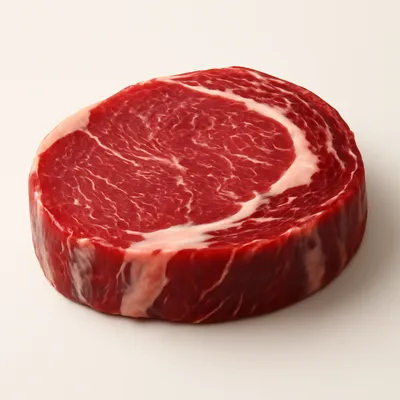



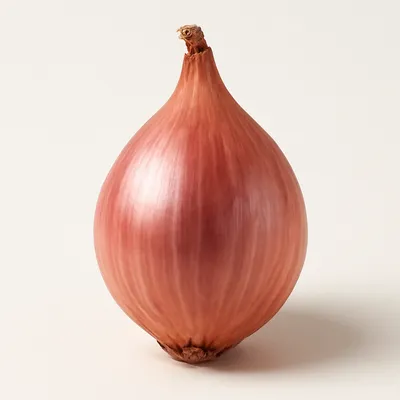
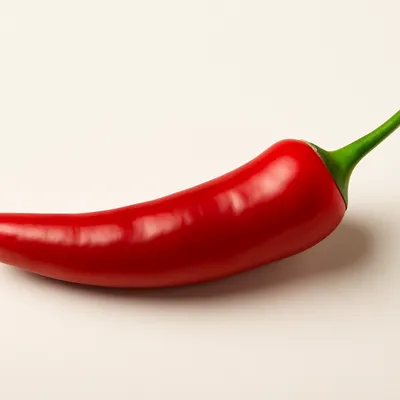
Minangkabau cuisine of West Sumatra. Originally invented as a 30-day-shelf-stable food for travel — the long slow reduction in coconut milk fries the meat in its own oil and leaves it bone-dry, killing bacteria. Pre-refrigeration, this was how Minangkabau merchants carried protein on weeks-long boat trips and overland to Java. Modern rendang is eaten fresh, but the technique is preservation-derived.
Rendang is a celebration of deep flavors, where spices meet tender beef in a dance of richness that envelops the senses.
Beef chunks the color of dark mahogany, no liquid in sight — the coconut milk has reduced to a dry, almost-crispy spice coating. Pull a piece apart; the fibers separate. Lemongrass and galangal up front, then dried chili's slow burn, then toasted-coconut sweetness. With white rice that absorbs nothing because there's nothing wet to absorb.
Three-stage reduction is the signature: gulai (wet curry) → kalio (semi-dry caramelized) → rendang (dry, dark, crispy). Most Western restaurants serve kalio and call it rendang — the difference is 4-6 more hours of cooking. The coconut milk's job changes through the stages: first it's the cooking liquid, then a fat for frying, then a glaze. Stirring constantly in the final hours is the only way to keep it from burning.
Variations
Rendang daging (beef, the canonical) vs rendang ayam (chicken, drier and lighter); Padang-restaurant rendang rests overnight to deepen; Malaysian rendang stops earlier and stays wetter.
On the Palate
Where Rendang sits in the Indonesian flavor cloud
Ingredients
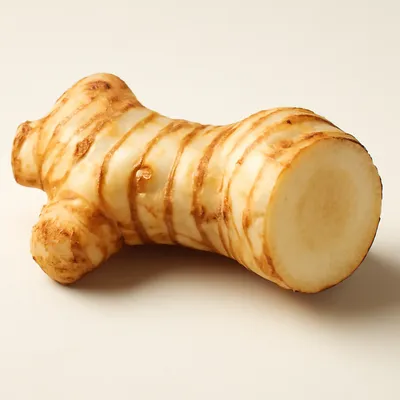

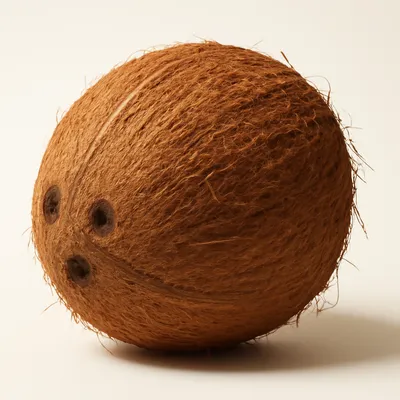




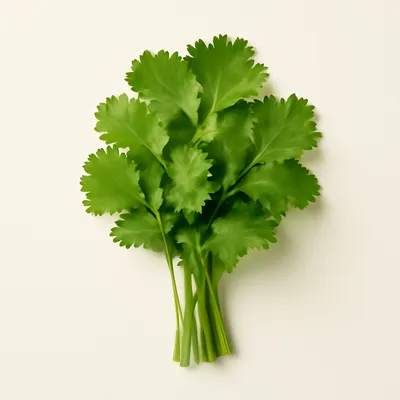
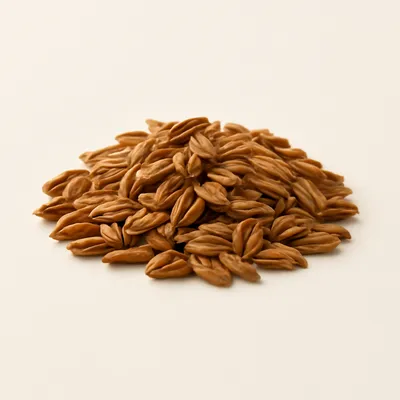

How it's made
4 steps · 2 hours 25 min
- 110 min
In a large, heavy-bottomed pot, combine the coconut milk with finely chopped lemongrass, garlic, shallot, chili pepper, turmeric, and ginger. Stir over medium heat until the mixture is fragrant and the oil begins to separate from the milk, creating a shimmering layer on the surface.
Watch outStir steadily as the coconut milk and aromatics warm; it's ready to add the beef when the mix smells fragrant and a shimmering layer of oil beads up and separates on the surface.
- 215 min
Add the beef, cut into large chunks, to the pot. Stir well to coat each piece with the aromatic coconut mixture. Increase the heat slightly and cook until the beef starts to brown and the spices cling to it.
Watch outTurn the chunks to coat every side, then let them cook until the surfaces lose their raw red and the spice paste starts clinging and browning onto the meat.
- 390 min
Reduce the heat to low and let the beef simmer uncovered. Stir occasionally, ensuring the meat cooks evenly and the sauce thickens into a rich, dark glaze. The liquid should reduce gradually, allowing the meat to fry in its own oils.
Watch outThe sauce should thicken into a dark, glossy gravy and the liquid drop gradually — watch for the meat beginning to fry rather than boil. Stir often; if it catches on the bottom, the heat is too high.
- 430 min
Continue to cook until the beef is tender and the sauce has reduced to a thick, flavorful coating. The oil should have separated completely, leaving the meat glossy and aromatic.
Watch outDone when there's no liquid left at all: the oil has fully separated, the beef is glossy and dark mahogany, the coating clings dry, and a piece pulls apart into separate fibers.
Archive tool suggestions — not reviewed
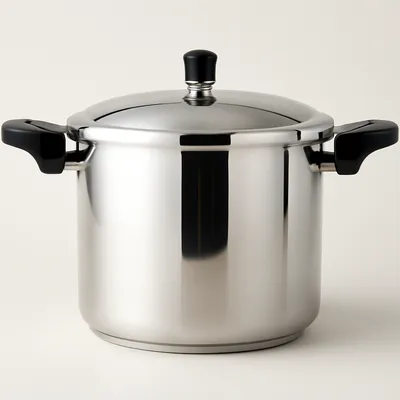
These legacy suggestions have not been evidence-reviewed and are not presented as required tools.