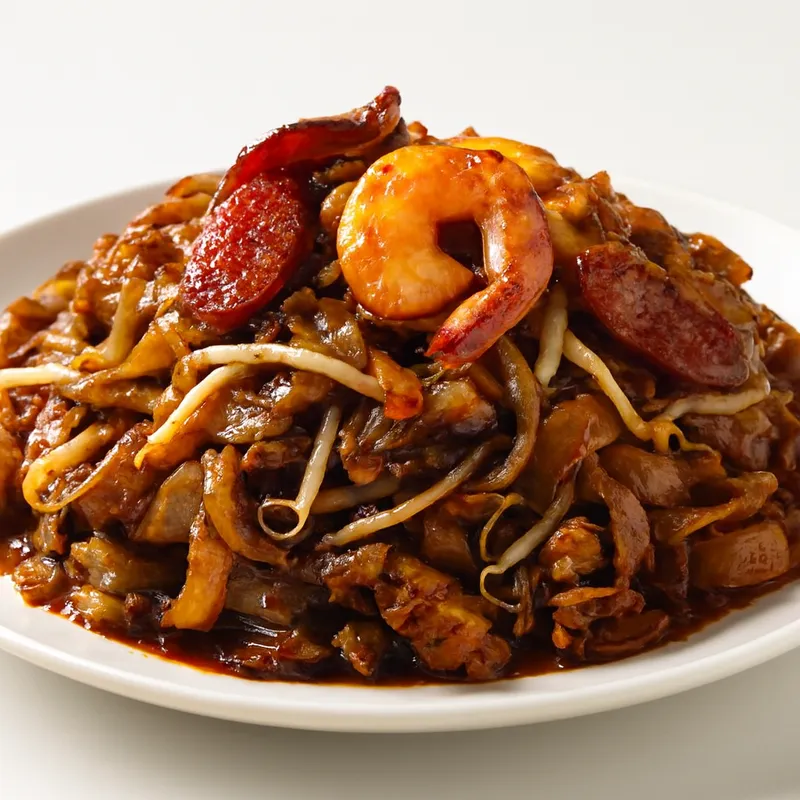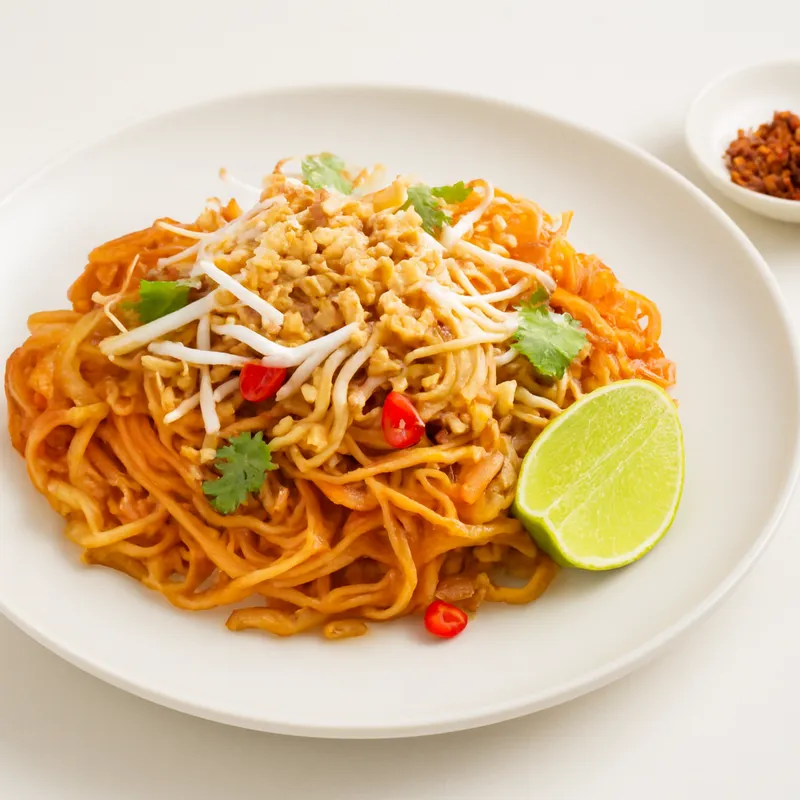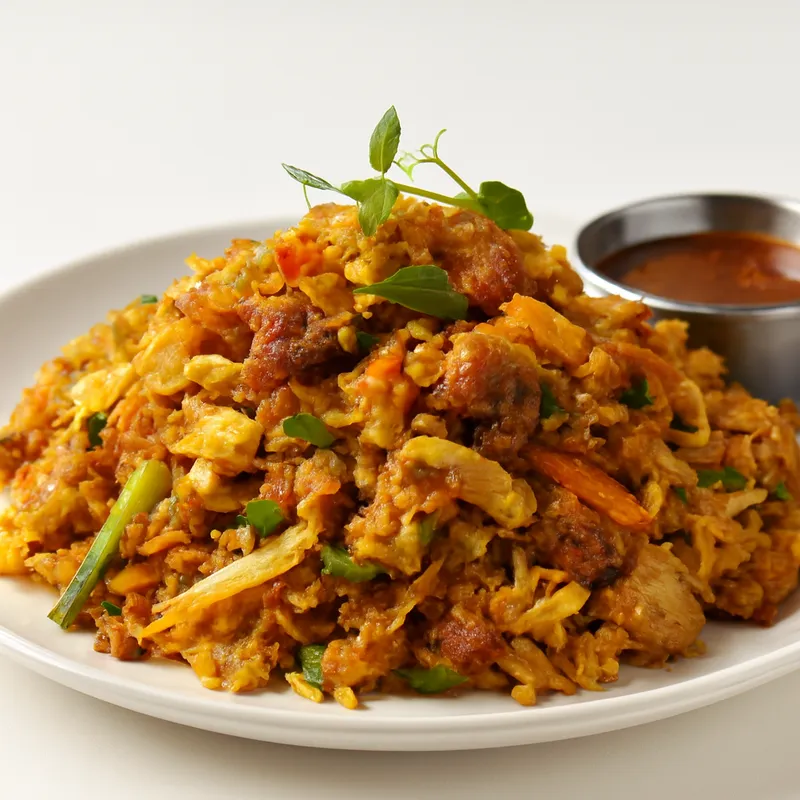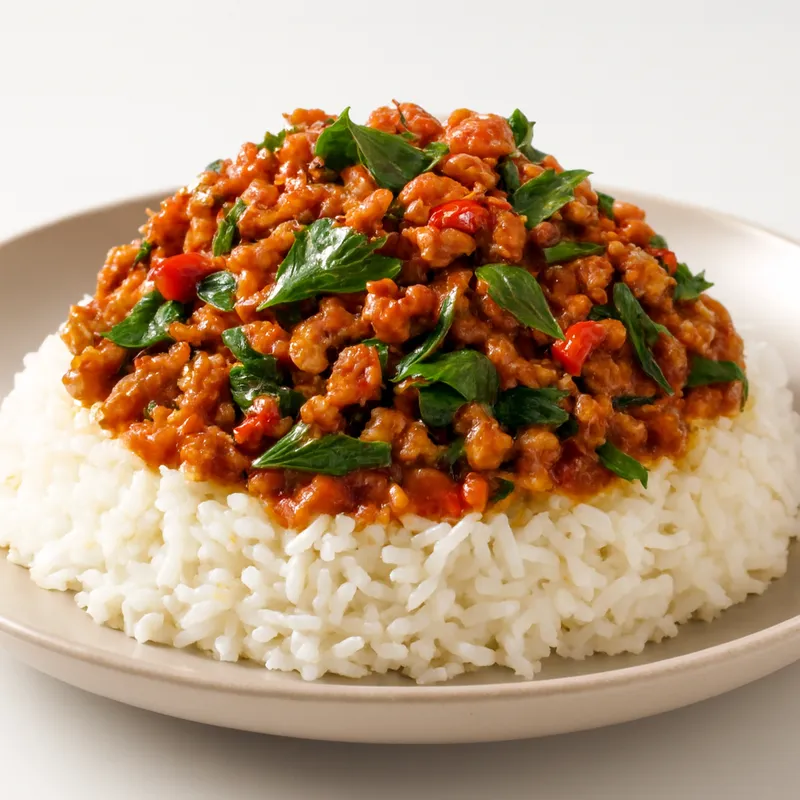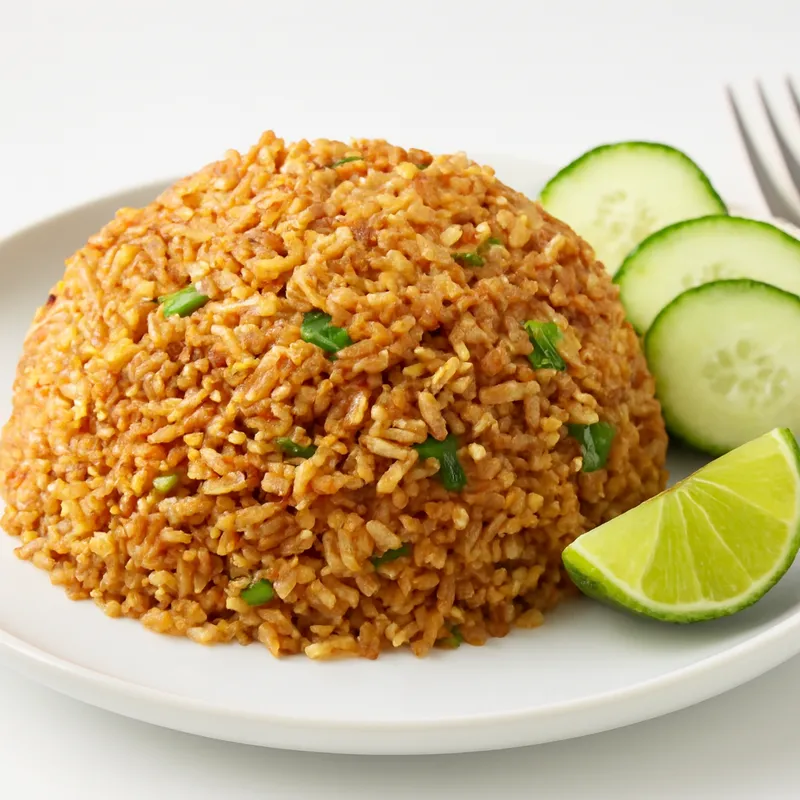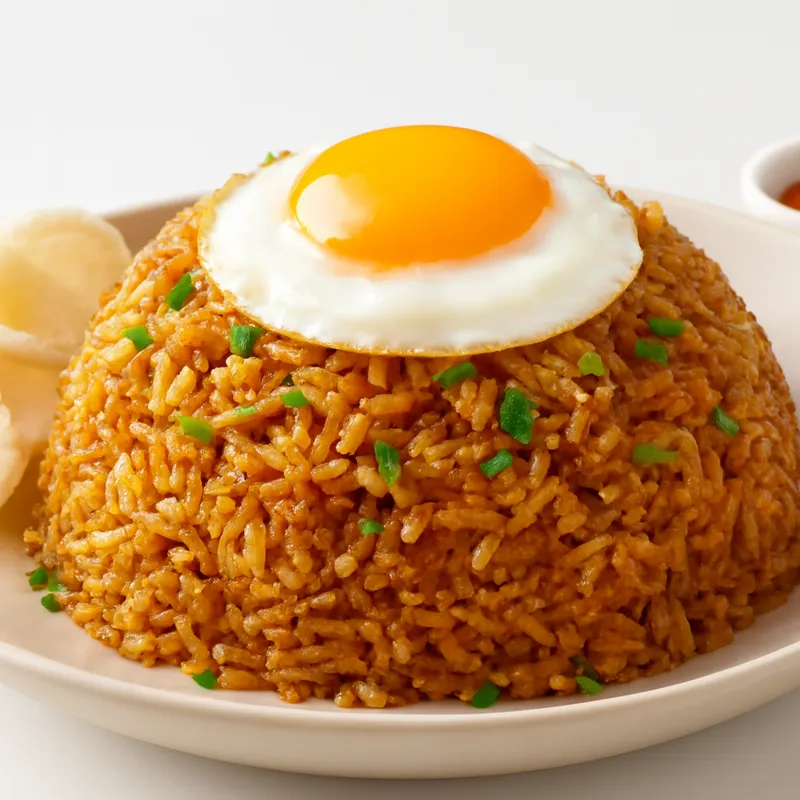


Indonesia's national dish, with Chinese-immigrant origins (Chinese traders and immigrants brought the wok-fried-rice technique to the archipelago (Chinese sources trace fried rice in the region back as far as the 10th century)) but the kecap-manis-and-sambal seasoning makes it unmistakably Indonesian. President Obama, who grew up in Jakarta in the 1960s, has called it "the food I miss most." In 2011 a CNN poll ranked it second-best food in the world, after rendang — also Indonesian.
This fragrant fried rice is a celebration of bold flavors and humble ingredients that come together beautifully.
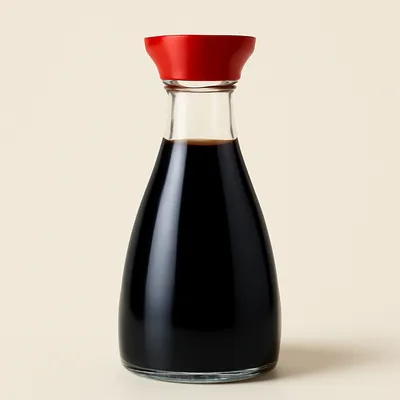
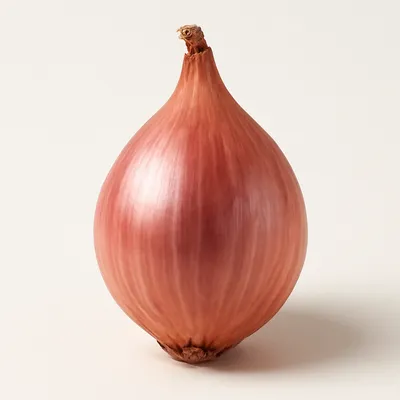
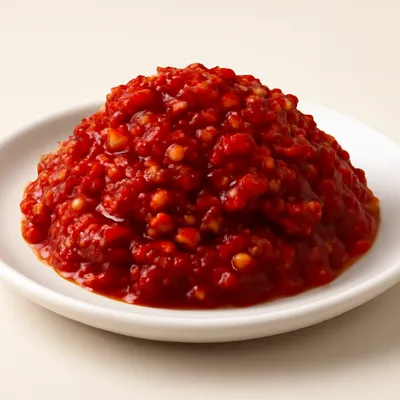
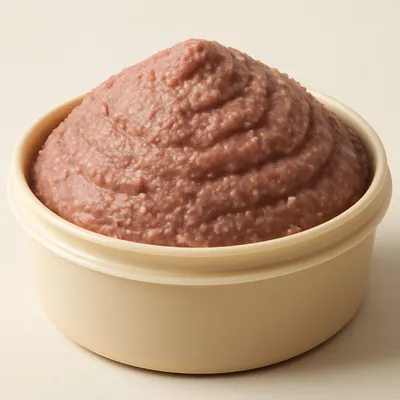
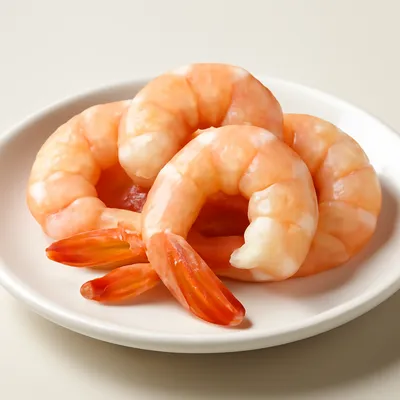
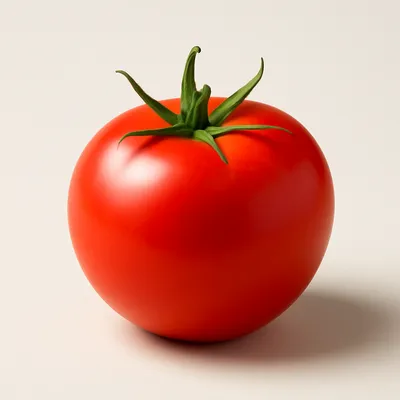
Day-old rice fried in a wok with kecap manis (sweet soy), garlic, shallot, sambal, shrimp paste — comes out dark caramel, dotted with shrimp or chicken or a fried egg on top. With acar (cucumber pickle), prawn crackers, fresh tomato and cucumber. The fried egg's runny yolk is the dressing.
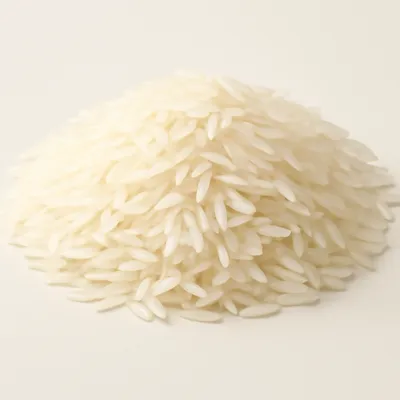
Day-old rice is non-negotiable. Fresh rice has too much moisture; in a wok it steams instead of frying and goes mushy. Refrigerated rice has dehydrated grains that crisp up — every Indonesian household has a Tuesday-rice-Wednesday-nasi-goreng rhythm. Kecap manis (palm-sugar-thickened sweet soy sauce) is the second secret: it's sticky, not liquid, so it coats grain by grain and caramelizes against the wok.
Variations
Nasi goreng kampung (village, with anchovies); nasi goreng pattaya (wrapped in egg crepe); nasi goreng jawa (Javanese, sweeter); Singaporean version skips kecap manis; ikan asin is the salt-fish addition.
On the Palate
Where Nasi Goreng sits in the Indonesian flavor cloud
Fry cold day-old rice, not fresh: chilled grains have dried out and separate into crisp, distinct kernels in the hot wok, while fresh rice is too wet and steams into a mushy clump — then let the sticky kecap manis caramelize against the metal to coat every grain mahogany.
Ingredients




How it's made
5 steps · 19 min
- 13 min
Heat a wok over medium-high heat and add a splash of oil. Once hot, add chopped garlic and shallot, stirring until they turn golden and aromatic.
Watch outFry the garlic and shallot just to fragrant gold, not brown — burnt aromatics turn the whole wok bitter.
- 25 min
Add pre-cooked rice to the wok, breaking up any clumps with the back of a spoon. Stir-fry until the rice is heated through and begins to take on a slight golden hue.
Watch outKeep the wok hot and toss constantly until you hear the grains crackle and see them turn dry and separate, taking on a light golden edge.
- 33 min
Push the rice to one side of the wok. Crack an egg into the empty space, scrambling it quickly with a spatula. Once set, mix it into the rice.
- 43 min
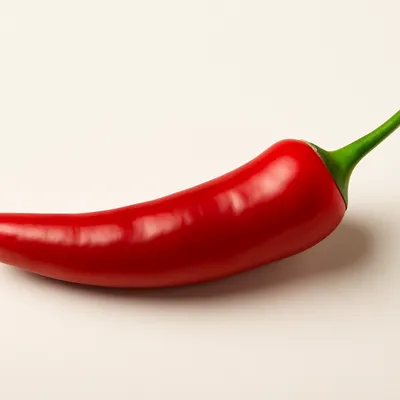
Pour in soy sauce and a touch of chili paste, stirring continuously to ensure each grain is coated and the flavors are evenly distributed.
Watch outStir without stopping as the kecap goes in so every grain gets coated and the sugar caramelizes evenly to mahogany instead of scorching in one spot.
- 55 min
Add vegetables of your choice, stirring until they are just tender but still vibrant. Ensure everything is well combined and heated through.
Watch outDo not overcook the vegetables; they should retain their color and crunch.