
Bengali dried-fish mash from the coast — small sun-dried (and partly fermented) fish, most often loitta (Bombay duck), churi (ribbonfish) or tiny shrimp, are roasted, rehydrated, then pounded with fried onion, garlic, dried chili and raw mustard oil into a coarse paste. Intensely funky, salty and umami — eaten in tiny portions with mounds of plain rice. The most polarizing dish in Bangladeshi cuisine: locals love it, newcomers are challenged by it. Made above all in coastal Chittagong and Cox's Bazar, and treasured by Rakhine and Chakma hill communities; it travels across the Bangladeshi diaspora in vacuum-sealed packets.



Shutki ('dried fish') has been a Bengali coastal-cuisine staple for centuries — small fish (puti, chapa, churi, loitta/Bombay duck) are gutted, salted, and sun-dried on bamboo racks until rock-hard, preserving them for months without refrigeration. Chittagong is the center of shutki production due to its bay-fishing economy. The 'bhorta' (mashed) form is one of dozens of shutki preparations — others include shutki curry, shutki bhuna, shutki vegetables. The dish's pungency is the technical signature; properly fermented and dried shutki develops an intensely savory umami unlike anything else. Diaspora Bangladeshis in London, New York, and Italy ship shutki in vacuum-sealed packets. Sylheti shutki bhorta uses different fish (hidol) and is fermentation-forward rather than salt-cured.
Shutki Bhorta is the ultimate Bengali umami bomb. The first taste hits with a wall of concentrated fish — salty, slightly fermented, sea-deep, with raw mustard-oil pungency riding underneath. Fried onions lend caramelized sweetness and green chili adds front-of-tongue heat, but the real tell is the sheer, almost confronting intensity of the salty-umami funk — the very thing lovers crave and others recoil from. A tiny bite goes a LONG way; taking too much overwhelms the palate. Mixed into plain white rice, each small bite is intensely flavorful yet pulled back into balance by the neutral rice. Bangladeshi cooks say a single jar feeds a family for a week. For first-timers: start with half a teaspoon on rice and build up.
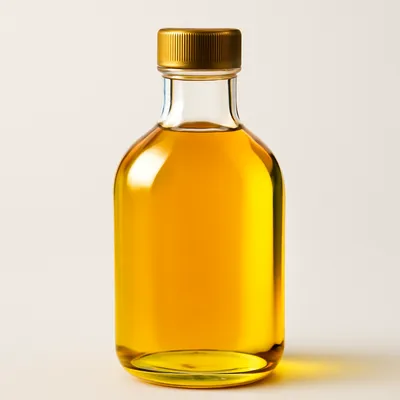
Shutki achieves its intense flavor through two preservation mechanisms: (1) salt curing extracts moisture from the fish via osmosis, concentrating amino acids (especially glutamates) and creating umami; (2) sun-drying further concentrates these compounds, with some fermentation as well (proteolysis breaking proteins into smaller flavor compounds — same family of reactions as garum, anchovies, fish sauce). The rehydration step partially reverses this — water reabsorbs but the concentrated flavor stays. Toasting in dry pan removes excess water + creates new Maillard compounds. The bhorta technique (pounding rather than blending) preserves textural variety. Mustard oil's allyl isothiocyanate is essential — it's the only oil with the pungency to match shutki's intensity.
Variations
Chittagong canonical (Bombay duck, mustard oil, raw + cooked elements); Sylheti hidol bhorta uses fermented fish paste hidol instead of shutki (different production method, different flavor); Khulna version uses ribbon-fish; Calcutta-Bengali version uses puti shutki; modern restaurant 'gourmet shutki' uses less salt + more aromatics for international diners; vegetarian impossibility (the fish IS the dish); the technique applies to many preparations — shutki bhuna (curry-form), shutki vegetables.
On the Palate
Where Shutki Bhorta sits in the Bangladeshi flavor cloud
Ingredients
Serves 4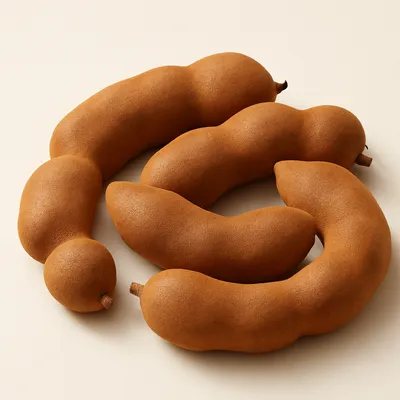



How it's made
10 steps · 30 min active + 15 min waiting
- 11 min
Choose 60g dried Bombay duck (loitta shutki) or chapa fish — available at South Asian grocery stores or online. The fish should be hard, pale-brown, and intensely fishy-smelling (this is correct).
- 216 min
Rehydrate: place the dried fish in a bowl of hot water for 15 min. Drain. Rinse 2-3 times under cold water to reduce excess salt.
- 33 min
Pat the rehydrated fish completely dry. Tear into small chunks (4cm pieces). Pick out any tiny bones if present.
- 44 min
In a dry skillet over medium heat, toast the fish pieces 3-4 min, turning, until lightly dry and aromatic. Set aside.
Watch outToast the rehydrated fish in a dry pan until it smells nutty and looks lightly dried again — this drives off water and builds a deeper savour.
- 510 min
Fry onions: in the same skillet, add 4 tbsp mustard oil + 2 thinly sliced large onions + 6 sliced garlic cloves + 4 sliced green chilies. Fry over medium heat 8-10 min until onions are deep golden-brown.
Watch outFry the onions, garlic and chilies until deep golden-brown, not just soft — the browning is what carries the dish's savoury base.
- 63 min
Add the toasted fish to the onion mixture. Stir-fry 3 min, breaking up any larger pieces with a spatula.
- 73 min
Add 1 tsp turmeric + 1 tsp red chili powder + 1/2 tsp salt + 1 tsp Kashmiri chili powder. Stir 2 min.
- 84 min
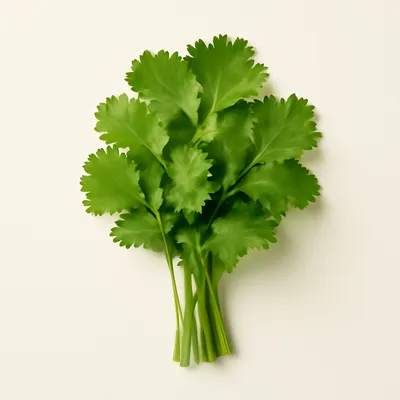
Transfer the entire mixture to a mortar (preferred — bhorta is traditionally pounded, not blended). Add 1 tsp tamarind paste + juice of 1/2 lemon + 2 tbsp finely-chopped fresh coriander. Pound vigorously 3-4 min until you have a coarse-textured paste (some chunks remaining, NOT smooth).
Watch outPound just until you have a coarse paste with visible bits still holding — if it's turning smooth and wet, you've gone too far.
- 91 min
Drizzle 1 tbsp fresh mustard oil over the bhorta as a finishing touch. Mix briefly.
- 102 min
Serve in a small bowl alongside hot steamed white rice. Take a tiny portion (1 tbsp) with each large mound of rice — shutki bhorta is INTENSE; you don't need much. Optional: serve with a wedge of lemon + a slice of raw onion + a green chili.
Archive tool suggestions — not reviewed
These legacy suggestions have not been evidence-reviewed and are not presented as required tools.
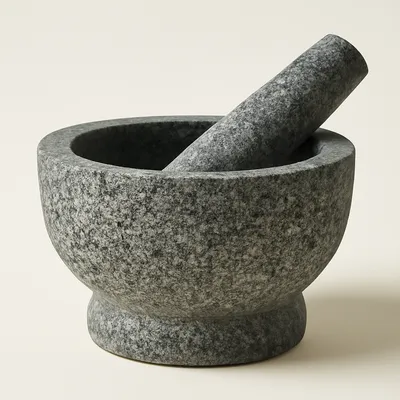
The simplest tool in any kitchen: a heavy bowl and a club to bash things in it. Different cuisines use different stones — Thai cooks pound green papaya in a tall granite mortar (krok hin); pesto Genovese requires the soft-pored Carrara marble; Indian masalas grind down on rough basalt. The bash-don't-cut motion releases volatile oils that a blade keeps sealed in the cell wall.

A heavy, single-piece cast iron pan, 25-30 cm across, weighing 1.5-2.5 kg. Once preheated, the thick mass holds 230°C+ even when a cold steak hits the surface — that's the secret to a deep crust. A well-seasoned skillet (multiple thin layers of polymerized oil baked into the iron) is essentially nonstick, gets better with use, and lasts a century. Lodge skillets from Tennessee have been in continuous production since 1896.


