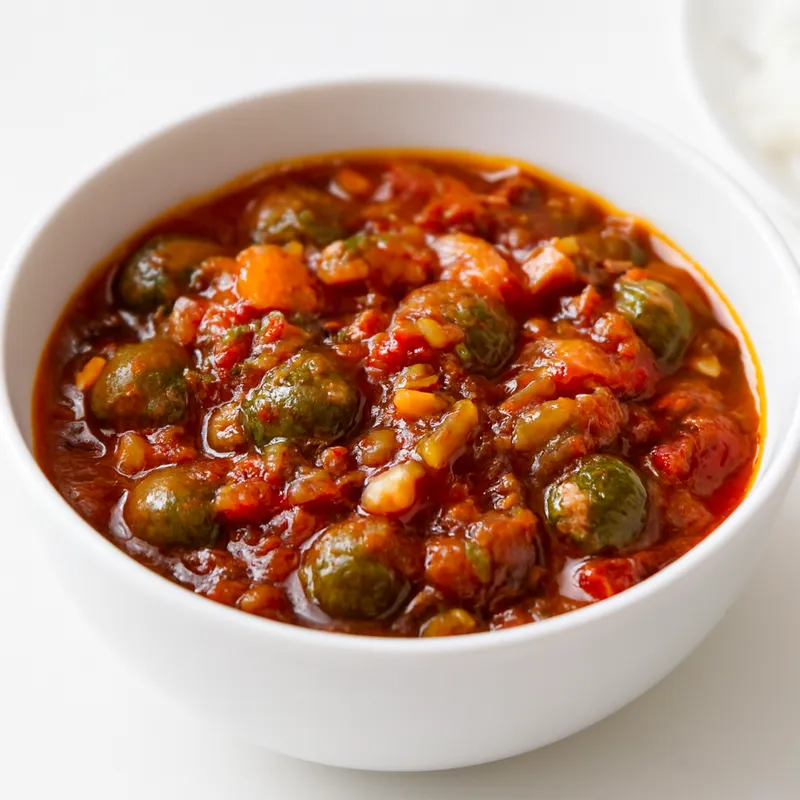
A tangy and spicy chutney made with turkey berries, perfect for pairing with rice or flatbreads.
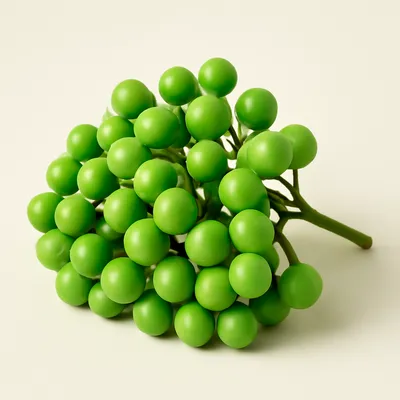



A South Indian (Tamil and Kerala) and Sri Lankan country-kitchen preparation, built on sundakkai (Tamil) or kaattu kathirikkai — turkey berry, a wild Solanum that grows roadside and on hedges across the tropical south. It enters Tamil and Sri Lankan Siddha medicine texts as a digestive and anti-parasitic from at least the medieval period. The chutney is rural everyday food, especially in Chettinad and Jaffna kitchens, and rarely appears in restaurants because the berry isn't farmed at scale.
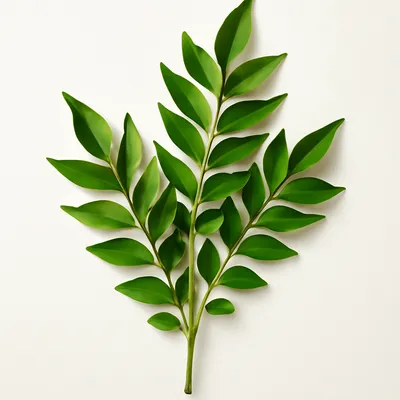
Tamil Nadu sundakkai chutney — the bitter pea-sized berry tempered with mustard seed, urad dal, and curry leaf. The bitterness is the point; sun-drying the berries first is what mellows it without killing it.
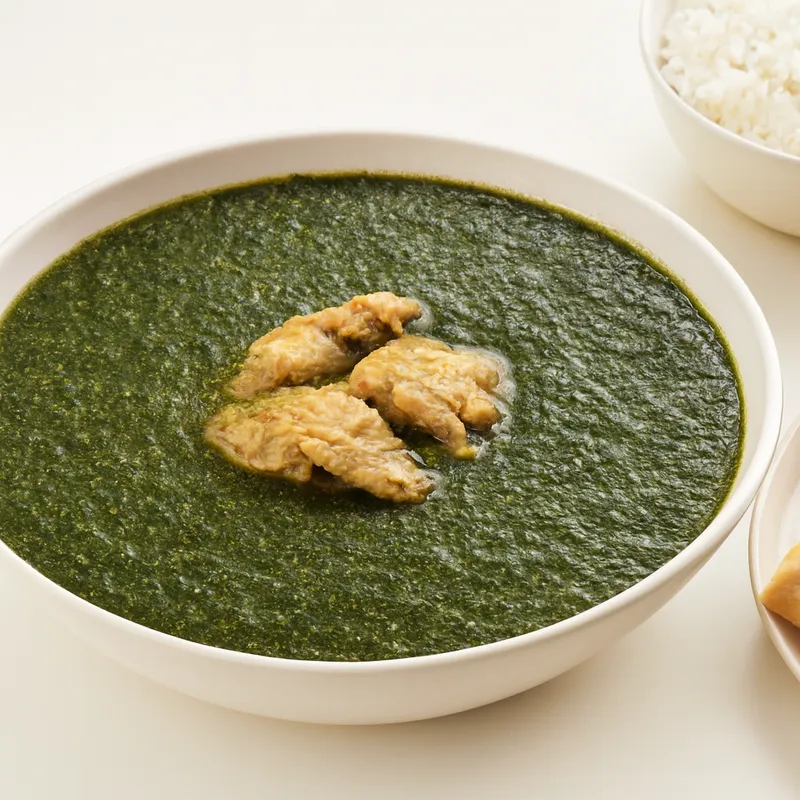
A coarse, dark-green chutney, seeds visible, served in a small mound beside rice. The first taste is bitter — turkey berries (Solanum torvum) carry a distinct alkaloid pungency — then heat from green chili, then garlic and curry leaf. Sour from tamarind or lime cuts through last. Eaten in tiny amounts: a fingertip-mixed bite of rice, or smeared on dosa. Bitterness should be present but not dominant; if it overtakes, the berries weren't blanched first.
Turkey berries contain solasonine and solamargine — Solanum-family glycoalkaloids that taste bitter and are mildly toxic raw. Traditional cooks blanch the berries 2–3 minutes in salted water, then crush; the blanch leaches enough alkaloid to make them edible while preserving the digestive-stimulant properties valued medicinally. Skip the blanch and the chutney is harsh and stomach-irritating; over-blanch and the berries lose their characteristic edge entirely.
Variations
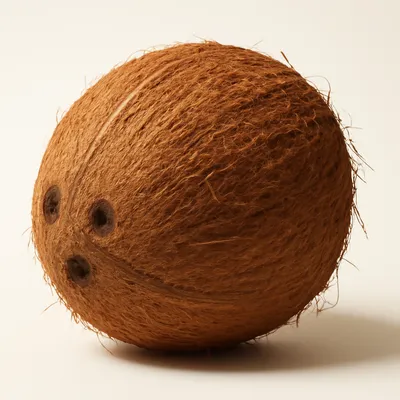
Chettinad version pounds it with red chili and fennel; Iyengar households dry-roast and grind to a podi; Sri Lankan Tamil cooks add coconut and tamarind.
On the Palate
Where Turkey Berry Chutney sits in the Indian flavor cloud
Ingredients






How it's made
5 steps · 17 min
- 15 min
Rinse the turkey berries thoroughly under cold water, then pat them dry. Heat a tablespoon of oil in a pan over medium heat until shimmering, and add the turkey berries. Sauté them until they are blistered and slightly softened, about 5 minutes.
Watch outWait for the oil to shimmer and the berry skins to blister and wrinkle — that blistering is what strips the raw bitterness.
- 23 min
Add sliced onions and grated ginger to the pan. Cook, stirring frequently, until the onions turn translucent and the ginger releases its aroma, about 3 minutes.
- 34 min
Add the coconut and tamarind to the pan. Stir well to combine, allowing the coconut to lightly toast and the tamarind to meld with the other ingredients, about 4 minutes.
Watch outThe coconut should smell toasty and just barely color; the tamarind melts and coats everything glossy.
- 42 min
Sprinkle in the spices and continue to cook, stirring constantly, until the spices are fragrant and the mixture is well combined, about 2 minutes.
Watch outEnsure spices do not burn; lower the heat if necessary.
- 53 min
Transfer the mixture to a blender and blend into a smooth chutney. Taste and adjust seasoning as needed.
Watch outStop blending while it's still coarse and spoonable — a slick purée has gone too far.
Archive tool suggestions — not reviewed
These legacy suggestions have not been evidence-reviewed and are not presented as required tools.