


The skewered grill technique came with Turkic and Persian armies into the subcontinent from the 13th century onward; the Mughal court refined it into the spiced minced version by the 16th century. "Seekh" is Persian/Urdu for skewer. The Pakistani Punjabi version uses more chili and raw papaya as a tenderizer; the Lucknowi (Indian) version stays subtler. Bundu Khan in Karachi is a touchstone house for the Pakistani version; in Lucknow the Awadhi kebab tradition itself is the benchmark, the bulk-cooking culture that grew up around the 18th-century building of the Bara Imambara monument.
Skewered grill brought into the subcontinent by Turkic and Persian armies from the 13th century onward — seekh is Persian/Urdu for skewer. Raw papaya purée (papain) tenderizes; ten-minute hand-kneading develops myosin tackiness so the log hangs on a vertical skewer. No egg, no breadcrumb. Bundu Khan in Karachi and Bara Imambara in Lucknow are the reference houses.
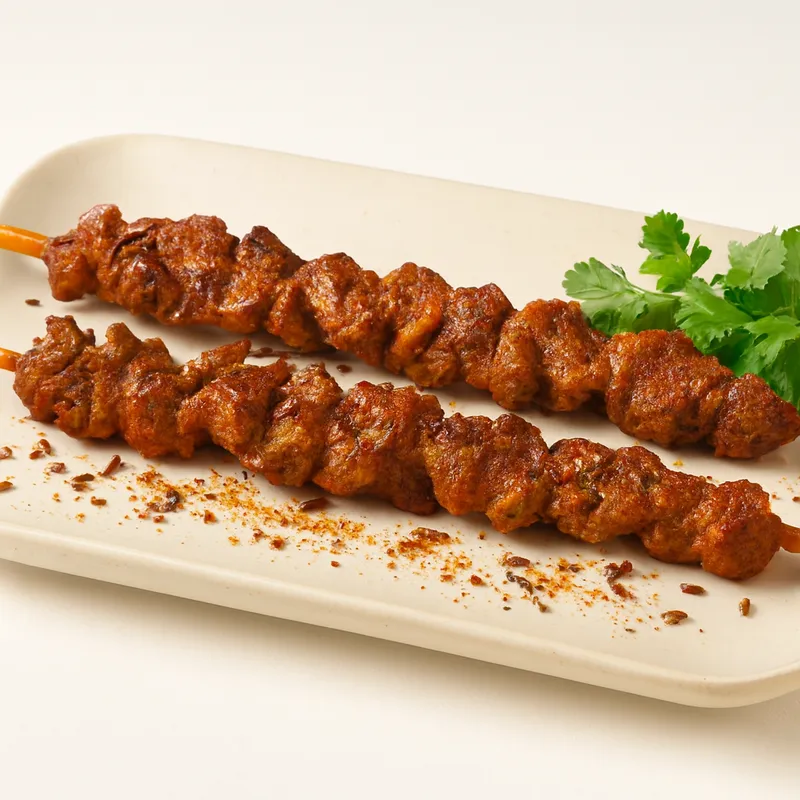
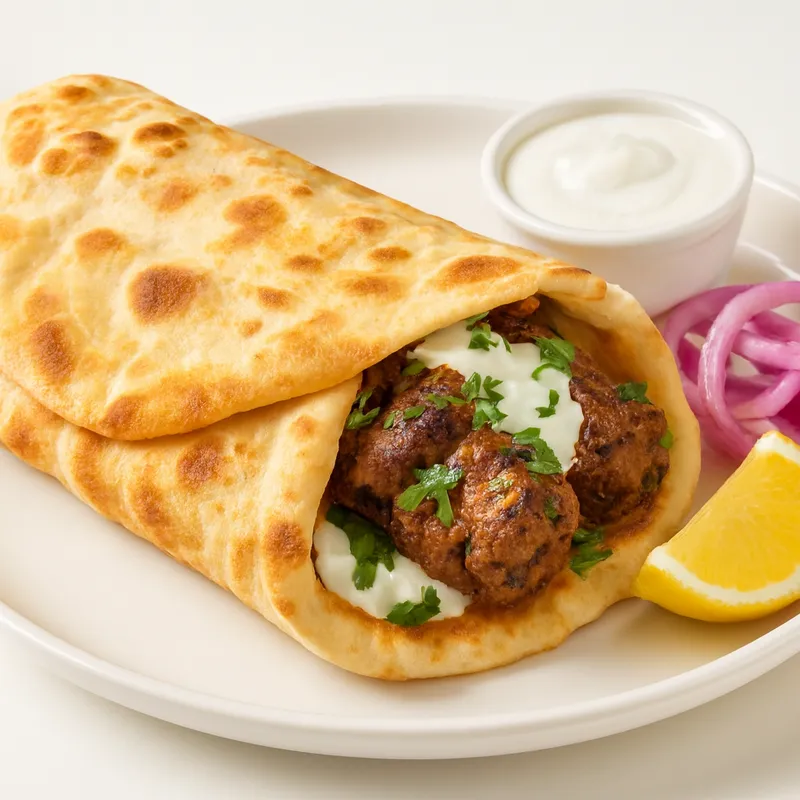
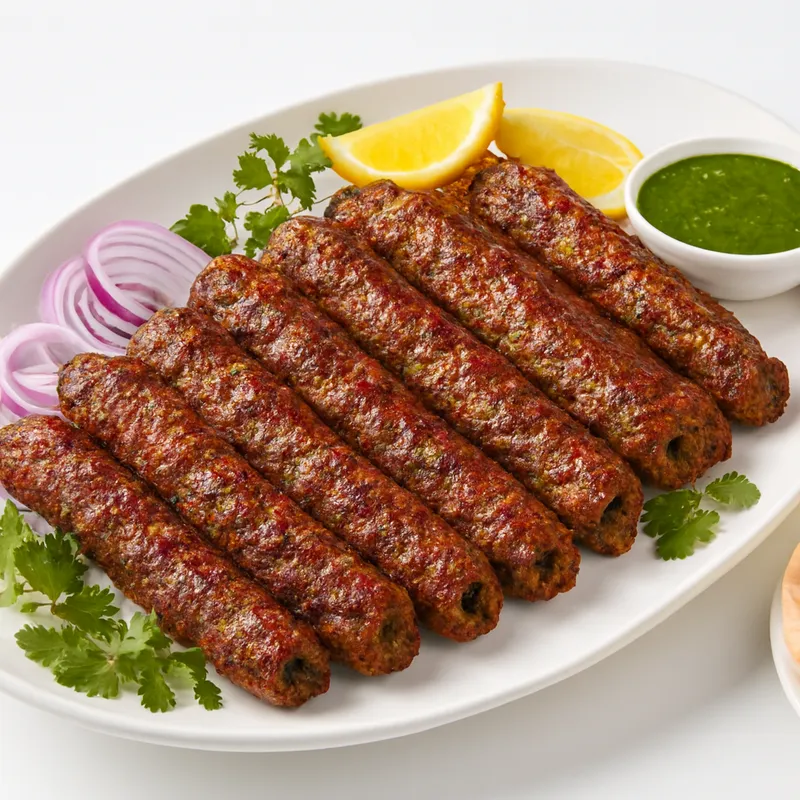
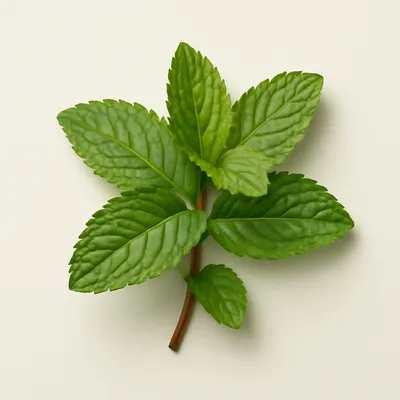
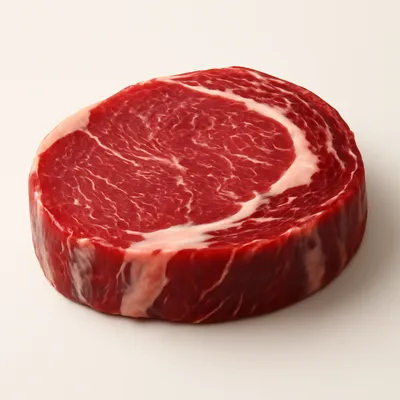
Cigar-shaped logs of minced lamb or beef, charred outside, pink inside, slid off a metal skewer onto naan. The meat clings to the skewer because it's been kneaded — not just mixed — until the proteins go tacky. Eaten with raw onion, mint chutney, and a wedge of lemon. Crumbling on the skewer means the cook didn't knead enough or skipped the rest in the fridge.
Raw papaya purée or papain is the tenderizer: it dissolves the connective tissue in cheap mince so the kebab stays moist on the high heat of an open coal fire. Equally critical is hand-kneading the meat for ten minutes — that develops the myosin tackiness that holds the log on a vertical skewer over flame. The Pakistani Punjabi version typically does add a little roasted gram flour (besan) to bind and absorb moisture, and often an egg; purist cooks lean instead on the protein tackiness alone.
Variations
Pakistani Punjabi (more chili, more papaya); Lucknowi (subtler, Bara Imambara reference); Bohra-style with mint and cilantro pounded in; Karachi Bundu Khan version (the late-night standard, larger logs).
On the Palate
Where Seekh Kebab sits in the Pakistani flavor cloud
Ingredients


How it's made
4 steps · 40 min
- 110 min
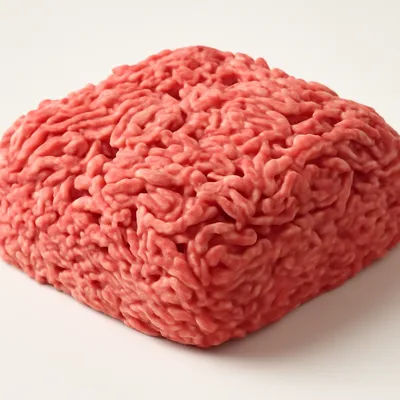
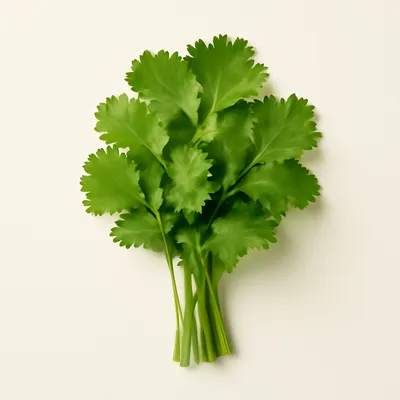
In a large bowl, combine minced beef with finely chopped onion, cilantro, cumin, ginger, and garlic. Mix thoroughly until the spices are evenly distributed.
Watch outKeep kneading past the crumbly stage until the mince is smooth, sticky and cohesive — that's when it'll grip the skewer.
- 210 min
Shape the mixture into long, cylindrical kebabs around metal skewers, pressing firmly to ensure they hold their shape.
Watch outPress the log firmly and evenly around the skewer with a wet hand, no cracks, so it doesn't split over the flame.
- 315 min
Preheat your grill to medium-high heat. Place the skewers on the grill, turning them occasionally to ensure even cooking and a charred exterior.
Watch outTurn only once each side has set and taken color — flip a soft, unset log and it tears and falls.
- 45 min
Once cooked through and nicely charred, remove the kebabs from the grill and let them rest for a few minutes before serving.
Watch outResting allows the juices to redistribute, preventing dryness when you cut into the kebabs.
Archive tool suggestions — not reviewed
These legacy suggestions have not been evidence-reviewed and are not presented as required tools.