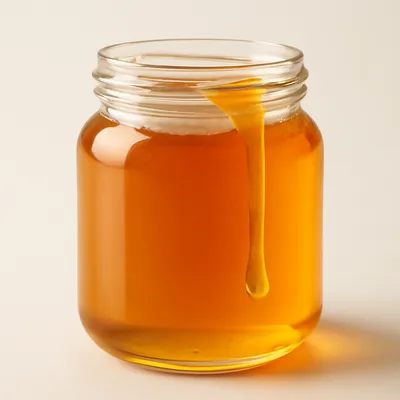
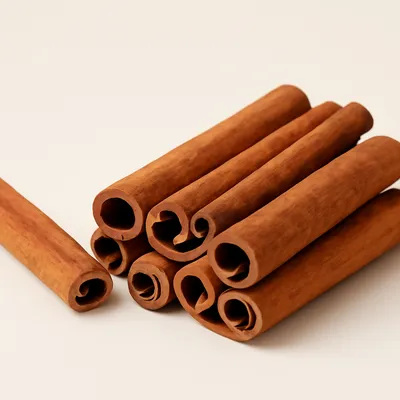
The Greek take on the pan-Eastern-Mediterranean layered pastry: dozens of paper-thin phyllo sheets brushed with butter, packed with a ground-walnut filling spiced with cinnamon and clove, baked crisp, then soaked in honey syrup. It differs from the Turkish version in three ways — walnuts rather than pistachios, honey rather than a plain sugar syrup, and the warm cinnamon-and-clove spicing. A whole clove is often pressed into the centre of each cut diamond.




Layered nut pastries of this family are claimed by many cuisines and reached their refined form in the kitchens of Ottoman Istanbul, from where regional versions diverged across the former empire. The argument that the dish descends in an unbroken line from ancient Greek honey-and-nut pastries is popular but not securely documented, so it is best treated as folk etymology rather than established history. What is distinctive and verifiable is the Greek profile itself: the standardisation around walnuts, a honey-based syrup, and cinnamon and clove, which sets Greek baklava apart from the pistachio-and-sugar-syrup Turkish style. The often-repeated claim of exactly 33 layers, said to honour the years of Christ's life, is a charming tradition rather than a fixed rule.
A diamond lifted from the tray shatters at the top into brittle, butter-laced layers, then turns dense and syrup-heavy toward the walnut core. The honey is the dominant note — floral and resinous where a sugar syrup would be neutral — backed by cinnamon and a sharp prick of clove. It is intensely sweet and sticky, cut into small pieces and eaten with strong coffee. Day-old baklava, once the syrup has fully migrated, is better than fresh.
Two heat-versus-temperature rules govern it. First, every phyllo sheet must be brushed with butter so the layers fry apart in the oven instead of fusing into a brick; clarified butter browns less and keeps the layers pale and crisp. Second, the syrup and pastry must meet at opposing temperatures — cold syrup onto hot baklava, or the reverse — so the honey is drawn deep into the layers without making them limp. Cutting the diamonds before baking, all the way to the base, is essential so the syrup can run down every channel.
Variations
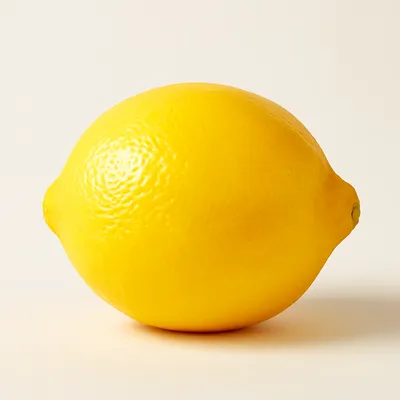
Walnut is standard, but some northern and island versions blend in almonds; a few use a mix of walnut and almond. The spice can extend to a little orange or lemon zest in the syrup. Saragli is a rolled variant, with phyllo wrapped around the nut filling into logs rather than layered flat. Sweetness and honey-to-sugar ratio vary widely between households and bakeries.
On the Palate
Where Baklava (Greek) sits in the Greek flavor cloud
Ingredients
Serves 20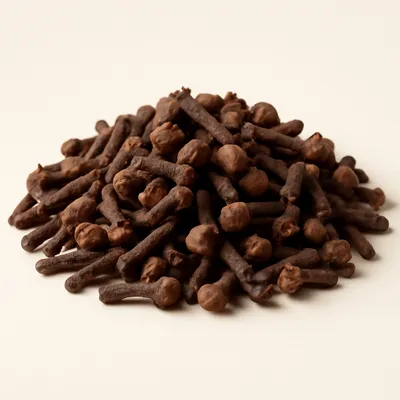
How it's made
6 steps · 1 hour 15 min
- 110 min
Mix the ground walnuts with sugar, cinnamon, and ground clove for the filling.
- 215 min
Brush a pan with butter and lay down about half the phyllo sheets, buttering each one.
Watch outBrush every phyllo sheet with butter — this is what makes the layers fry apart into flakes in the oven instead of fusing into one dense brick.
- 310 min
Spread the walnut filling evenly, then layer the remaining buttered phyllo on top.
- 410 min
Cut all the way through into diamonds and press a whole clove into each if using.
Watch outCut the diamonds all the way down to the base before baking — the channels are how the syrup runs into every layer later; a shallow score leaves the middle dry.
- 575 min
Bake at 160C until deep golden and crisp, about 1 hour 15 minutes.
- 615 min
Simmer honey, sugar, water, and a strip of lemon peel into a syrup, then pour the hot or cold syrup over the baklava at the opposite temperature and rest several hours.
Watch outPour hot syrup over cold baklava, or cold syrup over hot — matching them at opposing temperatures draws the syrup deep in; the same temperature both ways leaves it limp on top.
Archive tool suggestions — not reviewed
These legacy suggestions have not been evidence-reviewed and are not presented as required tools.


