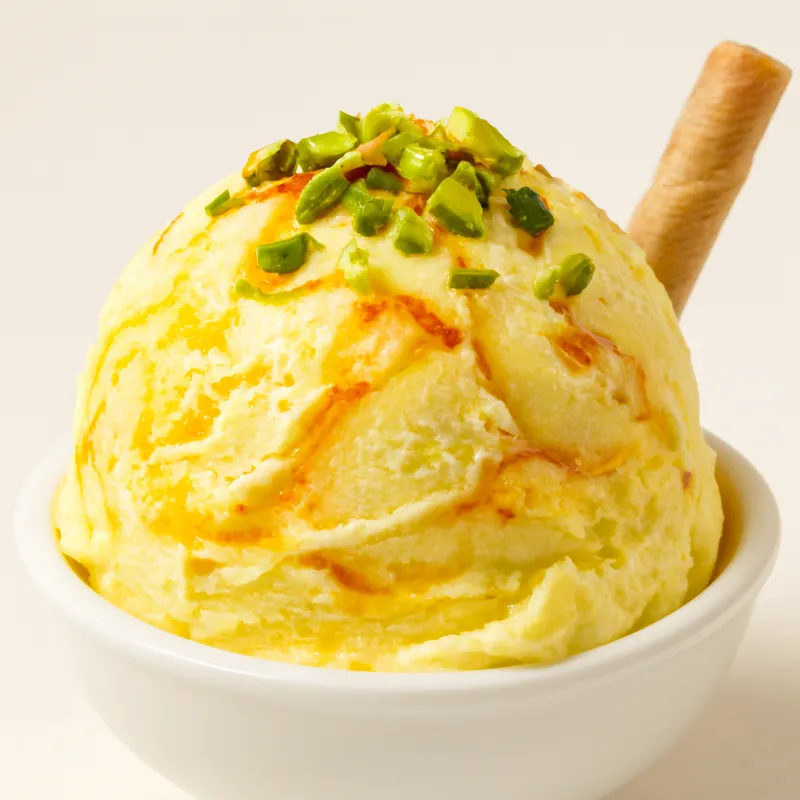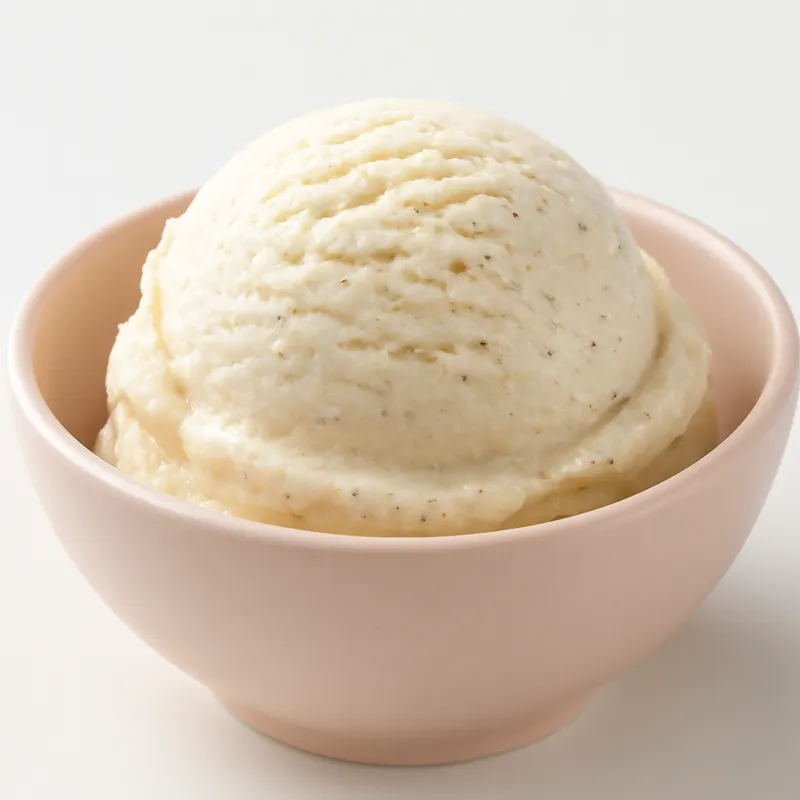
A dense, hand-churned milk ice cream from Xinjiang — made from milk, egg, and sugar, with a smooth, slightly chewy texture — sold as a summer street treat.
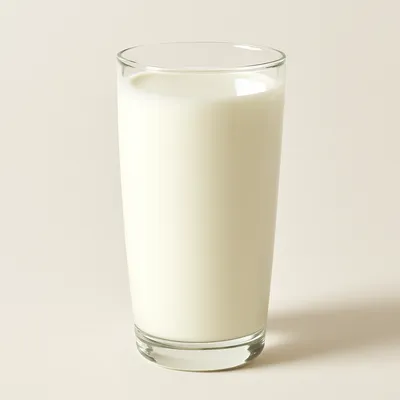

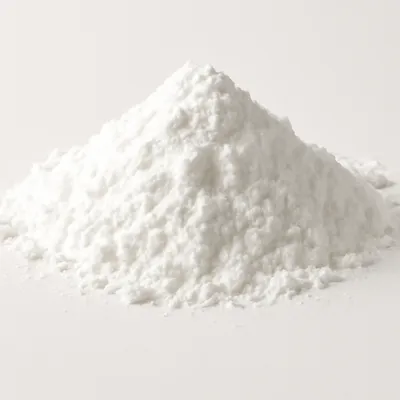
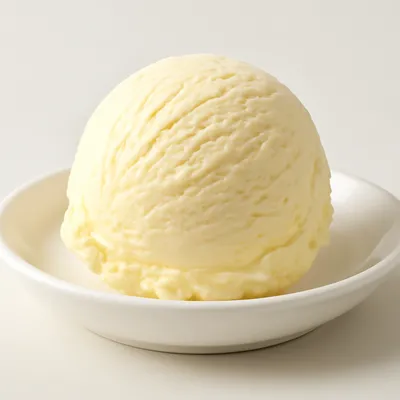
A century-old hand-churned milk ice from Xinjiang, locally often called by a Russian loan-name ("morozh"). It is made without modern refrigeration: a copper canister is set inside a large wooden bucket, the gap packed with crushed ice and coarse salt that drops the temperature below freezing, and the vendor spins the canister while pouring in the milk mixture, scraping it with a wooden board as it sets. The method is recognized as intangible cultural heritage in the Ili (Yili) region and is sold from carts and stalls across Xinjiang — from Hotan and Kashgar in the south to Yining and Urumqi — through the summer.
Silk Road dairy ice with technical kin to Persian bastani and Turkish dondurma. Cooked-in starch is what gives the chew — it builds a polymer net that traps water and resists ice crystals; skip the starch and you get gritty milk popsicle.
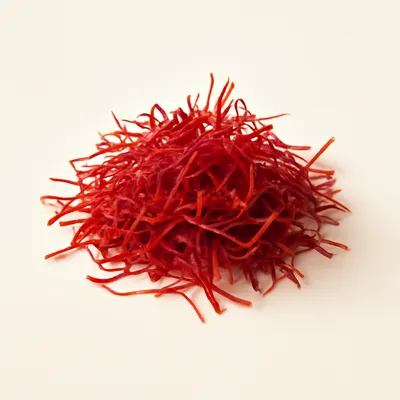
A rich milk ice with a dense, slightly chewy, elastic texture — heavier and more milk-forward than industrial ice cream, and slower to melt (good versions run above 12% milkfat). The vendor scrapes it from a deep canister with a wooden board, serving ribbons into paper cups, sold by the portion or by weight. It tastes plainly and fully of milk and a clean sweetness, with no added water, flavoring, or coloring; some southern stalls fold in mountain-flower honey, and a few add a hint of rosewater or saffron.
The dense, slightly chewy texture comes from high milkfat, egg, and constant hand-churning rather than any additive. Coarse salt mixed with ice drops the bucket below freezing, so the milk mixture crystallizes fast against the cold copper wall; spinning and scraping keep the ice crystals tiny, yielding a soft elastic mass instead of gritty granita. Fat from the egg and rich milk traps air and water, building the heavy body — which is how it stays smooth with no water and no stabilizers. (Turkish dondurma, by contrast, gets its cuttable stretch from sahlep orchid root and mastic.)
Variations
Yili and Tacheng versions are the most milk-forward, often enriched with mountain-flower honey for a heavier mouthfeel; southern stalls in Hotan and Kashgar keep it plainer — straight milk-and-sugar, scraped to order, sometimes scented with a little rosewater or saffron. Among Silk Road milk ices, Turkish dondurma instead thickens with sahlep orchid root and mastic for a gummier stretch you can cut with a knife.
On the Palate
Where Uyghur Ice Cream sits in the Uyghur flavor cloud
Ingredients
How it's made
5 steps · 52 min active + 4 hours waiting
- 15 min
In a medium saucepan, combine milk and sugar over medium heat. Stir until the sugar has dissolved completely, and the milk is warm to the touch.
Watch outEnsure the milk does not boil to prevent scorching.
- 25 min
In a small bowl, mix cornstarch with a bit of cold milk to form a smooth slurry. Gradually add this to the warm milk, stirring constantly to avoid lumps.
Watch outStir continuously to prevent the cornstarch from clumping and forming lumps.
- 37 min
Continue to cook over medium heat, stirring constantly, until the mixture thickens slightly and coats the back of a spoon. The aroma should be sweet and creamy.
Watch outDo not overcook, as it can lead to a grainy texture.
- 430 min
Remove from heat and allow the mixture to cool completely. Once cooled, churn in an ice cream maker until thick and creamy.
- 55 min
Transfer the churned ice cream to a container and freeze until firm. The texture should be smooth and scoopable.
Watch outEnsure the ice cream is fully frozen before serving to maintain texture.
Archive tool suggestions — not reviewed
These legacy suggestions have not been evidence-reviewed and are not presented as required tools.