Krüstchen is a rustic tavern plate of the Rhineland and the wider Ruhr-Sauerland belt: a thin breaded pork Schnitzel laid over a slice of toasted or pan-fried bread (in the Rhineland often a halved bread roll fried crisp in fat), crowned with a fried egg. It comes with fried potatoes, chips or potato salad and a few leaves of sharp salad, and a pickle on the side. The name points to the crust — the crisp fried bread base under the cutlet — and the dish is comfort food rather than haute cuisine, the kind ordered with a glass of beer in a Brauhaus.

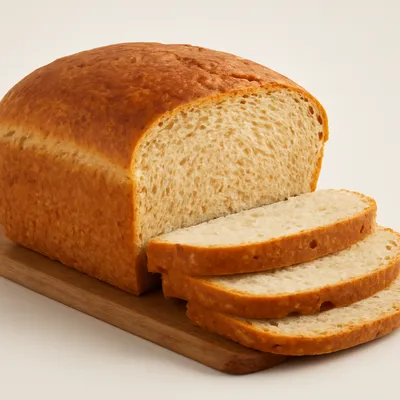




Krüstchen is the regional name, across the Rhineland, the Ruhr, the Sauerland, the Bergisches Land and the Siegerland, for a small breaded cutlet served on a fried slice of bread with a fried egg. The word derives from the bread crust (Brotkruste/Brotkante) that forms the base. A related term, 'Kurstgin', is documented in Cologne as far back as the 16th century, recorded there as an evening fasting dish. The modern plate is a Brauhaus and Gaststätte standard whose exact origin as a restaurant dish is unrecorded; it belongs to the everyday tavern repertoire rather than to any single cook or town.
You cut down through three layers at once: a crisp egg with a soft yolk that runs into the crumb, the thin crackly schnitzel under it, and the fried bread base soaked with meat juices and yolk at the edges. The crumb coating shatters; the pork inside is thin and tender. Fried potatoes add a second crunch, the pickle and salad cut the fat. Eaten with a knife and fork, the runny yolk acting as the sauce.
Everything here is dry-heat browning. The schnitzel is pounded thin so it cooks through in the minute or two it takes the breadcrumb shell to brown — the crumbs and the egg-and-flour coating dehydrate and undergo the Maillard reaction in hot fat, sealing a crisp armour around the meat. The bread base is fried in the same fat so its surface starch crisps and it can carry the cutlet without going soggy from the gravy. The egg is fried hard at the white but pulled while the yolk is still liquid, so it stays a sauce; salt on the hot yolk and crust ties the layers together.
Variations
The bread base shifts by region — rye bread (Roggenbrot) in the Sauerland and Ruhr, white toast in the Rhineland, a halved fried roll in Cologne pubs. Sides follow suit: Pommes in the Sauerland, Röstkartoffeln in the Ruhr, Kartoffelsalat in the Rhineland. In and around Cologne a 'Krüstchen warm' or 'Krüstchengulasch' is instead a small portion of goulash with a Röggelchen roll. The pork cutlet is sometimes swapped for a Jägerschnitzel with mushroom gravy or a vegetarian version on a thick grilled vegetable slice.
On the Palate
Where Krüstchen sits in the German flavor cloud
Ingredients
Serves 2

How it's made
6 steps · 30 min active + 5 min waiting
- 18 min
Pound the pork cutlets thin between two sheets of plastic, then season with salt and pepper.
- 26 min
Dredge each cutlet in flour, then beaten egg, then breadcrumbs, pressing the crumbs on firmly.
Watch outPress the crumbs on firmly so the coating seals the meat — a loose crust falls off in the fat and lets the thin cutlet dry out.
- 38 min
Heat plenty of lard or oil in a pan and fry the cutlets 2-3 minutes per side until the crust is deep golden and crisp; drain.
- 46 min
In the same fat, fry the halved bread roll or bread slices cut-side down until crisp, and the sliced potatoes until browned.
- 54 min
Fry the eggs sunny-side up, keeping the yolks runny and the whites just set.
Watch outFry the eggs until the whites just set but the yolks stay runny — that liquid yolk is the sauce that ties the layers together.
- 63 min
Set each schnitzel on its fried bread, top with a fried egg, and serve with the potatoes, salad and a pickle.
Archive tool suggestions — not reviewed
These legacy suggestions have not been evidence-reviewed and are not presented as required tools.