
The most classic of Cantonese clay-pot rice: long-grain rice cooked in a lidded earthenware pot and topped, as the rice dries, with Cantonese cured sausage (lap cheong) and liver sausage, whose fat renders down into the grains. The defining feature is the crust — a sheet of golden, crackling scorched rice (饭焦) that forms against the hot pot wall and base. It is served in its own pot, doused with a sweet-savoury soy sauce stirred through at the table so every grain glistens.




Clay-pot rice (煲仔饭) is a Cantonese cooking method from Guangdong and Hong Kong in which rice and its toppings are cooked together in a small earthenware pot (瓦煲) over direct flame, so the rice takes on the smoky 'wok breath' and a crisp crust. It is winter street and dai pai dong food above all, cooked to order in rows of pots over fierce burners. The cured-meat version is its signature because Cantonese preserved meats — lap cheong (腊肠) and liver sausage (润肠), air-dried in the cool, dry months — are themselves a winter specialty, and their rendering fat and wine fragrance suit the dry-cooked rice perfectly. It has no single inventor; it is a regional staple rather than a dish of one author, though its strong association is with the cold-season 'lap mei' (腊味) of Guangdong.
Three textures in one pot. The body of the rice is dry and fluffy, each grain separate and glossed with rendered sausage fat and soy — not wet or porridgy. The cured meats give the perfume: lap cheong is firm, sweet and faintly winey, the liver sausage darker and richer, and their fat soaks the grains beneath them with savour. Then the prize: the 饭焦, a continuous sheet of scorched rice crust against the pot wall, golden-brown, brittle and crackling, that you pry up in shards — nutty, toasty, a little chewy at the edges. The sweet soy stirred through ties it together. A good pot has an even, unbroken crust and no burnt-bitter smell; pushed too far, the crust blackens and turns acrid.
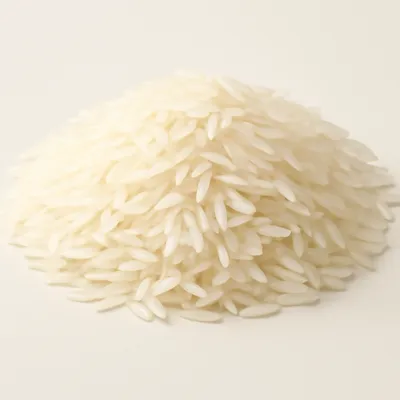
It is a study in controlled drying. Long-grain rice (the slender, less-sticky 丝苗米 is preferred for separate grains) is washed and cooked with a measured amount of water — about 1 part rice to 1.5 parts — first over high heat to boil it off, then dropped to low as the surface dries into a honeycomb of steam holes. The earthenware pot is key: it heats slowly and evenly and holds heat hard, so the rice against the wall and base keeps cooking after the water is gone, the surface starch dehydrating and lightly caramelizing into the golden 饭焦 crust. A trick at this stage is to drizzle oil down the inside of the pot, where it runs to the base and fries the rice into a crisper, more even crust. The cured meats are laid on once the rice surface dries, so their rendered fat seeps down without steaming the grains soggy; the pot is then left off the heat, covered, to finish in its own retained heat. The finishing soy — light and dark soy, sugar, a little stock — is poured on at the end and tossed through so it coats without drowning the rice.
Variations
The cured-meat pot is the classic, but the same method carries many toppings: marinated chicken (especially with Chinese mushroom), spare ribs with black bean, eel, frog, salted fish with pork, or a beef patty with a raw egg cracked on top to set in the heat. Within the lap mei version, the mix is to taste — lap cheong alone, or with liver sausage, cured pork belly (腊肉) and sometimes cured duck. Some lay a few leaves of green vegetable on at the end for colour. The sweet soy sauce is itself a point of pride, each shop guarding its own blend; the crust can be coaxed thicker or thinner by how long the pot is held over the flame.
On the Palate
Where Clay-Pot Rice with Cured Meat sits in the Chinese flavor cloud
Ingredients
Serves 2

How it's made
7 steps · 20 min
- 125 min
Rinse the long-grain rice until the water runs fairly clear; drain and put in an earthenware clay pot with water at about 1 part rice to 1.5 parts water. Soak 20–30 minutes.
- 25 min
Slice the lap cheong and liver sausage on the diagonal.
- 312 min
Cover and bring the pot to a boil over high heat, then lower to a gentle heat as the surface dries and forms steam holes.
Watch outBring it to a boil on high, then drop to low the moment the surface dries and pocks with steam holes — those holes tell you the water's nearly gone and it's time to ease off.
- 41 min
Drizzle a little oil around the inside wall of the pot so it runs to the base — this helps form a crisp crust.
Watch outDrizzle oil down the inside wall so it runs to the base — that's the trick that crisps the golden 饭焦 crust against the pot.
- 510 min
Lay the sliced cured meats over the rice, cover, and cook on low until the rice is dry and a crust has formed against the base and wall.
Watch outKeep it on low until the rice is dry and a crust has formed against base and wall — pull it early and there's no 饭焦 to pry up.
- 610 min
Turn off the heat and leave the covered pot to sit 10 minutes, finishing in its own heat.
- 73 min
Pour over the sweet-savoury soy sauce, scatter scallion, and stir through at the table; pry up the crust as you eat.


