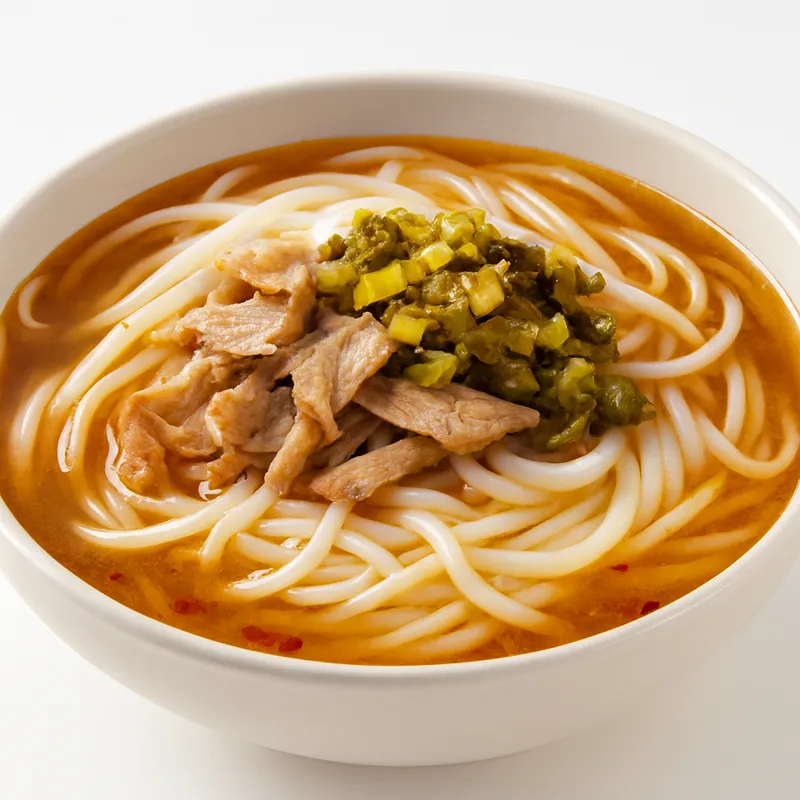
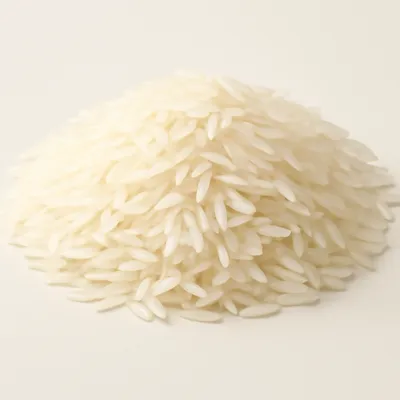
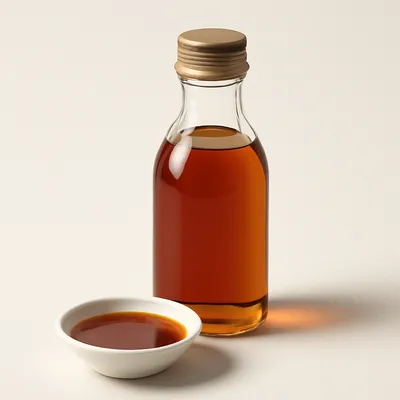
The most-ordered variety of Cantonese congee: white rice simmered long and slow with plenty of water until the grains break down into a smooth, thick gruel, studded with cut century egg (皮蛋) and slices of lean pork that has been lightly brined or salted. The pork is added so it just cooks through and stays tender; the century egg, dark and translucent, half-dissolves into the congee and half stays in soft wedges. It is served piping hot, finished at the table with chopped scallion, white pepper, a few drops of sesame oil, and often a handful of crisp fried dough (油条) on the side.


Century-egg and pork congee belongs to the Cantonese culture of 粥品 — the dedicated congee shops and morning markets of Guangdong and Hong Kong, where rice gruel is a daily staple eaten for breakfast or a late-night meal. Its exact origin and date are unrecorded; it is a popular pairing of two everyday Cantonese larder items rather than a dish with a single creator. The century egg itself is an old Chinese preserved food made by curing duck (or hen) eggs in an alkaline paste, with a documented history of several centuries; paired with brined lean pork over a long-simmered rice base, it became the default 'flavored' congee of the Cantonese repertoire, set apart from plain white congee (白粥) by these two toppings.
Good congee is smooth and pourable-thick, the rice cooked past recognition into a silky 绵 body with no hard grains and no watery layer separating out. The lean pork comes in tender, just-set slices that keep a faint cured savor; the century egg is the signature, its dark amber white set to a soft jelly and its grey-green yolk creamy and slightly sulfurous, lending a deep, almost cheese-like richness. Scallion and white pepper sharpen it, sesame oil rounds it, and a dunked piece of fried dough adds crunch. Done badly, the congee is thin and grainy because the rice was not cooked long enough, or it has gone gluey and grey from a pressure cooker, or the pork is overcooked into dry, hard shreds.
The texture of congee comes from starch gelatinization: held at a low simmer in plenty of water, the rice grains absorb water and swell, and their starch granules burst, releasing amylose and amylopectin that thicken the liquid into the smooth 绵 body — the longer and gentler the cook, the more the grains break down and the silkier the result. Stirring and a high water ratio (commonly around 1 part rice to 10–12 parts water) help the grains disintegrate evenly. The century egg is the product of an alkaline cure: eggs packed in a paste of strong alkali (the lime-soda-ash-and-ash mixture yields hydroxides such as sodium and potassium hydroxide) have the proteins of the white denatured and re-set into a firm, translucent gel without heat, while the yolk turns dark and creamy; the pine-flower crystal pattern (松花) on the white forms as magnesium and protein-breakdown products crystallize under the alkali. The lean pork is salted both to season it and to firm its proteins so it stays tender, and it is added near the end so it just poaches through in the hot congee rather than toughening.
Variations
The same congee base carries many Cantonese toppings: fish-slice congee (鱼片粥), sliced-beef congee (及第粥 with assorted pork offal, or 牛肉粥), and the rolling 'sampan' style. Some cooks marinate the pork with a little cornstarch and oil so it stays silkier; some use two century eggs, one stirred in to thicken and one kept in wedges; ginger slivers are common, and a few add dried scallop or a pork-bone stock for the base instead of water. In Hong Kong the rice is often pre-soaked, frozen, or part-blended (生滚 style) to break down faster, and the dish is finished with crisp fried dough, peanuts, or 薄脆 wafers; outside Guangdong it appears wherever Cantonese congee shops have spread.
On the Palate
Where Century-Egg & Pork Congee sits in the Chinese flavor cloud
Ingredients
Serves 4

How it's made
7 steps · 25 min active + 1 hour 5 min waiting
- 15 min
Rinse the rice and, if you have time, soak it (or freeze the soaked rice) so the grains break down faster; this gives a smoother congee.
- 25 min
Slice the lean pork thin, rub it with a little salt (and optionally a touch of cornstarch and oil), and set aside to brine briefly.
- 33 min
Peel the century eggs and cut each into wedges; set aside some to stir in and some to keep in pieces.
- 45 min
Bring a large pot of water to a boil with the rice, in a ratio of roughly one part rice to ten or twelve parts water, then drop to a low simmer.
- 560 min
Simmer uncovered, stirring now and then to stop sticking, for about an hour until the grains burst and the congee turns smooth and thick.
Watch outSimmer low about an hour until the grains burst and the congee turns smooth — the longer and gentler the cook, the silkier the body; stir now and then so it never catches.
- 65 min
Stir in half the century egg so it melts into the congee, then slide in the pork slices and the remaining egg and cook a few minutes more until the pork is just done.
Watch outStir half the century egg in to melt into the congee, then add the pork and cook just until it is barely done — overcooked pork slices go tough.
- 72 min
Season with salt and white pepper, ladle into bowls, and finish with chopped scallion, a few drops of sesame oil, and fried dough on the side.
Archive tool suggestions — not reviewed
These legacy suggestions have not been evidence-reviewed and are not presented as required tools.