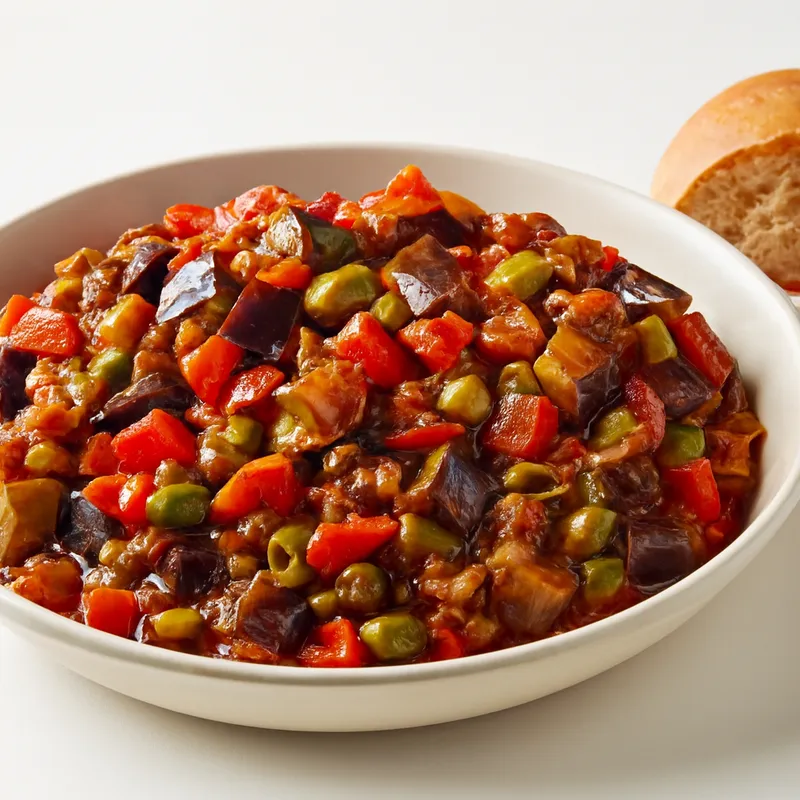
A fierce Neapolitan offal preparation, in dialect 'o suffritt and also called zuppa forte, 'strong soup,' for its heat. Pork offal — heart, lung, spleen, windpipe and trimmings — is cooked long and slow with lard, a great deal of tomato concentrate and an aggressive amount of dried chili into a dark, dense, deep-red conserve. In that concentrated form it keeps for a long time and is treated as a base: a few spoonfuls are let down with hot water or broth to make a soup ladled over stale bread, or stirred through pasta as a sauce. It is winter food and cucina povera at its most uncompromising — rich, fiery and frugal, built on the cheap cuts that nothing else used.





The zuppa di soffritto is a dish of old Naples and the Campanian interior, rooted in cucina povera and in the principle of using the whole pig: it is built on cheap pork offal that wealthier cooking discarded, transformed by long cooking, lard and chili into something rich and keepable. In its dialect name 'o suffritt the word soffritto does not mean the usual aromatic base but the dish itself; zuppa forte, its other name, points to the heat that defines it. Made as a dense conserve and stored, then diluted to serve, it reflects a preserving logic common to lean kitchens — concentrate, keep, and stretch a single pot across many meals through the winter. The dish is documented in the Neapolitan home and trattoria tradition; it is not tied to a dated recipe or named inventor, and the exact mix of offal varies by cook and by what the butcher had.
Dark, almost black-red and thick enough to stand a spoon in. Spooned over bread and loosened with broth it is a deep, meaty, faintly metallic soup — the unmistakable savour of organ meats — wrapped in concentrated tomato and lard, and over it all a hard, building chili heat that earns the name forte. The offal cooks down soft and yielding, the bread beneath turning to a saturated, melting layer. It is intense, oily and very spicy, a dish that fills and warms rather than refreshes; a little goes a long way, and the heat lingers well after the bowl is empty.
The dish is a long braise of tough, collagen-rich offal turned conserve. Heart, lung, windpipe and spleen are dense with connective tissue; cooked slowly in fat and tomato, their collagen hydrolyzes to gelatin and they soften, while the lard carries flavour and enriches the body. Tomato concentrate, simmered down hard, supplies acidity that balances the richness and a deep umami from its concentrated glutamates, and its low water content plus the fat is part of what lets the finished conserve keep. The heavy dose of dried chili does more than season: capsaicin and the salt and acid of the mix all work against spoilage, in the old preserving logic of a fiery, fatty conserve held through winter and diluted as needed. Serving it over stale bread is the classic stretch — the dried crumb drinks up the rich liquid and turns soft, bulking a small amount of the intense base into a full bowl.
Variations
The offal mix is the main variable: pork heart, lung, spleen and windpipe are typical, with some cooks adding trachea, trimmings or a little liver, and proportions set by the butcher's counter. The constants are lard, abundant tomato concentrate and a heavy hand with dried chili — the heat is the point, though it can be eased for a milder pot. Bay, rosemary and a splash of wine are common aromatics. The same dense base is used two ways: diluted with broth and served as a soup over toasted or stale bread, or used more thickly as a pasta sauce. Some families make a large batch as a keeping conserve to draw on through the cold months.
On the Palate
Where Zuppa di Soffritto sits in the Italian flavor cloud
Ingredients
Serves 6

How it's made
7 steps · 30 min
- 120 min
Clean the pork offal thoroughly, trim and cut into small, even pieces.
- 210 min
Melt lard in a heavy pot and add the offal, browning it over medium heat to seal and colour.
Watch outBrown the offal in the lard to seal and color it — that first browning builds the savory depth and sets the pieces; skip it and the conserve tastes flat and washed-out.
- 35 min
Add bay and rosemary and a splash of wine, and let it cook off.
- 43 min
Stir in the tomato concentrate and a generous amount of dried chili, coating everything.
- 590 min
Add enough hot water to barely cover, then simmer very gently, partly covered, for over an hour until the offal is soft and the sauce dark and dense.
Watch outSimmer very gently, partly covered, over an hour until the offal is soft and the sauce dark and dense — the collagen-rich pieces only tenderize with the long slow hold, and the base should end thick and concentrated, not soupy.
- 62 min
Adjust salt and heat; the base should be thick and concentrated.
- 75 min
To serve, let down a few spoonfuls with hot broth and ladle over stale or toasted bread, or stir through cooked pasta.
Archive tool suggestions — not reviewed
These legacy suggestions have not been evidence-reviewed and are not presented as required tools.