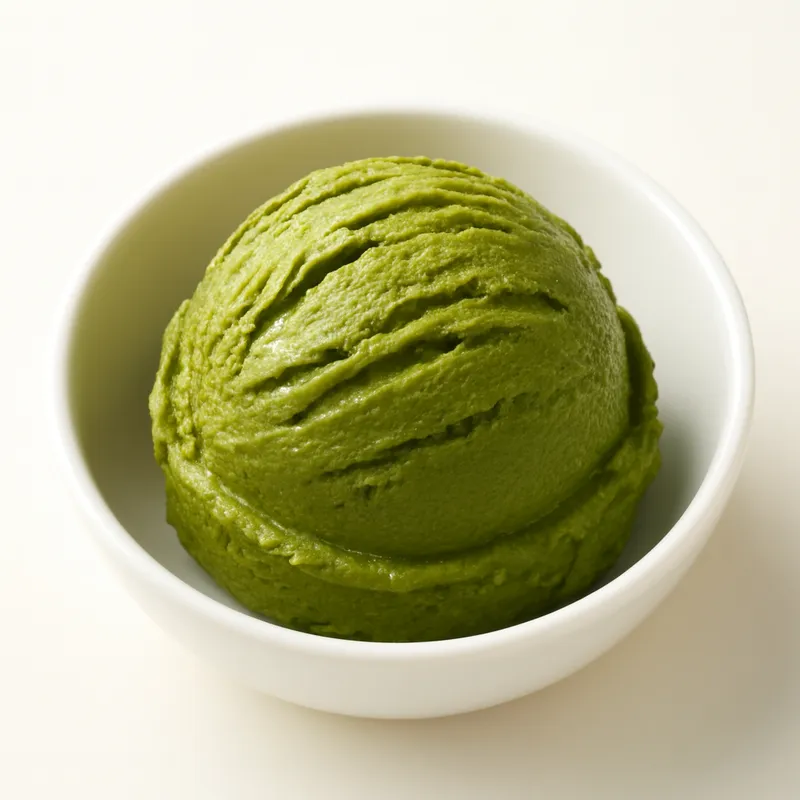
Half-pounded cooked rice molded onto a flat wooden skewer, brushed with a sweet-savory walnut-miso or soy glaze, and grilled until the coating caramelizes and the rice crusts. A mountain food of the Kiso and Ina valleys of southern Nagano (and neighboring Gifu and Aichi), gohei mochi turns everyday rice into a festive treat. The Shinshu signature is kurumi-miso, a glaze of ground walnuts blended with miso and sugar, which gives a rich, nutty, smoky-sweet finish over an open flame.


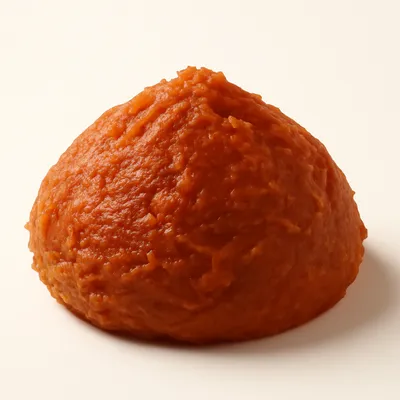


Gohei mochi is a mountain dish of the central highlands, present at least by the mid-Edo period; its exact origin is uncertain. The name has two competing folk explanations: one holds it is shaped like a gohei, the zigzag paper wand offered at Shinto shrines, marking it as food once offered to mountain deities; the other says it is named for a man called Gohei or Gohee — variously remembered as a woodcutter, hunter, or carpenter — who first mashed his rice, smeared it with miso, and grilled it. The shape splits along the old Nakasendo road: dango-style balls to the north, waraji (sandal) flattened paddles to the south. Walnut-miso is the characteristic Shinshu glaze.
The outside is lacquered and crisp where the sugar in the glaze has caramelized over the coals, while inside the half-pounded rice stays soft and slightly sticky, with whole grains still visible. The walnut-miso brings deep savory-sweetness and a toasted-nut richness, edged with the faint bitterness of char. It eats like a substantial snack — warm, hand-held, smoky, and filling.
The rice is pounded only halfway (han-tsuki) so it binds and holds onto the skewer without becoming a smooth mochi paste — leaving partial grains gives the chew that distinguishes gohei mochi from a fully pounded rice cake. Grilling does two things at once: it dries and crusts the rice surface through the Maillard reaction, and it caramelizes the sugar in the walnut-miso glaze, which is brushed on toward the end so it browns without burning. Toasting the walnuts before grinding deepens their aroma into the miso.
Variations
Glaze varies: kurumi-miso (walnut-miso) is the Shinshu standard, while soy-sugar, sesame-miso, and egashira (perilla-seed) versions appear across the region. Shape is dango-round in the north and flat waraji-paddle in the south. Closely related to the gohei mochi of Gifu's Hida-Tono and Aichi's Oku-Mikawa, which share the dish across old provincial lines.
On the Palate
Where Gohei Mochi sits in the Japanese flavor cloud
Ingredients
Serves 4How it's made
7 steps · 35 min active + 15 min waiting
- 115 min
Cook short-grain rice slightly softer than usual and let it cool a little.
- 28 min
Pound the rice halfway (han-tsuki) so it binds but whole grains remain visible.
Watch outStop pounding while whole grains are still clearly visible — it should clump and hold, not turn into a uniform paste.
- 35 min
Mold the pounded rice firmly onto flat wooden skewers in a paddle or ball shape; let the surface dry slightly.
- 47 min
Toast the walnuts, grind them, and blend with miso, sugar, and a little mirin into a thick walnut-miso glaze.
- 55 min
Grill the bare rice skewers over a flame or charcoal until the surface dries and lightly crusts.
Watch outGrill the bare rice until the surface dries and takes on a light crust — this base sets before the sweet glaze goes on.
- 65 min
Brush on the walnut-miso glaze and continue grilling until the coating caramelizes and browns, turning to avoid burning.
Watch outOnce glazed, turn often — the sugary walnut-miso browns and caramelizes fast and will scorch if left still.
- 71 min
Serve hot off the skewer.
Archive tool suggestions — not reviewed
These legacy suggestions have not been evidence-reviewed and are not presented as required tools.