
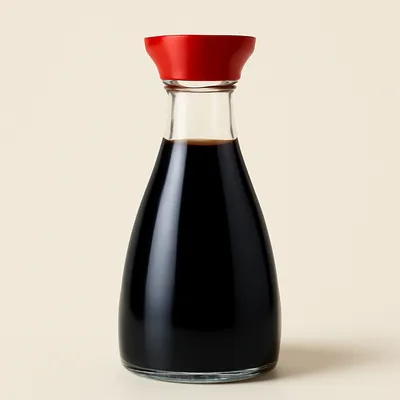
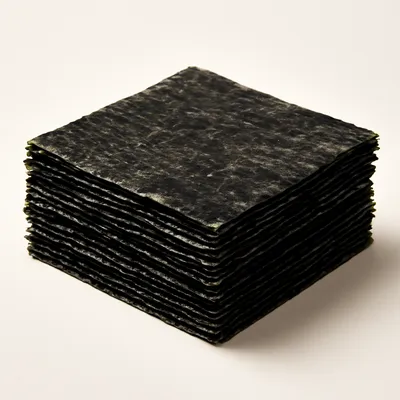
Crisp savory rice crackers made by pounding steamed non-glutinous (uruchi) rice into a dough, shaping it into thin discs, drying them, then grilling and brushing with soy sauce. The canonical eastern type is the soy-glazed Sōka senbei (草加煎餅) of Sōka in Saitama, browned over heat until glassy and crackling, sometimes wrapped in a band of nori (isobe). These rice senbei of Kantō are distinct from the sweet wheat-flour senbei of western and northern Japan, such as Tōhoku's nanbu senbei and kawara senbei. They are eaten plain by the handful with tea, the soy-sauce crust giving a deep savory snap.




Sōka senbei traces to the Edo period, when Sōka developed from 1630 as a post town (shukuba) on the Nikkō Kaidō, the highway linking Edo to the north. Sōka's many rivers made it good rice country, and locals pounded leftover cooked rice into cakes, dried them for keeping, and grilled them to sell as a refreshment to travelers on the road. A popular folk tale credits a tea-shop woman named Osen with the idea, but the legend is generally treated as just that — the cracker more likely grew out of these everyday farming customs. The crackers were first seasoned with salt; soy sauce took over as the main glaze from around the middle of the Edo period as soy-sauce consumption spread. The sweet wheat senbei of the west descend from a separate, older line, a Tang-dynasty confection (唐菓子) whose record in Japan is often dated to the eighth century.
A good senbei shatters at the first bite with a loud, brittle snap, then dissolves into a clean toasted-rice crunch rather than anything chewy. The soy-mirin glaze gives a glossy, dark-amber crust that is deeply savory and a touch sweet, with the roasted edge of caramelized sauce. A nori wrap adds a salty marine note and a faint chew against the crisp. It is dry, light, and bracingly umami — the kind of snack that pairs naturally with green tea.
Steaming gelatinizes the rice starch so the pounded grains bind into a cohesive, workable dough. Slow drying drives off moisture and lets the starch partly retrograde, setting a firm, low-moisture disc that will crisp rather than soften on the grill. Over heat the remaining water flashes off and the dehydrated starch matrix turns hard and glassy, sometimes puffing slightly as trapped steam expands the structure into the airy, brittle crunch. The soy-sauce-and-mirin glaze, brushed on near the end, browns through the Maillard reaction between its amino acids and sugars, building the dark color, roasted aroma, and savory depth of the crust.
Variations
Beyond plain soy (shōyu), common styles are salt (shio), nori-wrapped (isobe), and sweet sugar-crusted (zarame). Texture splits east to west: crunchy uruchi-rice senbei in Kantō versus lighter, delicate ones in Kansai. The sweet wheat-flour senbei are a different world — Tōhoku's nanbu senbei and the thin, molded kawara senbei among them. Closest of kin are arare and okaki, the cracker cousins made instead from glutinous mochi rice, technically a sibling family rather than true senbei.
On the Palate
Where Senbei sits in the Japanese flavor cloud
Ingredients
Serves 6How it's made
7 steps · 1 hour 20 min
- 118 min
Steam soaked short-grain non-glutinous rice until fully cooked and sticky, about 15 to 20 minutes.
- 28 min
Pound the hot rice into a smooth, cohesive dough while it is still warm.
- 37 min
Roll or press the dough thin and cut or shape it into round discs.
- 4360 min
Dry the discs in cool air (or low heat) for several hours until firm and leathery, then fully dry.
Watch outDry the discs until firm and leathery, then bone-dry — leftover moisture makes them soften and steam on the grill instead of crisping.
- 56 min
Grill or bake the dried discs over heat, turning, until they harden, color, and crisp, puffing slightly.
- 64 min
Brush both sides with a soy sauce and mirin glaze and grill briefly again so the coating browns without burning.
Watch outBrush on the soy-mirin glaze near the end and grill only briefly so it browns without burning — glaze too early and the sugars scorch black.
- 710 min
Cool completely so the crackers set crisp; wrap with nori if making isobe senbei.
Archive tool suggestions — not reviewed
These legacy suggestions have not been evidence-reviewed and are not presented as required tools.


