
A dense, chewy alkaline rice cake of the Gannan Hakka in southern Jiangxi, traditionally made for New Year. Glutinous 'dahe' rice (大禾米) is soaked in a lye water leached from the ash of burnt local plants — 黄元柴 and others — which turns the cooked rice a clear golden yellow and gives it its springy, slippery body. The rice is steamed, soaked again in the lye, steamed once more, then pounded in a stone mortar by several people with wooden mallets until it works into a smooth, dense, elastic mass. Shaped into blocks or cylinders and kept submerged in lye water, it stores for months. To eat, it is sliced and stir-fried with meat and vegetables or dropped into soup, slick and chewy and faintly alkaline.
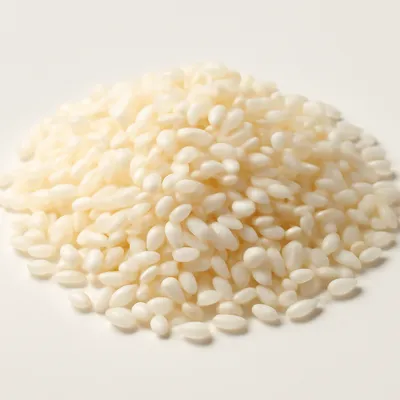


Huangyuan rice cake is a Hakka food of southern Jiangxi (Gannan) — the Ganzhou region, with Gan County, Xingguo, Dayu and neighboring counties all known for it — and its making is a defining New Year ritual there, captured in the local saying 'no rice cake, no New Year' (不打米果不过年), when relatives and neighbors gather to pound the rice together to work chants. A popular legend ties it to Wang Yangming, the Ming scholar-general, who is said to have chosen the golden rice cakes of the Hakka hill folk as army rations during his southern Jiangxi campaigns and later to have sent some to the throne, after which it was made a tribute food; this story is local folklore and not independently documented, so it is best treated as legend. What is recorded is modern recognition: the craft is carried as intangible cultural heritage in Gannan, with Dayu among the counties developing it as a heritage product. The cake was originally made from glutinous dahe rice; since the 1960s ordinary non-glutinous rice (粳米) has often been used instead.
Sliced and cooked, the cake is firm, dense, and deeply chewy — slick on the surface, springy and resilient under the tooth, with the smooth give of a well-worked rice gel rather than the soft stickiness of a fresh rice cake. It is mild and grain-sweet with a faint clean alkaline note from the lye, the savor coming from whatever it is cooked with. Stir-fried it takes on the flavors of the meat and vegetables and its surface turns glossy and slightly caramelized at the edges; in soup it stays slick and chewy and soaks up the broth. Properly made it is springy and never crumbles or turns gummy; underpounded it is loose and falls apart, overcooked it slumps soft. Its chew is the point, and it holds that chew well even after long storage.
The cake is built by waxy starch, alkali, and pounding. Glutinous dahe rice is nearly all amylopectin, the branched starch, so when steamed it gels dense, sticky, and elastic. Soaking and steaming the rice in lye water — an alkaline solution leached from plant ash, rich in potassium carbonate — raises its pH, and the alkali swells and partly breaks down the starch granules so they gelatinize more fully and bind into a tighter, springier, more cohesive gel; it also reacts with trace flavonoids in the grain to turn the rice a clear yellow, the color that names the cake. The repeated pounding in the stone mortar mechanically shears and works the hot rice, rupturing the remaining granules and aligning the starch into a smooth, uniform, highly elastic paste with no whole grains left — this is what gives the finished cake its dense chew. The alkaline, low-water gel also resists microbial spoilage, so kept submerged in lye water the cake stores for months into the next year.
Variations
The first divide is the rice: the old way uses glutinous dahe rice (大禾米) for the truest body, while since the 1960s many makers use ordinary non-glutinous rice (粳米), sometimes blended with glutinous rice, which changes the chew. The lye is leached from the ash of local plants — 黄元柴 is the classic, with 黄栀子 (gardenia fruit) sometimes added to deepen the yellow, and other shrubs such as 黄荆 used as well. To eat, the sliced cake is most often stir-fried with cured or fresh pork, garlic greens, and vegetables, or simmered in soup; it can also be pan-fried or grilled. Closely related lye-treated rice cakes are made across the Hakka and southern Chinese world under names like 大禾米果 and the broader family of 黄粄, the same idea of an alkaline, pounded, golden rice cake kept for the festive season.
On the Palate
Where Huangyuan Rice Cake sits in the Chinese flavor cloud
Ingredients
Serves 8How it's made
7 steps · 2 hours
- 160 min
Burn the dried huangyuan brush and other plants to ash, then steep the ash in water and filter to draw off a clear lye water
- 2480 min
Soak glutinous dahe rice in the lye water overnight until it takes on a golden tint
Watch outSoak the rice in lye water overnight until it takes on a clear golden tint — that yellow is the alkali reacting with the grain, the color that names the cake and the sign it's ready to steam.
- 340 min
Drain the rice and steam until cooked, then mix through more lye water, spread to cool, and steam a second time
- 440 min
Tip the hot steamed rice into a stone mortar and pound with wooden mallets, several people taking turns, until it works into a smooth, dense, elastic mass with no whole grains
Watch outPound the hot rice until it's a smooth, dense, elastic mass with no whole grains left — the repeated pounding is what develops the springy, cohesive texture; stop early and it stays loose and grainy.
- 515 min
Wet the hands, lift out the mass, and shape it into blocks or thick cylinders, smoothing the surface
- 630 min
Cool the shaped cakes fully, then store them submerged in lye water, where they keep for months
- 712 min
To eat, slice the cake thin and stir-fry with pork, garlic greens, and vegetables, or simmer the slices in broth
Archive tool suggestions — not reviewed
These legacy suggestions have not been evidence-reviewed and are not presented as required tools.


