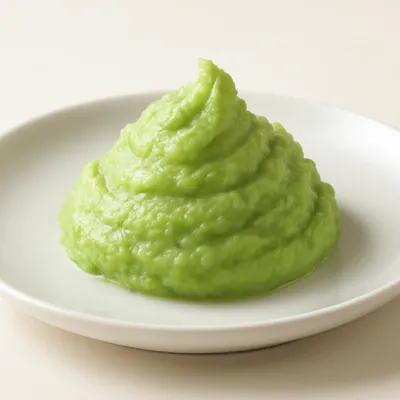
Ruibe is a Hokkaido way of eating salmon: the fish is frozen solid, then sliced thin and eaten while still frozen, so the slices begin icy and crystalline and melt as they warm in the mouth. It is served like sashimi, with wasabi and soy sauce, the partly frozen flesh firmer and cleaner-tasting than fresh raw salmon. Rooted in Ainu food practice, ruibe was originally a way to keep salmon through the northern winter, and the freezing doubles as a safety measure against the parasites carried by raw salmon. Trout and other fish are now prepared the same way.
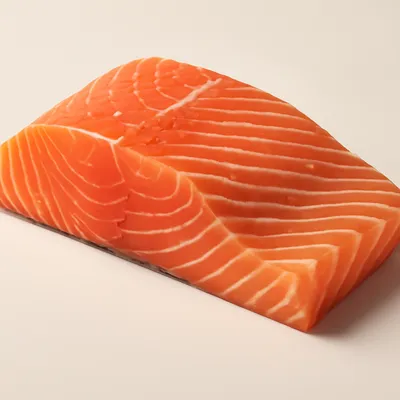



Ruibe originates in the food practice of the Ainu, the Indigenous people of Hokkaido, for whom salmon was a vital source of protein. According to the Japanese Ministry of Agriculture's account, the Ainu buried salmon caught in late autumn and early winter in the snow to freeze it for storage, then shaved it thinly while still frozen and ate it through the winter. The name comes from the Ainu words ru, meaning to melt, and ipe, meaning food, joined as ruipe — a reference to the way the frozen flesh melts as it is eaten. The hard freeze also kills anisakis and other parasites present in salmon flesh, so the method that began as winter storage doubles as a safeguard for eating the fish raw. Modern ruibe is made in a freezer rather than a snowbank, and ruibe-zuke, salmon and roe marinated in soy sauce before freezing, is a popular present-day form.
The first moment is cold and crystalline — thin shavings of salmon stiff with ice, the texture closer to a firm sorbet than to soft raw fish. As the slice warms against the tongue it loosens and turns silky, the fat coming forward and the flavor blooming from clean and faint to fully salmon-rich. Freezing tightens the flesh and tames the slippery softness of fresh salmon, leaving it firm, clean and not at all fishy. Wasabi and soy cut cleanly through the cold fat.
Freezing does the work here. As the salmon freezes, water in the flesh forms ice crystals that firm the muscle and give the cold, crisp first bite; as the slice warms in the mouth those crystals melt and release the fat and water-soluble savor, which is why the flavor builds rather than arriving all at once. The fish is sliced while still frozen so it cuts into clean thin sheets and is eaten before it fully thaws, keeping the icy-to-melting contrast that defines the dish. Critically, a hard freeze kills anisakis larvae in the flesh: holding the fish frozen — by modern food-safety guidance, well below household-freezer temperatures and for a sustained period — makes raw salmon, which can carry the parasite, safe to eat. Leaner Pacific salmon takes especially well to the method.
Variations
Beyond salmon, ruibe is now made with trout, squid and even pork, all frozen and sliced the same way. Ruibe-zuke marinates the salmon and its roe in a soy-and-mirin sauce before freezing, so each slice is seasoned through; it is eaten over rice as often as on its own. Restaurants may serve ruibe shaved very thin so it thaws to silkiness within a few seconds, while home versions cut it a little thicker for a longer-lasting chill.
On the Palate
Where Ruibe sits in the Japanese flavor cloud
Ingredients
Serves 4How it's made
6 steps · 15 min
- 15 min
Choose very fresh, sashimi-grade salmon or trout and trim it into a neat block.
- 21440 min
Wrap the block tightly and freeze it solid, holding it well frozen long enough to ensure any parasites are killed.
Watch outFreeze it rock-solid and hold it hard-frozen long enough to kill any parasites — this deep freeze is the food-safety step, not optional for raw salmon.
- 32 min
Take the frozen block from the freezer and let it sit only a minute or two, until a sharp knife can shave it.
- 45 min
Slice the still-frozen fish into thin sheets, working quickly before it thaws.
Watch outSlice it while still frozen into thin sheets — let it thaw and it won't shave clean, and you lose the icy-to-melting bite that defines the dish.
- 52 min
Lay the frozen slices on a chilled plate, fanned out so they stay separate.
- 61 min
Serve at once with wasabi and soy sauce, eating each slice while it is still icy and letting it melt in the mouth.
Archive tool suggestions — not reviewed
These legacy suggestions have not been evidence-reviewed and are not presented as required tools.