
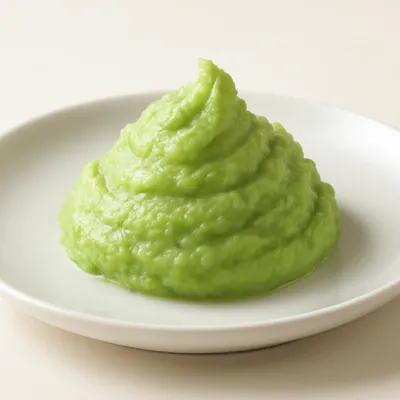
A pungent relish of finely chopped wasabi root and stems cured in sake lees, salty-sweet from the kasu and nose-clearingly hot from the wasabi. In Shinshu it is the signature product of Azumino, the spring-fed valley below the Northern Alps that is one of Japan's foremost wasabi-growing regions, home to vast water-cultivated wasabi fields. Eaten in small dabs with rice, over plain tofu, with grilled fish, or as a sake accompaniment, wasabi-zuke turns the prized local root and the by-product of sake brewing into a fierce, fragrant pickle.
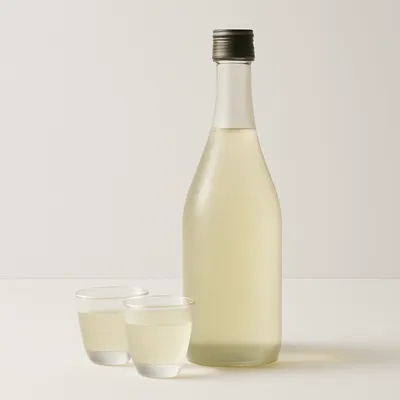


The wasabi-zuke method is documented as originating not in Shinshu but in Suruga (eastern Shizuoka): around the Horeki era (1751–1763) a merchant remembered as Tajiriya Risuke is credited with curing chopped wasabi in sake lees, and Shizuoka remains the most famous producer. Shinshu's claim to the dish rests on terroir rather than invention: Azumino in central Nagano, fed by snowmelt springs from the Northern Alps, is one of Japan's largest wasabi-cultivation areas, and wasabi-zuke is among its defining specialties. The pickle pairs the region's celebrated water-grown wasabi with sake lees from local brewing.
A tiny amount delivers a sharp, volatile heat that rushes straight up the nose and clears just as fast, cut by the sweet, faintly boozy mellowness of the sake lees and a salty backbone. The chopped root and stem give a crunchy, slightly fibrous texture against the soft kasu paste. It is intense and meant to be eaten in dabs — a single chopstick-tip enlivens a bowl of plain rice or a block of chilled tofu.
Wasabi's pungency, like a radish's, is enzymatic: only when the root is grated or finely chopped does myrosinase act on glucosinolates to release the volatile isothiocyanate (allyl isothiocyanate) that stings the nose — so the wasabi is cut fine to generate heat, then sealed into the sake lees, whose sugar and alcohol environment slows the loss of that volatile compound and lets the pickle keep its bite far longer than freshly grated wasabi, which fades in minutes. The kasu also ferments mildly, contributing sweetness, aroma, and salt-balanced preservation.
Variations
Recipes vary in the ratio of wasabi root to stem and the sweetness and salt of the kasu, and some makers add a little sugar or mirin to the lees. Beyond the relish itself, the same Azumino wasabi appears as fresh grated wasabi, wasabi soba, and even wasabi-flavored sweets. The dish is shared with Shizuoka, where it originated; the Shinshu version is identified with Azumino's spring-water wasabi cultivation.
On the Palate
Where Wasabi-zuke sits in the Japanese flavor cloud
Ingredients
Serves 8How it's made
7 steps · 20 min active + 10 min waiting
- 15 min
Trim fresh wasabi, using both the root (rhizome) and tender stems and leaf stalks; wash well.
- 28 min
Chop the wasabi root and stems very finely to release the pungency, then lightly salt them and let stand briefly.
Watch outChop the wasabi very fine to release the pungency — only cutting the cells brings out the nose-stinging heat; a coarse chop stays mild.
- 32 min
Squeeze out excess moisture from the salted wasabi.
- 43 min
Season the sake lees (kasu) with a little sugar, salt, and optionally mirin, mixing into a smooth paste.
- 53 min
Fold the chopped wasabi thoroughly through the seasoned sake lees.
- 65 min
Pack into a sealed container and let it mature in a cool place for a day or more so the flavors meld.
Watch outSeal it into the sake lees and let it mature a day or more — the sugar-alcohol lees slows the loss of that volatile heat, so the pickle keeps its bite far longer than freshly grated wasabi.
- 71 min
Serve in small dabs with rice, chilled tofu, or grilled fish.
Archive tool suggestions — not reviewed
These legacy suggestions have not been evidence-reviewed and are not presented as required tools.


