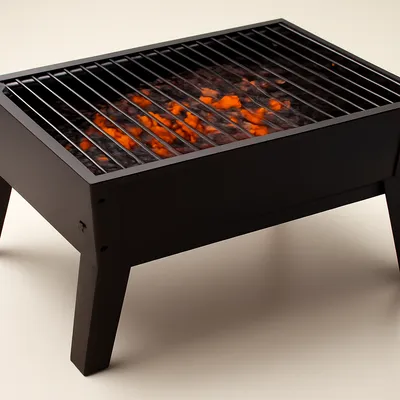
Pig's trotters braised in a five-spice stock until fully gelatinous, then rack-smoked over charcoal with scattered sugar until a mahogany crust sets — finished with brushed sesame oil, they are tremblingly soft inside and fragrant with sweet smoke outside.
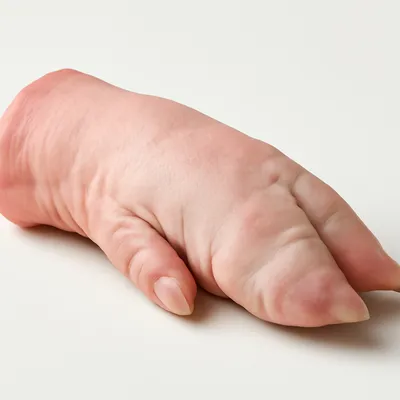




From Beizhen, Liaoning — historically within the Jinzhou prefecture — where pig-trotter smoking is documented as widely recognized during the Daoguang reign of the Qing dynasty (1820–1850), placing the tradition at least two centuries back. Beizhen occupies an ancient traffic corridor between the Liaodong coast and the Mongolian steppe: Han Chinese braise-and-smoke methods converged here with Manchu and Mongolian practices of smoke-curing meat for preservation and travel. The resulting two-stage technique — long spice braise followed by a brief sugar-smoke — is calibrated to solve two different problems simultaneously: collagen conversion for tenderness, and caramel-smoke deposition for flavor and shelf life.
The skin shatters at first bite into something smoky and caramel-tinged, then gives way to a quivering layer of collagen-rich skin and fat. The interior meat falls off the bone, carrying the spice broth deep into each fiber. Sesame oil on the finish is herbal and clean.
The two-stage process targets texture and flavor independently. Braising in spiced stock at 85–90°C for roughly 90 minutes converts the dense collagen in pig-trotter skin and tendons to gelatin, producing the characteristically yielding interior. The subsequent sugar-smoke is a dry-heat surface treatment: sugar scattered on hot coals undergoes rapid pyrolysis and caramelization, releasing furfural, hydroxymethylfurfural, and phenolic compounds that deposit on the skin surface as a thin, lacquered brown film. Sesame oil brushed on immediately afterward seals the film and layers volatile aromatic compounds — primarily sesaminol and sesamol — on top of the smoky notes.
Variations
Cold-plate version: sliced thinly at room temperature and dressed with chili oil as a drinking snack. Soy-master-stock version: trotters spend an extended first stage in a complex master stock before smoking, for a deeper base flavor. Some Beizhen shops replace cane sugar with apple or pear wood chips for a fruitier, lighter smoke tone. Whole front hocks can substitute for split trotters for a larger presentation.
On the Palate
Where Beizhen Five-Spice Smoked Pig's Trotters sits in the Chinese flavor cloud
Ingredients
Serves 4


How it's made
7 steps · 20 min
- 110 min
Scrub pig's trotters thoroughly; place in cold water, bring to a boil, skim foam, drain and rinse clean.
- 25 min
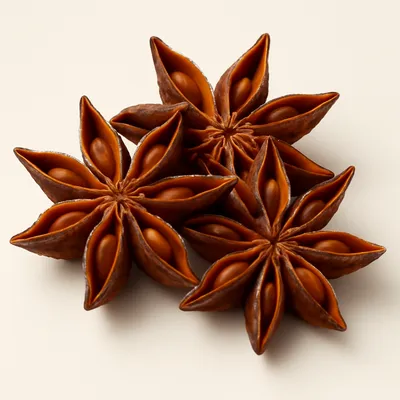
In a large pot, combine water with Sichuan peppercorns, black cardamom, star anise, cinnamon, soy sauce, and salt; bring to a boil.
- 390 min
Add trotters to the spiced stock; reduce to a steady low simmer; cook uncovered for 90 minutes until skin is soft and a skewer passes through easily.
Watch outSimmer the trotters uncovered ninety minutes until a skewer passes through easily — braising is where the skin turns tender; the smoke only colours it.
- 45 min
Remove trotters; drain well and pat the skin completely dry — moisture prevents the smoke from adhering.
Watch outPat the skin bone-dry before smoking — any moisture and the smoke won't stick or colour evenly.
- 55 min
Set up a charcoal fire under an iron rack; allow coals to reach an even glow with no open flame.
- 610 min
Scatter granulated sugar evenly over the hot coals; immediately set trotters on the rack; cover loosely; smoke 8–10 minutes, turning once, until skin is deep mahogany and lacquered.
Watch outScatter sugar on the glowing coals and smoke just until the skin turns deep mahogany and lacquered, turning once — past that it goes acrid.
- 75 min
Remove from rack; brush immediately all over with sesame oil; rest 5 minutes; serve whole or halved.
Archive tool suggestions — not reviewed
These legacy suggestions have not been evidence-reviewed and are not presented as required tools.