A tradition of southern Hebei's great inland trading hub: pork blended with mung bean starch, egg, and sesame oil, stuffed into casings, simmered in spiced broth, then smoked over pine sawdust and sugar until the casing turns deep purple-red. Keeps three to four days unrefrigerated and is recorded as 'famous for hundreds of li around' since at least the late Qing era.





Nangong City was one of the most important dry-port commercial hubs of the North China Plain during the Qing dynasty, a crossroads where merchants required provisions that kept without refrigeration for the road. A smoked-meat trade flourished to meet that demand. The 1992 Nangong Cultural and Historical Materials (《南宫文史资料第四辑》) contains an article by local historian Dong Yuequiao titled 'Nangong Street Foods,' which records that Nangong smoked meat was 'famous for several hundred li around,' indicating the tradition was already mature by the late Qing. Contemporaneous sources link the mung bean starch sausage form to Qing-era butcher shops that blended starch into pork filling to extend the product and improve texture — a practice common across north China pork processors by the mid-Qing period.
Dense, cross-section slices with a faintly springy interior — mung bean starch creates a cleaner, more uniform texture than all-pork sausage. Dry pine smoke registers as a resinous warmth on the palate, with sesame oil providing a lingering nutty close.
Mung bean starch gelatinizes fully during simmering (around 65–70°C), embedding pork particles in a firm, continuous starch gel that holds its shape when sliced. During smoking, combustion of pine sawdust generates guaiacol-family methoxyphenol compounds that penetrate the casing surface, inhibiting lipid oxidation and extending shelf life while contributing the characteristic smoky aroma. White sugar added to the smoking chamber undergoes caramelization at low pyrolysis temperatures, producing caramel color compounds that, combined with carbonyl groups from the pine smoke, create the deep purple-red exterior.
Variations
Lean version: some producers use leaner cuts with a higher starch ratio, yielding a firmer cold cut sliced and eaten at room temperature without further cooking. Festival sausages: for New Year markets, tied in pairs and smoked longer for a darker crust; traditionally sold alongside pickled garlic.
On the Palate
Where Nangong Smoked Pork Sausage sits in the Chinese flavor cloud
Ingredients
Serves 8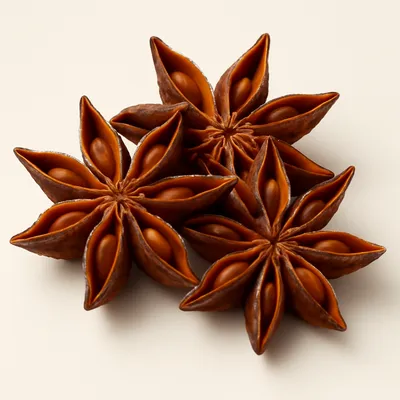



How it's made
7 steps · 1 hour
- 110 min
Grind pork to a coarse paste. Combine with mung bean starch, beaten egg, ginger shreds, sesame oil, salt, and five-spice powder; mix thoroughly until the mixture reaches a porridge-like consistency.
- 230 min
Soak natural pork casings in cold water for 30 minutes to soften, then rinse. Using a sausage stuffer or piping bag, fill casings with the meat mixture in 20 cm sections, tying off ends without overfilling.
- 35 min
Prepare the poaching broth: combine water with star anise, cinnamon bark, bay leaves, ginger, soy sauce, and salt; bring to a boil, then reduce to a gentle simmer.
- 440 min
Lower the stuffed sausages into the simmering broth. Cook for 40 minutes over medium-low heat, turning occasionally, until the interior is fully set and the casings are taut.
Watch outPoach the sausages until the interior fully sets and the casings pull taut — undercooked, they slump and won't slice clean after smoking.
- 55 min
Lift the sausages out and drain briefly. Set up the smoking chamber: spread pine sawdust and white sugar evenly across the base; position a wire rack above.
- 625 min
Place the sausages on the rack. Cover tightly and smoke over medium heat for 20–25 minutes until the casings are deep purple-red and the surface is dry with a resinous aroma.
Watch outSmoke until the casings turn deep purple-red and the surface dries with a resinous scent — that color and dryness mean the smoke has set.
- 75 min
Remove from heat and brush immediately with sesame oil. Cool completely before slicing and serving at room temperature.
Archive tool suggestions — not reviewed
These legacy suggestions have not been evidence-reviewed and are not presented as required tools.