A whole young chicken packed with tsao-kuo, ginger, and Sichuan peppercorns, sealed inside a fresh green bamboo tube with banana leaf, and slow-roasted over hardwood charcoal for two hours until the tube chars through. At the table, the blackened tube is split open: a column of bamboo-scented steam rises, the broth runs out clear and golden, and the chicken falls off the bone. It is a dish built on the logic of the Hani terraced forest — the bamboo is both the cooking vessel and the seasoning.





Bamboo tube cooking is practiced across the ethnic minority cultures of Yunnan's montane forests; the insertion-cooking technique — packing food inside a sealed tube — is attested in Chinese culinary records from the Qing dynasty, when Zhu Yizun's food compendium Shi Xian Hong Mi (食宪鸿秘) describes crab balls cooked to completion inside a bamboo tube. The Hani people have farmed the terraced valleys of Honghe prefecture (Yuanyang, Lüchun, Mojiang, Jiangcheng) for over a thousand years, building the most elaborate hand-carved terraced paddy system in the world. The Hani rice terraces were recognised as a FAO Globally Important Agricultural Heritage System in 2010 and inscribed as a UNESCO World Cultural Heritage site in 2013 under the name 'Cultural Landscape of Honghe Hani Rice Terraces.' The bamboo groves ringing every Hani village serve simultaneously as windbreak, boundary marker, and material store: cooking vessels, water pipes, carrying baskets, and house scaffolding all come from the same trees. Roasting a chicken inside a living green bamboo tube — using the wood as both pot and flavour donor — is the most concentrated expression of this ecological relationship. The dish is traditionally prepared for the spring planting ceremony 昂玛突 (ang-ma-tú), weddings, and for receiving guests of significant social rank.
You tilt the split tube and the broth pours out first — pale gold, entirely clear, clean and sweet in a way that only bamboo steaming produces. Then the chicken slides out: the flesh falls from the bone in a single pull, soft and perfumed with tsao-kuo and ginger. But the dominant note is something more elusive — a green, resinous coolness from the bamboo itself, as if the bird had spent two hours breathing the forest. The charred inner wall of the tube, now blackened and caramelised, can be scraped and eaten: it holds the deepest bamboo flavour of all.
The green bamboo tube functions as a sealed pressure vessel. As internal temperature climbs, water released by the chicken becomes steam; because both ends are sealed (one by the natural bamboo node, one by the banana-leaf plug), slight pressure builds, raising the effective cooking temperature above 100°C and driving steam through the muscle fibre. This accelerated steam-braising hydrolyses connective-tissue collagen without over-tightening the myosin in the muscle fibres — the result is fall-off-the-bone tenderness achieved in roughly two hours. Crucially, fresh green bamboo releases its own volatile aromatic compounds as its walls heat and lose moisture: chiefly bamboo-specific phenols, terpenoids, and cis-3-hexenyl compounds (the molecular source of the 'green, freshly-cut' note in cucumber and new grass). These volatiles migrate continuously into the trapped broth and chicken fat over two hours of roasting, producing a flavour that cannot be replicated by any substitute vessel. The outer charring of the tube's wall — the carbon layer — further insulates the interior, moderating heat and preventing the inner green bamboo from burning through.
Variations
Lemongrass herb version: replace tsao-kuo with fresh lemongrass, kaffir lime leaf, and galangal — common in Hani areas bordering Laos, reflecting Tai-Kadai linguistic and culinary overlap. Bamboo fish version (竹筒鱼): fresh river fish packed with ginger and wild chili in a narrower tube, roasted identically — lighter, more acidic, with a cleaner brine note. Bamboo rice (竹筒饭): soaked glutinous rice packed into narrower bamboo tubes without filling, roasted over open fire on a Hani farming morning — the everyday staple version, scented and portable.
On the Palate
Where Hani Bamboo Tube Chicken sits in the Chinese flavor cloud
Ingredients
Serves 4

How it's made
7 steps · 30 min
- 15 min
Select a fresh young green bamboo section (毛竹 or similar), about 50 cm long with an outer diameter of 10–12 cm; ensure one end has a natural node (sealed); open the other end cleanly with a saw.
- 23 min
Rinse the interior of the tube with hot water; drain and allow to stand upright to dry briefly.
- 310 min
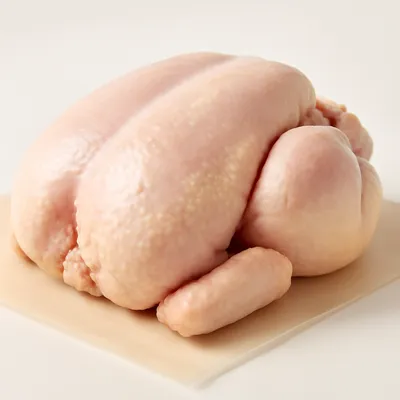
Prepare a 1.2 kg young rooster (仔公鸡): remove innards, rinse, and pat dry. Rub the interior cavity and outer skin generously with salt, lightly crushed tsao-kuo (草果) pods, sliced fresh ginger, and Sichuan peppercorns.
- 45 min
Fold the chicken to fit inside the bamboo tube — insert legs first, press breast in last; pack tightly. Pour about 100 ml of cold water into the tube before sealing.
Watch outPack the chicken in tight and add about 100 ml water before sealing — that water turns to the steam that braises the bird; too little and it roasts dry.
- 55 min
Bundle a thick pad of fresh banana leaf (芭蕉叶) and press it firmly into the open end as a seal; secure with a strip of split bamboo or kitchen twine pulled tightly around the neck.
Watch outPlug the open end firmly with banana leaf and tie it tight — the seal is what builds the pressure; a loose plug lets the steam blow out.
- 6120 min
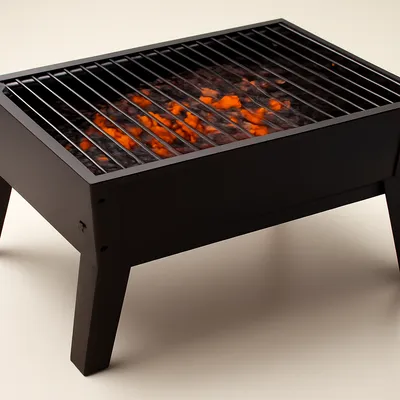
Stand the tube sealed-end-up beside a hardwood charcoal fire; roast for 2 hours, rotating the tube a quarter-turn every 30 minutes. The outer bamboo will char progressively — this is correct and desirable; the inner green bamboo wall protects the contents.
Watch outLet the outer bamboo char as it roasts — that's correct; the inner green wall protects the chicken, and steam escaping the seal tells you it's done.
- 72 min
When the tube is heavily charred and steam visibly escapes from the seal, remove from heat. At the table, split the tube lengthwise with a heavy cleaver; pour the broth into bowls first, then serve the chicken pieces directly from the cracked tube.
Archive tool suggestions — not reviewed
These legacy suggestions have not been evidence-reviewed and are not presented as required tools.