Rongzhou Mala Chicken comes from Rongxian County — known in earlier dynasties as Rongzhou — in Zigong, Sichuan. Free-range mountain chickens from the county's Changshan township are steamed whole until silky-tender, cooled, chopped, and dressed in a vivid red oil made from locally grown Lede red chili, Sichuan peppercorn, camellia oil, and house-brewed soy sauce. Every piece arrives coated in a numbing-spicy gloss, clean and melt-finish on the palate. One of the Three Signature Dishes of Rongzhou and one of Zigong's Ten Iconic Salt-Merchant Dishes, it was designated a Sichuan Provincial Tianfu Famous Dish in December 2021.





The dish traces to at least two oral lineages in Rongxian's Xuyang Township. The most documented runs through a local cook named He Neng, who developed the style called He Mala. He Neng passed the craft to his third daughter and to an apprentice, Gong San; Gong San's daughter-in-law Zhang Shuhua, owner of the Jingbian Guan restaurant, refined and popularised it over many years. A separate account credits folk chef Xu Yaoting of Chai Lane in the 1930s; by the 1950s and 60s four prominent Rongxian families — He, Ding, Zhou, and Zhu — each kept the tradition alive. Today the dish has expanded far beyond Rongxian: Xuyang Township alone hosts over two hundred specialist restaurants with combined annual revenues exceeding two hundred million yuan, and outlets have reached cities across China and as far as Singapore and Cambodia.
A platter arrives heaped with clean-cut pieces, each one glazed in deep-red chili oil. The chicken skin is supple and faintly tacky; the meat is fine-grained and moist — steaming rather than frying seals the natural juices inside the flesh. Sichuan peppercorn's electric tingle reaches the tongue first, followed slowly by the warmth of Lede chili: spicy but not scorching, buzzing but not harsh. Rongxian locals call the finish shuang-kou-hua-zha — clean and dissolving — the kind of mouthfeel that leaves nothing heavy behind and makes you reach for another piece, or another bowl of rice.
The entire dish pivots on steaming. Whole chickens go into the steamer and cook low and slow until the juices are fully sealed inside skin and flesh; the accumulated liquid at the steamer base is poured back into the dressing — this step is the critical one that amplifies savory depth. The dressing centers on Lede red chili from Rongxian: a locally cultivated variety with high pigment yield, thick flesh, and clean aromatic heat. It is combined with Sichuan peppercorn and camellia oil (tea seed oil); camellia oil has a high smoke point and a neutral, clean profile that does not compete with the chili or the chicken. House-brewed soy sauce rounds out the blend. Nothing is reheated after dressing — the just-cooled chicken holds its ideal tender texture at room temperature.
Variations
The traditional preparation is steam-only — no second fry. Some modern restaurants oil-flash the steamed chicken briefly to crisp the skin and improve dressing adhesion, but old-style shops in Rongxian hold strictly to the steam-and-dress method. Chopping style also varies: the classic technique presses the blade with the palm to control the cut and minimize bone splintering, while a hand-tear variant pulls the meat into strips for easier eating. The Lede chili is the preferred base for the dressing; cooks outside Rongxian substitute other quality Sichuan dried chilies with broadly similar results.
On the Palate
Where Rongzhou Mala Chicken sits in the Chinese flavor cloud
Ingredients
Serves 4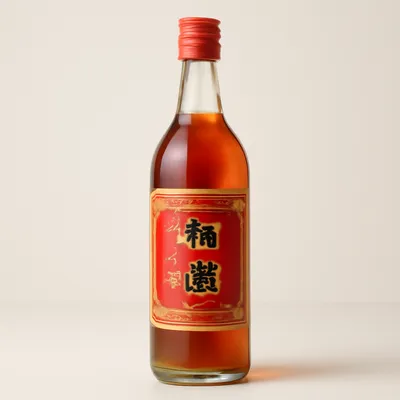

How it's made
7 steps · 20 min
- 115 min
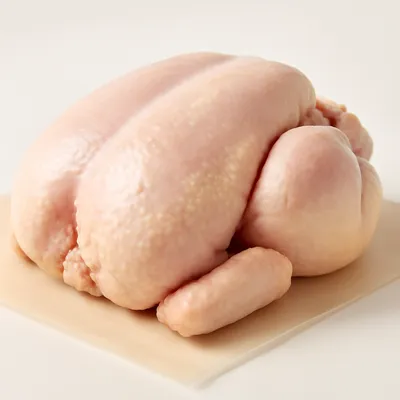
Wash and pat dry the whole chicken. Rub salt, ginger slices, and Shaoxing wine evenly over the surface and inside the cavity; rest for 15 minutes.
- 280 min
Bring a large steamer to a rolling boil. Place chicken breast-up on the steaming rack; reduce to medium heat, cover, and steam 70–80 minutes until juices at the thigh joint run clear when pierced.
Watch outSteam low and steady the full 70–80 minutes; done is clear juice at the pierced thigh joint — pink juice means back in the steamer.
- 330 min
Turn off heat; carefully lift out the chicken and pour all accumulated steaming liquid into a bowl to reserve. Set the chicken on a rack to cool to room temperature, about 30 minutes.
Watch outSave every drop of liquid pooled under the chicken — that concentrated broth stirred into the dressing is what gives the dish its savory depth; don't tip it out.
- 45 min
Toast Sichuan peppercorn in a dry wok over low heat for 2–3 minutes until fragrant; cool slightly and coarsely grind.
Watch outToast the peppercorns on low just until fragrant and you smell them lift — a shade too dark and they'll grind bitter.
- 510 min
Combine dried chili oil (or quality dried Sichuan red chili), heated camellia oil, ground peppercorn, minced garlic, soy sauce, and 3–4 tablespoons of the reserved chicken broth in a bowl; stir until fully blended. Taste and adjust salt.
- 610 min
Once the chicken is fully cooled, chop into 4 cm pieces with a heavy cleaver — press the blade spine firmly with your palm for controlled cuts that minimize bone splintering.
- 75 min
Arrange chicken pieces on a serving platter; pour the dressing evenly over; toss gently until every piece is coated in red chili oil; scatter sliced scallion on top and serve at room temperature.
Archive tool suggestions — not reviewed
These legacy suggestions have not been evidence-reviewed and are not presented as required tools.

