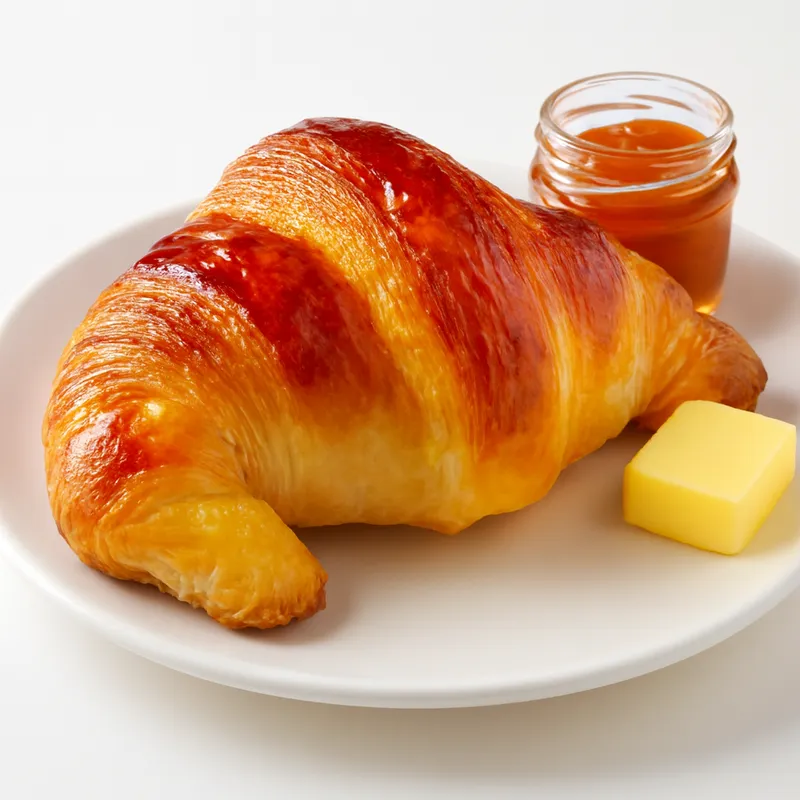

Brought to Argentina by Austrian and French bakers in the late 19th century, the medialuna evolved from the Viennese kipferl/French croissant lineage but was sweetened and downsized for mate-and-coffee culture. The honey glaze and smaller form became Buenos Aires-standard by the 1920s, when the city's confiterías hit their peak. The lard version is older and more rural.
Austrian-French baker lineage from late-19th-century Buenos Aires, downsized and sweetened from the Viennese kipferl. Three single butter folds instead of the French four-to-five — that's why the layers are present but soft, not shattering. Hot honey-syrup glaze gelatinizes for the lacquered shine.
Small, palm-sized crescents — softer and sweeter than a French croissant, with a sticky honey-syrup glaze brushed on while warm. The crumb is dense rather than airy, more brioche-like; the layers exist but don't shatter. Two styles: medialunas de manteca (butter, sweeter, glazed) and de grasa (lard, plainer, salted). Eaten with a cortado at a café counter, often two at a time.
The dough has more sugar and egg than a croissant base, and fewer butter folds (typically 3 single turns instead of the French 4–5), which is why the layers are present but soft rather than shattering. The post-bake glaze — sugar syrup with a touch of honey, brushed while still hot — gelatinizes on the surface and gives that lacquered shine; without it, the crust is just dry.
Variations
Medialunas de manteca (butter, sweeter, glazed — the café default); medialunas de grasa (lard, plainer, salted, often eaten with savory fillings); medialunas rellenas (filled with dulce de leche or jamón y queso); Confitería La Ideal and Las Violetas in Buenos Aires are the canonical reference.
On the Palate
Where Medialunas sits in the Argentinian flavor cloud
Ingredients
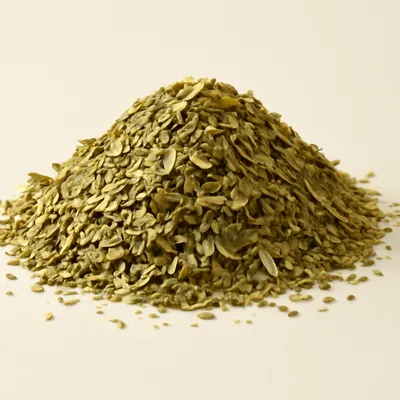
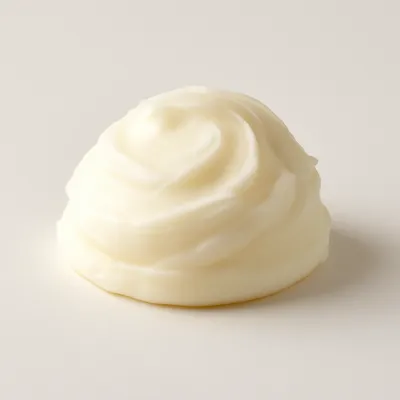

How it's made
6 steps · 4 hours
- 113 min
Mix flour, yeast, sugar, and salt in a bowl.
- 221 min
Add in milk and melted butter to form a dough.
- 321 min
Let the dough rise until doubled in size.
Watch outLet it prove until doubled and pillowy — press a floured finger in and the dent should spring back slowly; over-proofed, the layers won't hold their curl.
- 417 min
Roll out the dough and cut into triangles, then roll each into a crescent shape.
- 5105 min
Bake until golden brown.
Watch outBake to a deep even gold — pale means the sugar in the dough hasn't caramelized and they'll taste flat.
- 663 min
Brush with a honey glaze while still warm.
Watch outBrush the syrup while they're still hot from the oven — the heat sets it into that lacquered shine; wait too long and it just sits there sticky and dull.
Archive tool suggestions — not reviewed
These legacy suggestions have not been evidence-reviewed and are not presented as required tools.