Hand-rolled silk-fine noodles from Qingyang, ladled into a blazing-red spiced broth thick with pork or lamb, radish, tofu, and dried day-lily — the ritual noodle of Loess Plateau weddings and festivals. So piping hot and so heavily spiced you must slurp with a whistle of breath, earning it the folk name 哨子面: whistling noodles.




Qingyang臊子面 is Gansu's foremost ritual noodle. A legend traces the dish's roots to the early Western Zhou dynasty, claiming that the Zhou ancestor Gongliu brought a spiced-broth noodle tradition to Qingyang's Ning county — though this is folk传说 rather than documented history. A 臊子肉面法 recipe is recorded in the late-Ming health encyclopedia 《遵生八笺》 by Gao Lian (published 1591 CE), where its 饮馔服食笺 sets out a diced-pork sauced-meat noodle method. The dish flourished as wedding-ceremony food after the early Ming Hongwu period. The custom of the new bride cooking 试刀面 for in-laws on the morning of the third day after marriage persists in rural Qingyang today. A notable regional divide: southern Qingyang counties use pork 臊子 (Qingcheng, Ning County), while northern counties use lamb (Huachi, Huanxian).
Gossamer-thin noodles swimming in a fiery, sour-savory broth — chunky with tender pork, soft white radish, and silken tofu — that warms from throat to belly. The chili heat builds steadily; the vinegar's acid cuts the fat and keeps each mouthful bright.
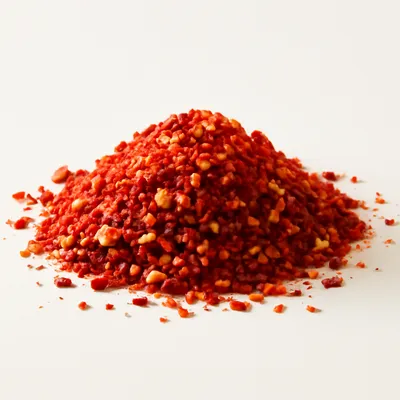
The 臊子 broth builds depth through two stages. First, dried chili flakes are bloomed in hot lard (辣椒炝锅 at 150–180 °C): fat-soluble capsaicin and the pigment capsanthin dissolve into the oil, fixing both heat and vivid red color. Second, the pork is stir-fried until Maillard browning develops savory amino-acid compounds, then simmered slowly so collagen hydrolyzes into gelatin, giving the broth body and a silky mouthfeel. The noodles are rolled extremely thin (about 1 mm) and cut fine, maximizing surface area for broth uptake — the broth-to-noodle ratio per bite is high, so every strand carries full flavor. By ritual tradition the soup must be served at scalding temperature: so hot you must whistle to cool it before swallowing, hence the folk name 哨子面.
Variations
Pork 臊子 version (southern Qingyang); lamb 臊子 version (northern Qingyang and Huanxian); vegetarian 臊子 for Buddhist fast days using only tofu, day-lily, and wood-ear mushroom; the 试刀面 wedding version is sometimes made with hand-stretched rather than rolled-and-cut noodles; modern restaurants serve in individual bowls, while the traditional rural ritual style involves a communal pot with continuous ladle-refill service.
On the Palate
Where Qingyang Braised-Pork Noodles sits in the Chinese flavor cloud
Ingredients
Serves 4

How it's made
7 steps · 45 min
- 110 min
Make the noodle dough: combine 400 g all-purpose flour with about 200 ml warm water, knead firmly for 10 minutes until the dough is smooth, elastic, and slightly firm. Cover with a damp cloth and rest for 20 minutes.
- 28 min
Prepare the 臊子 base: dice 200 g pork belly into 1 cm cubes. Heat 2 tbsp lard in a wok over medium heat. Add 3 tbsp dried chili flakes and stir for 30 seconds until fragrant and the oil turns vivid red. Raise heat to high, add pork, and stir-fry for 5 minutes until browned.
Watch outBloom the chili flakes in the lard just until the oil turns vivid red and smells fragrant — a second too long and they scorch bitter.
- 320 min
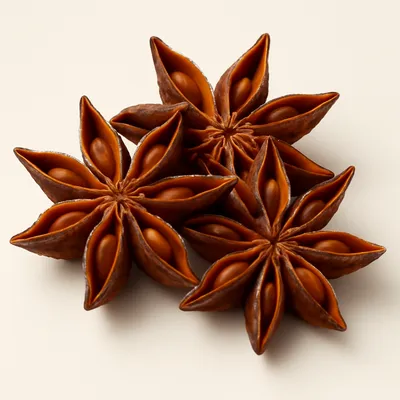
Build the broth: pour 1 L water into the wok with the pork. Add 100 g white radish cut into small dice, 100 g firm tofu cut into small cubes, a small handful of pre-soaked dried day-lily (黄花菜), 2 tbsp soy sauce, 1 tbsp aged black vinegar, 1 tsp salt, and 3 star anise. Simmer over low heat for 20 minutes until the broth is deeply red and fragrant.
- 410 min
Roll and cut the noodles: dust the rested dough well with flour. Roll out to roughly 1 mm thickness — as thin as you can manage. Dust the sheet, fold it several times, then cut into fine strands no wider than 2 mm. Shake the strands apart and dust with more flour to prevent sticking.
Watch outRoll the noodle sheet as thin as you can, near 1mm — thick noodles won't soak up the 臊子 broth and every bite goes bland.
- 53 min
Cook the noodles: bring a large pot of unsalted water to a rolling boil. Add the noodles and cook 2–3 minutes until just tender but still slightly springy. Stir gently to prevent clumping.
Watch outPull the noodles at just-tender with a little spring left — they keep softening in the scalding broth, so err on firm.
- 62 min
Assemble each bowl: drain noodles and portion into individual bowls. Ladle a generous amount of 臊子 broth over the top, making sure each bowl gets pork, radish, tofu, and day-lily.
- 71 min
Serve immediately at scalding temperature. Add a drizzle of extra chili oil and a splash of black vinegar to taste. The dish must be eaten piping hot — the heat is part of the ritual.
Archive tool suggestions — not reviewed
These legacy suggestions have not been evidence-reviewed and are not presented as required tools.


