A soft translucent roll of semolina-and-stretchy-cheese dough filled with clotted cream (ashta), sliced into spirals, drenched in orange-blossom syrup and crowned with crushed Aleppo pistachios — a centerpiece of the Syrian sweet table.
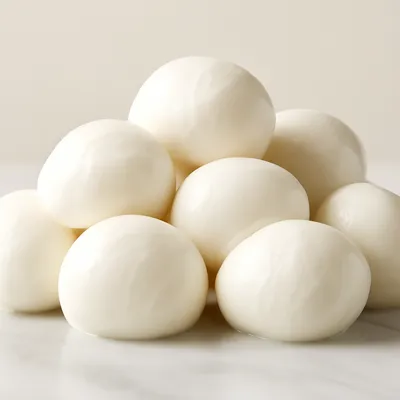


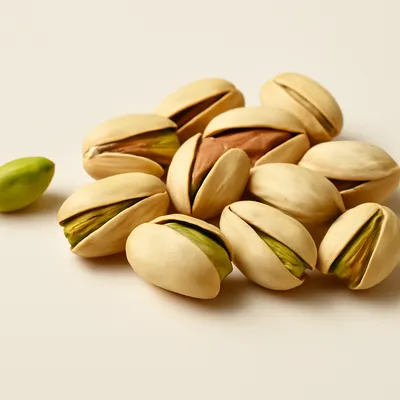
Halawet el Jibn (literally sweetness of the cheese) is a luxurious dessert whose origins lie in central Syria. It is one of the most refined expressions of the Damascene and broader central-Syrian cheesemaking-and-syrup pastry tradition — a silk ribbon of sweet cheese, as one description puts it. It belongs to the family of mouhalabieh-style milk-and-semolina sweets that link Damascus to the ancient and medieval Arab dessert repertoire, layered with the Ottoman-era refinement of stretched-cheese pastry technique. The use of Aleppo pistachios and rose or orange-blossom syrups ties it firmly to Bilad al-Sham.
The cheese dough is soft, slightly chewy and faintly salty — a perfect foil for the cool, bland sweetness of the clotted cream within. The orange-blossom syrup perfumes every bite; the crushed pistachio adds green crunch and nutty depth. It is rich but not heavy, the salt of the cheese keeping the sweetness in check.
Heating and kneading a mixture of mozzarella-type cheese with semolina and water melts the cheese proteins (casein) into a continuous, stretchable network — the same cross-linking that gives pizza mozzarella its melt, here repurposed into a pliable dough that can be rolled thin. The semolina provides starch to bind and structure the dough so it holds its shape once cool. Clotted cream (ashta) filling is chosen because it is stable at room temperature (unlike whipped cream) and has a clean dairy sweetness. Hot sugar syrup poured on at the end is absorbed into the porous cheese dough; the orange-blossom water's volatile aromatics are added off the heat so they are not lost.
Variations
Some add a fine layer of ground pistachio inside the roll along with the cream. A modern version shapes the dough into individual bite-sized rolls. The syrup may be rose-scented instead of orange-blossom.
On the Palate
Where Halawet el Jibn sits in the Syrian flavor cloud
Ingredients
Serves 8
How it's made
5 steps · 50 min
- 14 min
In a saucepan, bring 150ml water, 1 tbsp sugar and 1 tbsp corn oil to a boil; add 75g fine semolina and stir constantly over medium heat 2-3 minutes until thick.
- 25 min
Off the heat, add 250g shredded low-salt mozzarella (or akkawi, soaked and drained) and 1 tbsp sugar; stir vigorously until the cheese melts and pulls into a smooth, pliable dough (return to low heat briefly if needed).
Watch outStir the cheese into the hot semolina until it melts into a smooth, stretchy dough — under-melted it's lumpy and tears; over-heated it turns tough and won't roll thin.
- 38 min
Turn onto a damp cloth or silicone mat; knead briefly until smooth, then roll or press out into a thin rectangle about 3mm thick; let cool until just warm and no longer sticky.
Watch outRoll it out while just warm and no longer sticky — too hot it slumps and sticks; fully cold it stiffens and cracks when you shape it.
- 430 min
Spread a generous layer of ashta (clotted cream, or 200g mascarpone thinned with 2 tbsp milk) evenly over the dough; roll up tightly into a log, wrap in cling film and chill 30 minutes to set.
- 53 min
Slice the log into 3cm spirals; arrange on a plate; drench with orange-blossom syrup (300g sugar, 200ml water, 1 tbsp lemon juice simmered 8 min, then 1 tbsp orange-blossom water off heat); crown generously with crushed Aleppo pistachios.
Watch outDrench with syrup while both are the right temperature so the porous dough drinks it in — a cold roll or cold syrup just beads and slides off.
Archive tool suggestions — not reviewed
These legacy suggestions have not been evidence-reviewed and are not presented as required tools.


