
Bosnia's date-shaped semolina cookies — semolina-and-flour dough mixed with butter, sugar, eggs, and yogurt, shaped into small oval 'dates,' baked golden, then soaked in a hot sugar-and-lemon syrup until plump and saturated. Dusted with chopped walnuts. The cookies stay moist and syrupy for days; the texture is between a cake and a sponge. The Ottoman-Bosnian dessert served at every Eid celebration and family wedding.





Hurmašice (Bosnian-Turkish 'hurma' = date) is the Ottoman-Bosnian syrup-soaked dessert that's served at Eid celebrations and weddings. The name comes from the cookies' shape (resembling pitted dates) — though the cookies contain no dates. The Sarajevo recipe uses semolina, which gives them their characteristic golden-grainy texture; the long syrup-soaking gives them their characteristic moisture. The dish came to Bosnia during 400 years of Ottoman rule (1463-1878), where similar syrup-soaked cookies (like Turkish şekerpare) were daily palace fare. Modern Bosnian families bake 50-100 hurmašice for every wedding and Eid; they keep for 2 weeks in airtight containers, making them perfect for advance preparation. The dessert is served alongside Bosnian coffee (kafa) from a džezva.
Pick up a hurmašica — golden-brown semolina cookie shaped like a date, glistening with sugar syrup, walnut pieces clinging. Bite: the cookie is plump and saturated with sweet syrup, the semolina gives a slightly-grainy texture that's between cake and sponge, the lemon's citrus brightness cuts through the heavy sweetness, the cinnamon's warm-spice adds depth. Chew with a sip of Bosnian coffee — the coffee's bitterness perfectly balances the cookie's intense sweetness. Three or four hurmašice with strong coffee is the Bosnian post-meal ritual, unchanged for 400 years.
Semolina (coarsely-ground durum wheat) gives hurmašice their characteristic grainy texture — different from all-purpose-flour cookies, which would be smoother — and the hard-wheat grains can drink a lot of syrup without collapsing. The high yogurt content provides moisture and tang; the egg + baking powder + yogurt creates an airy crumb that's perfect for absorbing syrup. The temperature contrast between syrup and cookies is critical, but the classic rule is one-hot-one-cold rather than both hot: cooled (or warm) syrup is poured over the cookies straight from the oven. The hot, well-browned cookies have a Maillard-set crust that resists dissolving and open, heat-expanded pores that draw the cooler syrup deep in by capillary action; the temperature differential restrains the absorption rate so the cookies plump up fully without turning mushy or losing their ridged pattern. Letting them rest 2+ hours (ideally overnight) allows complete, even syrup absorption. The lemon's acidity inverts some of the sucrose into non-crystallizing invert sugar (glucose + fructose), keeping the syrup smooth and clear instead of going grainy.
Variations
Almond hurmašice replace walnuts with chopped almonds. Pistachio hurmašice use pistachios. Chocolate hurmašice (modern) add cocoa powder to the dough. Date hurmašice (literal interpretation) add chopped fresh dates to the dough. Rose-water hurmašice add 1 tbsp rose water to the syrup. Saffron hurmašice add a pinch of saffron — celebration version. Cocktail-size mini hurmašice for tea parties.
On the Palate
Where Hurmašice sits in the Bosnian flavor cloud
Ingredients
Serves 8




How it's made
14 steps · 30 min active + 1 hour waiting
- 14 min
Make dough: in a large bowl, combine 250 g semolina + 250 g all-purpose flour + 1 tsp baking powder + 1/4 tsp salt.
- 24 min
In a separate bowl, whisk 150 g melted butter + 100 g sugar + 2 large eggs + 200 ml plain yogurt + 1 tsp vanilla extract.
- 332 min
Pour wet into dry. Mix until just combined into a soft, slightly-sticky dough. Cover; rest 30 min.
Watch outStop mixing the second it comes together into a soft dough — work it any more and the cookies bake up tough instead of grainy-tender.
- 44 min
Preheat oven to 180°C. Line a baking sheet with parchment paper.
- 58 min
Shape the cookies: with wet hands, take about 25 g of dough; roll into an oval shape about 4 × 2 cm. Press a fork on top to create a slight indentation (the 'date' look).
- 66 min
Repeat to make ~30 cookies. Arrange on the baking sheet, 2 cm apart.
- 722 min
Bake 20-25 min until golden-brown.
Watch outBake to a real golden-brown, not pale — a well-browned cookie holds its shape and drinks the syrup; a soft pale one turns to mush.
- 812 min
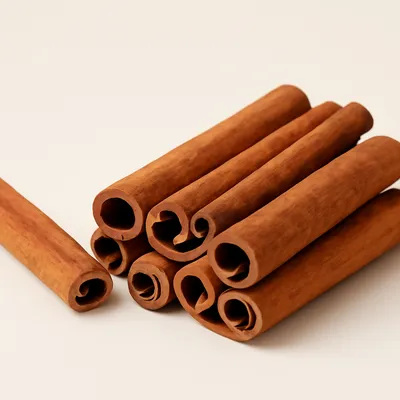
While the cookies bake, make the syrup: in a saucepan, combine 500 g sugar + 350 ml water + 1 lemon (zest + juice) + 1 cinnamon stick. Bring to a boil; reduce heat. Simmer 8 min until slightly thickened. Remove cinnamon.
- 94 min
When cookies are baked, transfer them to a deep pan (still hot). Slowly pour the hot syrup over the cookies — they will sizzle and absorb.
Watch outPour the syrup over while the cookies are straight-from-the-oven hot — you want them to sizzle and pull the syrup in; that contrast is what plumps them.
- 102 min
Press down on the cookies with a spoon to make sure they're all submerged in syrup.
- 11122 min
Cover the pan. Let sit at room temperature 2 hours (or longer — overnight is even better) so the cookies absorb the syrup and become plump and tender.
- 122 min
Sprinkle with 100 g chopped walnuts.
- 133 min
To serve: place 2-3 hurmašice in a small dessert plate, spoon a bit of extra syrup over, sprinkle additional walnuts on top.
- 143 min
Serve at room temperature with strong Bosnian coffee. The cookies keep in an airtight container for up to 2 weeks.


