The Idea
Pour oil into water and it beads up and floats; the two want nothing to do with each other. Yet a spoon of mayonnaise is mostly oil suspended in a little water, held so smoothly you'd never guess. That suspension is an emulsion — millions of oil droplets coaxed to hang, evenly, in a liquid they'd normally flee.
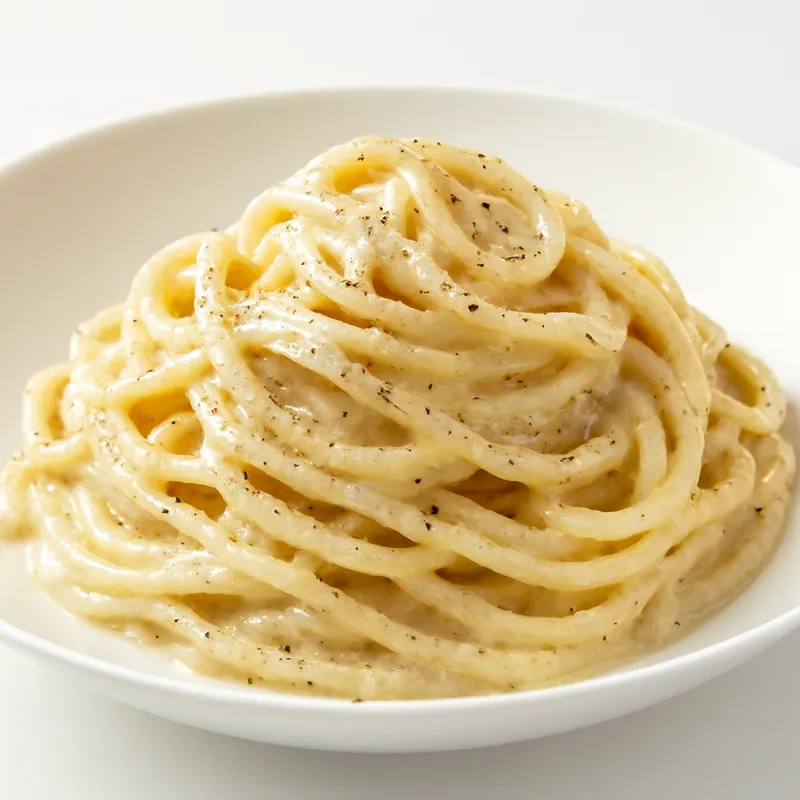
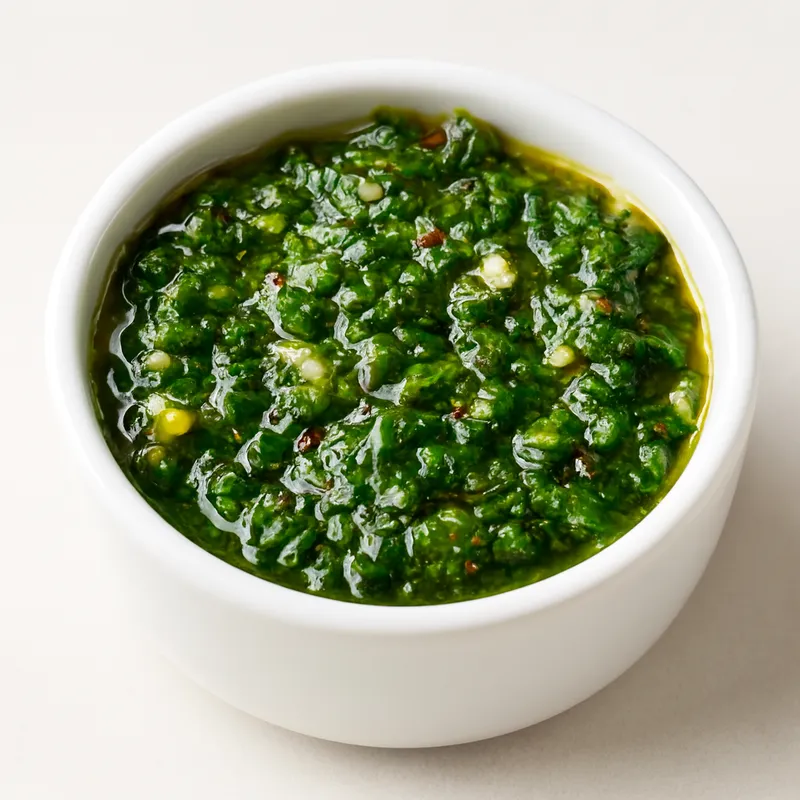
It is one of the quiet marvels of the kitchen, arrived at independently wherever cooks whisked fat into liquid: Provençal aioli, French hollandaise, Lebanese toum, a Roman cheese sauce clinging to pasta. Different oils, different liquids, the same feat — a stable marriage of two things that don't belong together.
The tongue tastes the liquid on the outside, not the oil trapped within — which is why mayonnaise, nearly all oil, never tastes oily.
A Short History
representative milestonesA poem attributed to Virgil, the Moretum, describes a farmer pounding garlic, cheese, and olive oil in a mortar — a documented ancestor of aioli, made by hand two thousand years before the whisk.
After the French siege of Port Mahón, a cold sauce of oil beaten into egg travels back to France as "mahonnaise" — the disputed birth of mayonnaise, most likely Menorcan in origin.
Marie-Antoine Carême codifies the grand sauces of French cooking in L'art de la cuisine française, laying the classification the emulsified sauces would later be sorted into.
Théodore Gobley isolates lecithin from egg yolk — later named for the Greek for yolk — identifying the very molecule that makes mayonnaise and hollandaise hold.
Escoffier's Le Guide Culinaire treats mayonnaise as a mother sauce — a true cold emulsion from which a whole family of sauces descends.
Richard Hellmann begins selling mayonnaise in labeled glass jars, turning a whisked-to-order sauce into a shelf-stable emulsion made by the millions.
What's Happening
The secret is a go-between called an emulsifier — a molecule with a split personality, one end that loves water and one that loves oil. In mayonnaise and hollandaise it's lecithin, a phospholipid from egg yolk; in a vinaigrette it can be the mucilage in a dab of mustard; in aioli, compounds from the garlic itself. Whisk hard and the fat shears into tiny droplets; the emulsifier rushes to coat each one, its oil-loving end buried in the droplet and its water-loving end facing out, lowering the tension between the two and keeping the droplets from merging back. The reason it matters to your mouth: you taste the continuous phase — the liquid on the outside — not the droplets suspended inside. A sauce that is two-thirds oil can taste bright and lemony rather than greasy, because oil is the part you never directly touch.
Four Ways to Bind
the mental modelEvery emulsion answers the same question — what keeps the droplets apart? — in one of a few ways. Learn these and you can read any sauce on the table: which will hold for days, which you must serve at once, and how to save one that splits.