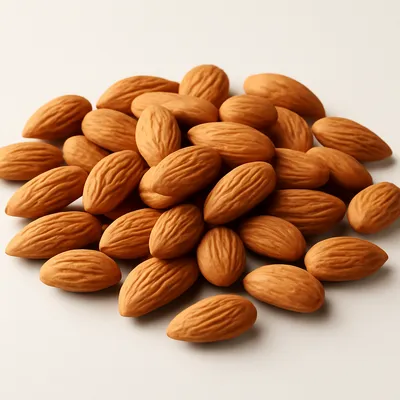
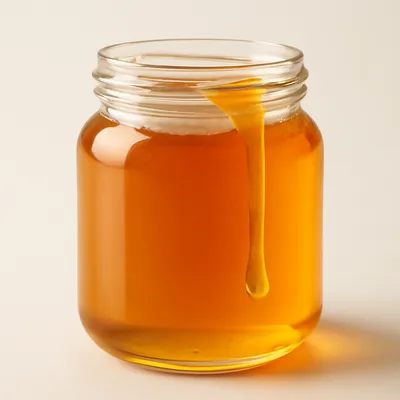
Pillowy domes of sweet and bitter almond paste from Ozieri in northern Sardinia — ground almonds bound with sugar, honey, and lemon zest, shaped into small rounded mounds and encased in a glassy white fondant glaze, then wrapped one by one like bonbons; a wedding confection born in the 19th century from the bighinas tradition of neighborly women gathering to help a bride prepare.




The Sospiri di Ozieri arose in 19th-century Ozieri, a hilltop town in the Logudoro area of Sassari province, northern Sardinia, as a wedding confection prepared by the bighinas — the neighborhood women who gathered in the days before a wedding to help the bride's family with food preparation and domestic tasks. The name 'sospiri' (sighs) is said to evoke either the delicate lightness of the sweets or the admiring sighs of guests who tasted them. Today they are the most emblematic confection of Ozieri and are listed among Italy's traditional agri-food products (PAT).
The thin glaze cracks at the first bite with a faint snap, yielding to an almond paste that is dense, moist, and intensely fragrant — the bittersweet interplay of sweet and bitter almonds, lifted by a thread of honey and a bright jolt of lemon zest that ties the sweetness together.
Marzipan forms through mechanical grinding: rupturing almond cell walls releases almond oil, which coats sugar crystals and binds the mass into a smooth, plastic colloidal paste. Bitter almonds contribute amygdalin — a glycoside that, when cell walls are ruptured and exposed to moisture, is hydrolysed by the endogenous enzyme emulsin to release benzaldehyde (the sharp, characteristic almond note) and trace hydrocyanic acid (dissipated safely at the small quantities used). Honey's invert sugars (fructose and glucose) are strongly hygroscopic, keeping the paste moist and slowing sugar crystallisation inside the dome. The fondant glaze is a supersaturated sucrose solution: cooked to 115°C (soft-ball stage) to concentrate the sugar, then cooled and beaten until billions of micro-crystals nucleate simultaneously — the resulting smooth, opaque paste sets firm and glassy when applied and dried, creating a crackling shell that contrasts the soft paste within.
Variations
The classic recipe uses only sweet and bitter almonds, sugar, honey, and lemon zest; some modern Ozieri confectioners add a drop of bitter almond extract or orange zest for a brighter citrus note. The traditional glaze is white fondant, but festive versions occasionally use coloured sugar glaze. Sospiri are always sold individually wrapped in waxed or printed paper. A related Sardinian almond confection from the island's interior uses a nearly identical paste baked without the fondant shell.
On the Palate
Where Sospiri di Ozieri sits in the Italian flavor cloud
Ingredients
Serves 24How it's made
6 steps · 45 min
- 15 min
Blanch sweet and bitter almonds together in boiling water for 2 minutes, then drain, rinse under cold water, and slip off the skins; spread on a clean towel and dry thoroughly.
- 215 min
Process the dried almonds in a food processor until they reach a fine, oily paste; add granulated sugar gradually and continue processing until the mixture becomes smooth and cohesive.
Watch outGrind the almonds to a paste that just turns oily and clumps, no further — push past that and the released oil splits and greases the paste.
- 310 min
Warm the honey slightly until liquid and add to the almond-sugar mixture along with the freshly grated lemon zest; knead by hand until the paste is uniform, pliable, and just holds its shape.
- 420 min
Pinch off walnut-sized portions of paste; roll each between dampened palms into a smooth ball, then flatten the base slightly to create a stable dome; arrange on a parchment-lined tray and refrigerate for 30 minutes to firm.
- 520 min
Make the fondant glaze: dissolve sugar in water over medium heat, then boil without stirring to 115°C; remove from heat, pour onto a marble slab or into a bowl, cool to 40°C, then beat vigorously with a spatula until the syrup turns white, opaque, and smooth.
Watch outBoil the syrup to exactly 115°C, then cool to about 40°C before beating — beat it hot and it stays runny; beat it at the right temp and it turns white and opaque.
- 630 min
Working quickly while the fondant is still fluid, dip each chilled dome into the glaze, allow the excess to drip off, and set on a wire rack; when the glaze has hardened to a glassy shell, wrap each piece individually in waxed or printed paper.
Watch outDip while the fondant still flows and work fast — once it starts to set it goes lumpy and won't coat in a clean glassy shell.
Archive tool suggestions — not reviewed
These legacy suggestions have not been evidence-reviewed and are not presented as required tools.


