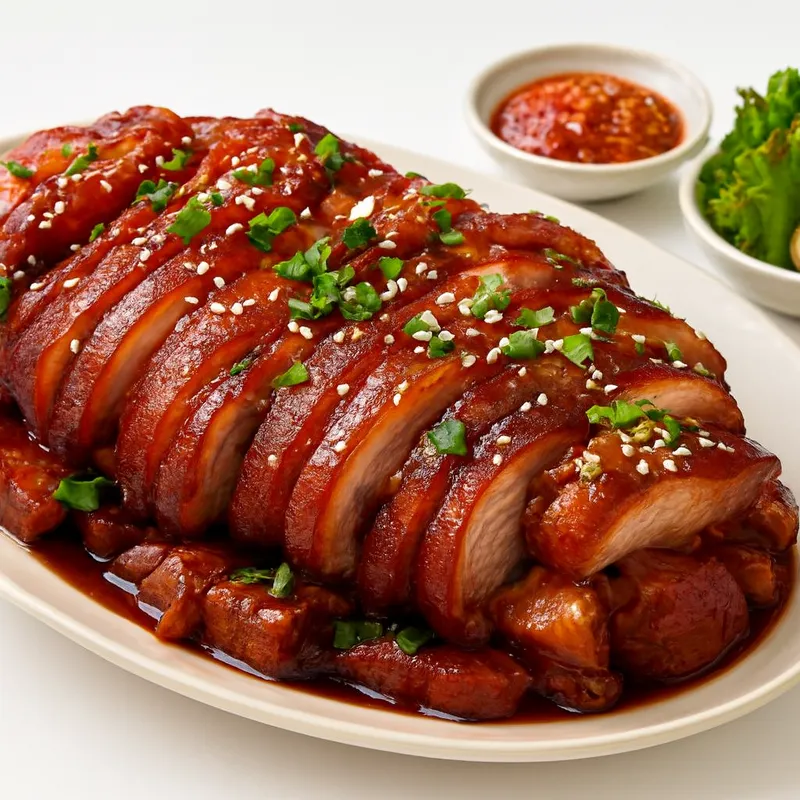
Kongbiji Jjigae
“Earthy stew of kongbiji — the soybean lees left after grinding and straining tofu — simmered with pork belly, aged kimchi, and a splash of anchovy stock; a humble winter pot.”
Where it comes from
Kongbiji jjigae is the frugal cousin of sundubu jjigae and budae jjigae — born of households that made their own tofu and used the lees rather than throw it out. It belongs to the central and northern peninsula winter table; in Seoul it became a Jongno-area working-class dish in the 1960s-70s when small tofu workshops sold the leftover okara cheap. The home version above uses the whole crushed bean (a thicker, sweeter result) rather than waste-stream okara — both are called kongbiji.
On the plate
A grainy, oatmeal-thick stew the colour of pale ash, flecked with red kimchi and dark pork. The texture is the whole point — coarse, crumbly, slightly sandy on the tongue, completely unlike smooth soup. Soybean sweetness comes through first, then the funk of aged kimchi, then pork-fat warmth. Many people find the texture confronting on first try; eaten over rice with a spoonful of yangnyeomjang stirred in, it becomes the comfort dish of grandmothers. Burnt bottom = ruined; the pot must be stirred constantly.
How it works
Soybean lees has very little gluten or pectin to bind it, so the stew thickens by mechanical suspension only — the coarse fibre traps water. This is also why it sticks: with no protein gel layer between mash and pot, contact heat scorches in 60 seconds if you stop scraping. Aged kimchi (fermentation pH around 4.0) is non-negotiable — fresh kimchi tastes flat against the bean's sweetness. The pork belly is there for fat, not meat; the rendered lipid is what carries the kimchi seasoning into the bean particles.
Frugal cousin of sundubu — born when households made tofu and used the lees instead of throwing them out. Became Jongno working-class food in 1960s-70s Seoul when small workshops sold okara cheap. Aged kimchi at pH 4.0 is non-negotiable; fresh kimchi tastes flat against the bean's sweetness.
Variations
Seoul Jongno working-class style with aged kimchi and pork belly; Gangwon highland version uses whole crushed beans for sweetness; Buddhist temple kitchens skip pork and add mushroom; Jeolla cooks add kelp stock to thin it.
On the Palate
Ingredients
Serves 3




How it's made
5 steps · Show ↓30 min active · 20 min waiting
How it's made
5 steps · Show ↓- 15 min
Soak 200g dried soybeans in cold water 8 hours (or overnight) until they double in size and a split bean shows pale-yellow flesh through. Drain.
- 28 min
Blend the soaked beans with 600ml fresh water in batches until rough — texture should be coarse cornmeal, not smooth milk. Don't strain. This unstrained mash IS kongbiji (the bean-lees stew uses the whole crushed bean rather than the okara left after tofu-making, in the most common Seoul home version).
- 38 min
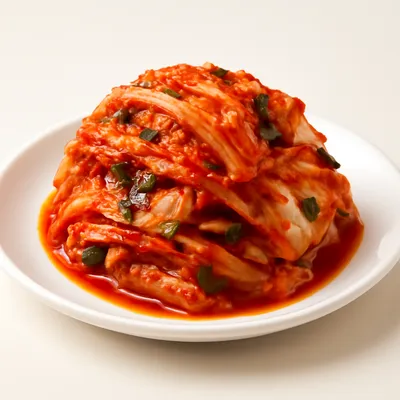
In a ttukbaegi clay pot, render 150g pork belly cut in 1cm strips over medium heat 5 minutes until the fat runs clear. Add 150g chopped aged kimchi and 1 tsp gochugaru; stir-fry 3 minutes until the kimchi smells caramelized.
- 413 min
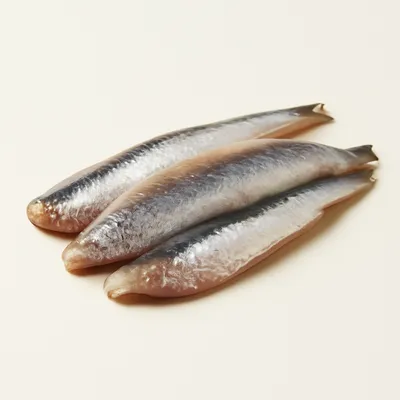
Pour in 400ml anchovy-kelp stock (10g dried anchovies + 8cm dasima simmered 10 minutes, strained). Bring to a boil. Pour in the bean mash. Stir gently and simmer 12 minutes over low heat — kongbiji burns easily on the bottom; scrape with a wooden spoon every 2 minutes.
Watch outKongbiji burns easily on the bottom; scrape with a wooden spoon every 2 minutes.
- 54 min
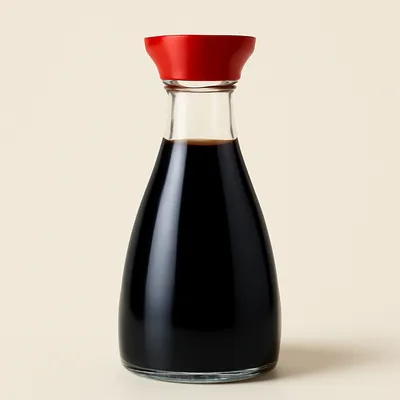
Season with 1 tbsp gukganjang, 1 tsp saeujeot (salted shrimp), and salt to taste. Off heat. Top with 1 sliced scallion and a small spoon of yangnyeomjang on the side (1 tbsp soy + 1 tsp gochugaru + sesame oil + minced garlic). Serve in the clay pot with rice; eaters mix the sauce in to taste.
What you'll need
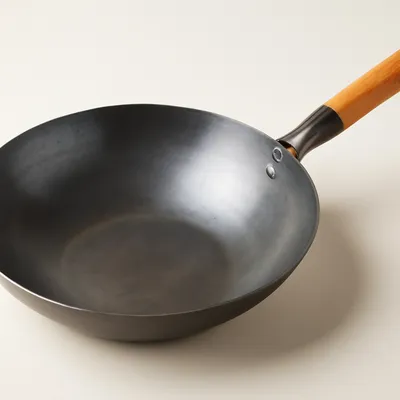
A carbon-steel hemispherical pan, 30-40 cm across, with a rounded bottom and high sloping walls. The bottom takes ferocious direct heat — a properly seasoned wok over a roaring gas flame holds 250-300°C, hot enough to deliver wok hei, the breath-of-the-wok smoky char prized in Cantonese stir-fry. The sloped walls give cooler zones for batch-cooking, and the rounded bottom lets a single tossing motion distribute oil and food evenly.
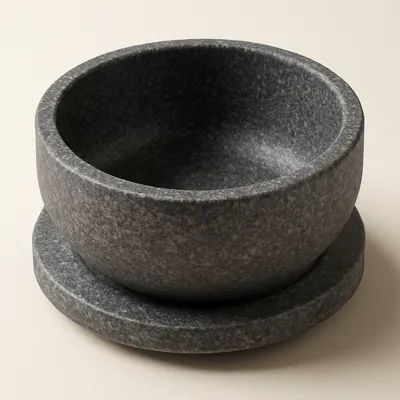
A heavy unglazed Korean stone bowl, 18-22 cm across, that goes from stovetop straight to table. Heated to ~250°C before the rice is added, it crisps the rice into a crackly nurungji (the prized golden crust on the bottom of bibimbap) within 30 seconds. The bowl stays at serving temperature for 15+ minutes — the egg yolk in dolsot bibimbap cooks against the wall as you stir.

A round-bellied unglazed clay pot, 1.5-3 liters, with a domed lid and side handles, used for slow-cooking Chinese soups, claypot rice (煲仔饭), and stews. The clay's high porosity diffuses heat slowly so soups never come to a violent boil — flavor develops over 2-3 hours of low simmer. Cantonese claypot rice gets its prized crispy bottom (锅巴) from the same direct-flame stovetop heat that would crack a less robust pot.

A small, thick-walled Korean earthenware pot, 12-18 cm across, that goes from gas burner to table. Its high thermal mass keeps soybean stews (doenjang jjigae), silken-tofu stews (sundubu jjigae), and steamed eggs (gyeran jjim) furiously bubbling for 10+ minutes after leaving the heat. The pot is meant to deliver food still actively cooking — a quirk of Korean meal pacing the Japanese donabe shares.