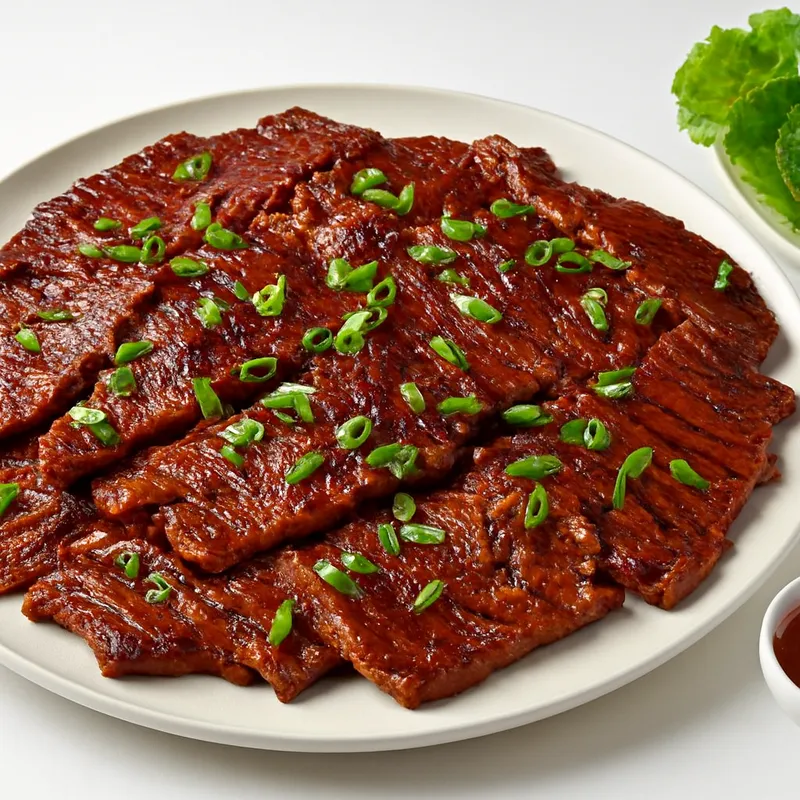
Ojingeo Bokkeum
“Squid scored and stir-fried in gochujang-soy sauce with onion, carrot, scallion, and sesame oil; sweeter and milder than Jeolla's nakji bokkeum, with bouncy Q-textured rings.”
Where it comes from
Ojingeo bokkeum is a 20th-century Seoul home and pojangmacha (street tent) staple. Squid (ojingeo) became cheap and abundant in Korea after the East Sea fleet expanded in the 1960s, and the gochujang stir-fry format borrowed directly from earlier nakji and jeyuk bokkeum recipes. It's now a standard Korean kitchen and bunsik-jib (snack-house) dish, sweeter and tamer than its Jeolla octopus cousin to suit a wider palate. Often plated alongside udon noodles or as a topping for bibimbap-style 'ojingeo deopbap'.
On the plate
The squid pieces curl into ridged little pinecones — that crosshatch scoring is the visual giveaway of a properly-prepped ojingeo bokkeum. Bite gives a soft initial yield then a Q-bounce as the muscle fibre snaps back. The sauce is sweet-spicy, gochujang-forward, with the soy and sugar pulling it toward bibimbap territory rather than the death-spice of Jeolla nakji bokkeum. Onion sweet, carrot crisp, scallion still pungent. Rubbery squid means more than 3 minutes in the pan; flat (uncurled) squid means the scoring went through.
How it works
Crosshatch scoring is the load-bearing technique: cuts at 5mm intervals shrink at different rates than the uncut underside when proteins contract above 70°C, forcing the piece to curl into ridged spirals. This both increases surface area for sauce adherence and creates the 'Q' textural rebound from intact longitudinal fibre. Cooking time is the second variable — squid stays tender below 3 minutes or above 30 minutes; the deadly middle window (3-15 minutes) is when it goes rubbery.
Squid stir-fry that took off after Korea's East Sea fleet expanded in the 1960s. Crosshatch scoring at 5mm is the load-bearing technique — cuts shrink at different rates above 70°C and force the piece to curl into ridged pinecones for sauce-grip.
Variations
Seoul home version is sweet-spicy and gochujang-forward; bunsik-jib shops plate it on udon; ojingeo-deopbap is the rice-bowl format; Gangwon coastal versions sometimes use whole baby squid uncut for chew.
On the Palate
Ingredients
Serves 3







How it's made
5 steps · Show ↓20 min active · 5 min waiting
How it's made
5 steps · Show ↓- 18 min
Clean 2 medium squid (about 500g): pull out head, remove ink sac, beak, and inner cartilage; peel off the purple skin under cold running water. Slice the body open into a flat sheet.
- 25 min
Score the inside surface of the squid in a 5mm crosshatch — go 70% through the flesh, not all the way. This is what makes the rings curl into bouncy 'pinecone' shapes when cooked. Cut into 4cm x 3cm rectangles. Cut tentacles into bite-size clusters.
- 33 min
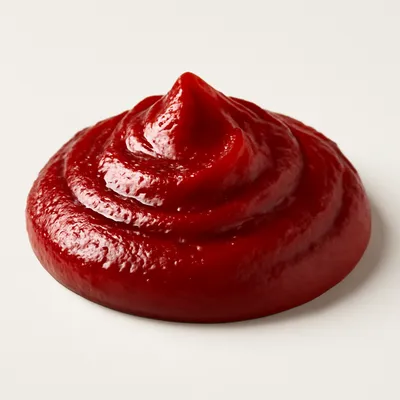
Whisk sauce: 2 tbsp gochujang, 1 tbsp gochugaru, 2 tbsp soy sauce, 2 tbsp sugar, 1 tbsp rice wine, 1 tbsp minced garlic, 1 tsp grated ginger, 1 tsp toasted sesame oil, ½ tsp ground black pepper. Sweeter than the Jeolla version — Seoul style.
- 42 min
Heat 2 tbsp neutral oil in a wide skillet over high. Add 1 sliced onion, 1 carrot in 3mm half-moons, ½ green cabbage cut in 4cm squares. Stir-fry 90 seconds — vegetables stay crisp.
Watch outMake sure the oil is hot enough to prevent the vegetables from steaming.
- 53 min
Add squid and sauce. Stir-fry hard 2 minutes — the scored pieces will curl into ridged rolls and the sauce turns glossy. Off heat, toss in 3 scallion batons and 1 tsp toasted sesame seeds. Serve over rice.
Watch outAvoid overcooking the squid to maintain its bouncy texture.
What you'll need
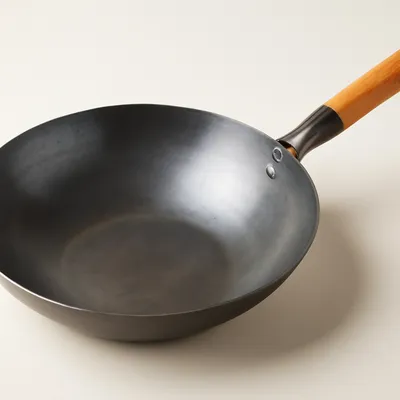
A carbon-steel hemispherical pan, 30-40 cm across, with a rounded bottom and high sloping walls. The bottom takes ferocious direct heat — a properly seasoned wok over a roaring gas flame holds 250-300°C, hot enough to deliver wok hei, the breath-of-the-wok smoky char prized in Cantonese stir-fry. The sloped walls give cooler zones for batch-cooking, and the rounded bottom lets a single tossing motion distribute oil and food evenly.
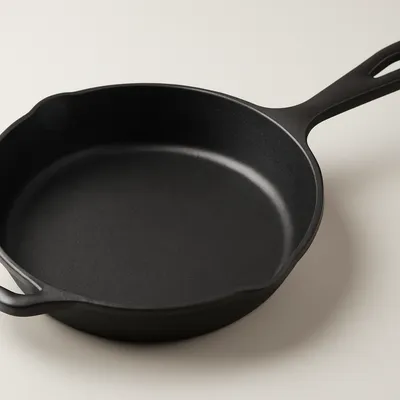
A heavy, single-piece cast iron pan, 25-30 cm across, weighing 1.5-2.5 kg. Once preheated, the thick mass holds 230°C+ even when a cold steak hits the surface — that's the secret to a deep crust. A well-seasoned skillet (multiple thin layers of polymerized oil baked into the iron) is essentially nonstick, gets better with use, and lasts a century. Lodge skillets from Tennessee have been in continuous production since 1896.