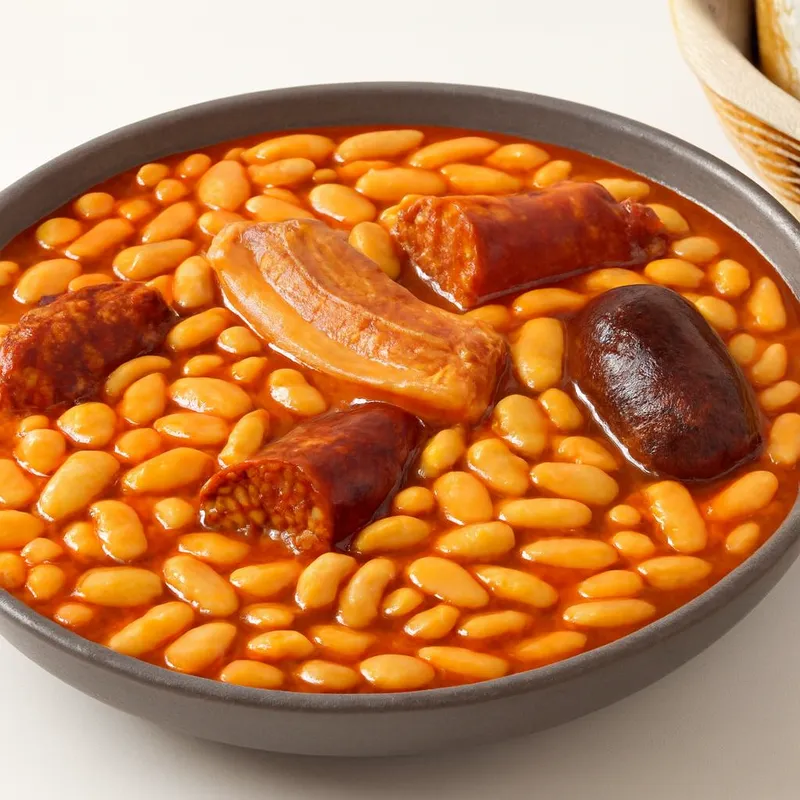
Botifarra amb mongetes is Catalan home cooking at its most basic — paired pork-and-beans on every farmhouse table since at least the 17th century. The pairing reflects what every Catalan smallholder produced: a backyard pig that became sausage, and the ganxet bean that thrived in the Vallès basin. Nicknamed seca i botifarra (dry beans and sausage), it's the Catalan equivalent of bangers and mash — peasant fuel that became a sentimental staple of Sunday lunches and rural festes.
Catalan farmhouse pork-and-beans since at least the 17th century. Ganxet beans have a seed coat half the thickness of navy beans, so fat penetrates fast. Salt only goes in the last 10 minutes — calcium ions cross-link with pectin and harden the skins.
A burnished sausage that sounds taut when you cut it, then releases a perfumed pork juice — coarse-ground, fennel-and-pepper accent, more rustic than a frankfurter. Underneath, beans the colour of cream sit in a glossy fat-and-bean-broth slick; you push sausage through the beans with each bite. The ganxet bean's thin skin almost dissolves on the tongue. A dry sausage means it was over-pricked; mealy beans mean a hard boil.
The dish is constructed in one pan: the pork fat that renders out of the sausage becomes the cooking medium for the beans, which absorb it. The ganxet variety is structurally key — its abnormally thin seed coat (about half the thickness of a navy bean's) lets fat penetrate fast and gives the creamy mouthfeel. What genuinely toughens beans is hard water: divalent calcium and magnesium ions cross-link with the bean cell-wall pectin and firm up the tissue. Table salt (sodium) does the opposite — sodium displaces those hardening ions, so salting early does not toughen modern dried beans and can even speed softening.
Variations
Vic ganxet is the protected bean; Empordà sometimes uses tavella beans instead; Pyrenees Pallars version finishes with grilled botifarra negra (blood sausage); Barcelona old-school taverns serve it with allioli on the side.
On the Palate
Where Botifarra amb Mongetes sits in the Spanish flavor cloud
Ingredients
Serves 4

How it's made
6 steps · 25 min active + 11 hours 35 min waiting
- 15 min
Soak 300g dried mongetes del ganxet (or any small white bean) overnight in cold water. The ganxet variety has a hooked shape and unusually thin skin — it cooks creamier than other white beans.
Watch outOld beans never cook tender — buy from a shop with high turnover, ideally current-year crop.
- 275 min
Drain, cover with fresh cold water by 5cm, add 1 bay leaf, 1 garlic clove, half an onion, no salt. Bring to barely-simmer and cook 60-90 min until skins are tender but beans are still whole. Salt only in the last 10 min.
Watch outHard boil splits the bean skins — the broth turns cloudy and beans go mealy. Bare simmer only.
- 33 min
Drain beans, reserve 200ml cooking liquid. Discard the aromatic vegetables.
- 410 min
Score 4 fat botifarras (each 150g) once on top so they don't burst. In a heavy skillet over medium heat, prick lightly with a fork. Cook in 1 tbsp olive oil 4 minutes per side until deeply browned and just firm — internal 70°C. Move to a warm plate.
Watch outHigh heat splits the casing and dries the sausage — medium browning over 8 min total is the right pace.
- 56 min
In the same pan with all the rendered pork fat, add 2 minced garlic cloves; cook 30 seconds until just blond. Add the drained beans, toss gently. Pour in 100ml of the bean cooking liquid, simmer 4 minutes — beans absorb the pork fat and a glossy sauce forms.
Watch outStir gently with a wooden spoon — aggressive stirring breaks the bean skins.
- 62 min
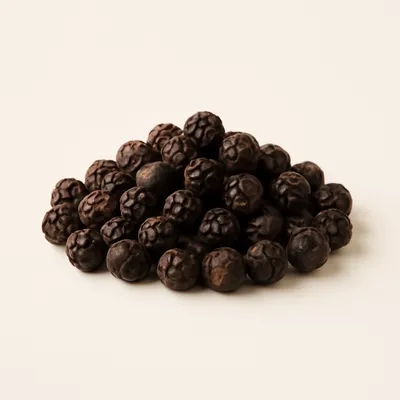
Adjust salt and a few grinds of black pepper. Optionally finish with a tablespoon of chopped parsley. Slide beans onto warm plates, lay a botifarra on top of each. Serve with crusty bread.
Archive tool suggestions — not reviewed
These legacy suggestions have not been evidence-reviewed and are not presented as required tools.