Long-simmered collard greens cooked down with smoked turkey neck or ham hock, vinegar, and red pepper flakes — the leaves go silky and the pot likker is dipped with cornbread.





Collard greens as cooked in the American South are a West African foodway, not a West African plant — the technique of stewing leafy greens into a low gravy and sopping it with bread is West African, while the collard itself reached West Africa from the Mediterranean via Moroccan and Muslim traders — the leafy-green-with-pork-and-broth structure traces to West African dishes like efo riro and palaver sauce, brought through the Atlantic slave trade. Enslaved cooks made do with discarded cuts (necks, hocks, ears) which is how smoked pork became the seasoning meat. The pot likker — historically considered scrap by enslavers — was kept and consumed by Black families, where its iron and vitamins became a documented nutritional backbone.
West African foodways translated South — efo riro and palaver sauce structure, brought through the Atlantic slave trade. Enslaved cooks used discarded pork (necks, hocks, ears); pot likker, dismissed as scrap by enslavers, was kept for its iron and vitamins.
Dark forest-green ribbons that have surrendered all crunch — they slip apart under a fork, slick from rendered pork fat. The pot likker is the prize: smoky, peppery, faintly sweet from sugar and onion, sharp from the vinegar — drink it from the bowl or sop it with cornbread. The smoked meat tastes of three hours; the leaves taste of the broth they swam in. A bowl of greens without any pot likker is an incomplete plate.
Collards have tougher leaves than kale or chard — the cell walls and cellulose need ≥90 minutes at simmer (~95°C) to break down into that silky texture. The pork fat is load-bearing for two reasons: it carries fat-soluble flavor compounds from the smoked meat into the leaves, and it coats them so they read rich on the palate even with no cream. The vinegar is added at two points (start and finish) — the first round mellows during cooking; the second round preserves the bright acidic top note that balances the fat.
Variations
Carolina-style with smoked hocks and apple cider vinegar; Geechee/Gullah version uses crab boil seasoning and shrimp stock; New Year's plates pair them with hoppin' John and cornbread; Sylvia's (Harlem, 1962) is the Northern soul-food reference.
On the Palate
Where Collard Greens sits in the American flavor cloud
Ingredients
Serves 6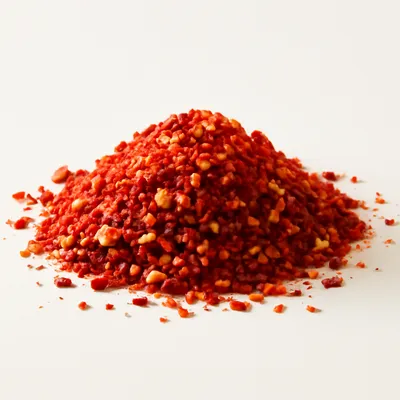





How it's made
6 steps · 25 min active + 2 hours 35 min waiting
- 110 min
Strip the tough center rib from 2 lb (900g) collards by folding each leaf along the spine and tearing the leaf away. Stack, roll, and slice into 2-inch ribbons. Wash in three changes of cold water — collards hold grit.
Watch outDon't skip the third wash — sand at the bottom of the pot will ruin the pot likker.
- 28 min
In a heavy 6-qt pot, render 2 oz diced bacon or salt pork over medium until fat coats the bottom. Add 1 diced yellow onion and sweat 5 minutes until translucent. Add 3 minced garlic cloves; 30 seconds.
- 35 min
Add 1 smoked turkey neck or 1 small ham hock, 6 cups (1.4L) chicken stock or water, 2 tbsp apple cider vinegar, 1 tsp red pepper flakes, 1 tsp sugar, 1 tsp salt. Bring to a low boil.
- 4120 min
Pile the collards in — they will look impossibly tall, but they collapse. Push them down with a wooden spoon until submerged. Cover, drop heat to a bare simmer, cook 2 hours. Stir every 30 minutes.
Watch outIf the leaves still squeak between your teeth at 90 minutes, keep going — silky is the target, not al dente.
- 517 min
Pull the turkey neck/ham hock, shred the meat off, return to the pot. Taste — adjust salt, vinegar (a tablespoon more is normal), and another pinch of red pepper flakes. Simmer uncovered 15 minutes to concentrate.
- 62 min
Serve a heavy spoonful with a generous ladle of the dark green pot likker over it, hot sauce on the side. Cornbread is non-negotiable — for sopping the likker.
Archive tool suggestions — not reviewed
These legacy suggestions have not been evidence-reviewed and are not presented as required tools.