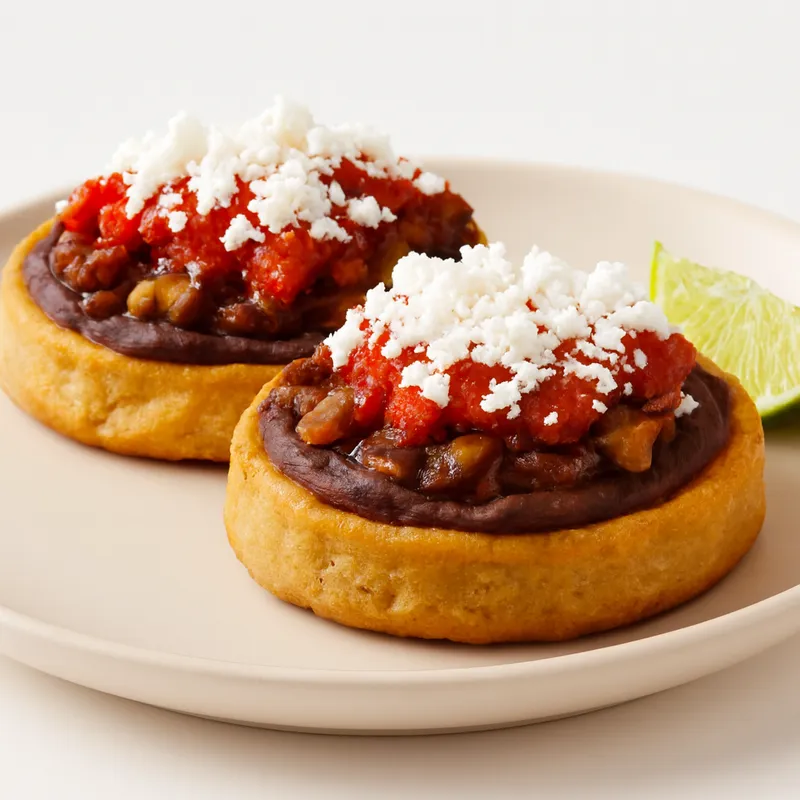
Thick oval cakes of nixtamal masa cooked on a clay comal, smeared with asiento (the browned fatty sediment left at the bottom after rendering carnitas), black bean paste, crumbled queso fresco, and green salsa.
Memelas predate the Spanish — they are nixtamal cakes from the Zapotec and Mixtec valleys of Oaxaca, where masa cooked on a clay comal has been the daily bread for at least 3,000 years. The asiento topping arrived after 1521 with the pig: it is the brown sediment left in the cazo after rendering carnitas, too good to throw away. Today the most famous memelas are sold by the comal stalls inside Mercado 20 de Noviembre and along the streets of the Oaxacan zócalo at dawn.
Zapotec-Mixtec breakfast — 8mm nixtamal cakes with pinched 5mm rims, topped with asiento (the brown sediment left in the cazo after rendering carnitas). Not fresh lard — fresh lard tastes flat; asiento carries browned-meat residue and salts the masa from inside.
Heavy in the hand — twice the weight of a tortilla. Crisp gold underneath, soft inside, with a salty puddle of pork-fat asiento that has soaked into the warm bean paste. Queso fresco squeaks against the teeth, raw onion bites back, salsa verde brings the acid that cuts the lard. The standard Oaxacan tianguis breakfast, eaten standing at a comal next to the woman pressing the next one.
Memelas are not thick tortillas — the geometry matters. The 8mm thickness lets the bottom crisp on the comal while the interior stays steamy and soft, so the bean paste melts into the masa instead of sliding off. The pinched rim, formed in the 20-second window before the masa cools, is structural: it holds asiento and salsa from running off the edge. Asiento itself is the dish's secret — fresh lard tastes flat; asiento carries the browned-meat residue from carnitas and salts the masa from inside.
Variations
Mercado 20 de Noviembre's comal stalls run the canonical asiento-and-bean version; Tlacolula-Sunday-market cooks add quesillo string cheese; Mitla-area memelas are smaller and topped with chapulines.
On the Palate
Where Memelas sits in the Mexican flavor cloud
Ingredients
Serves 4






How it's made
6 steps · 45 min active + 15 min waiting
- 120 min
Mix 500g masa harina (or 600g fresh nixtamal masa) with 380ml warm water and 1 tsp salt. Knead 4 minutes to a smooth, slightly tacky dough that holds a fingerprint without cracking. Cover and rest 15 minutes.
Watch outIf the dough cracks at the edge when you press it, add water 1 tbsp at a time — dry masa makes brittle memelas.
- 295 min
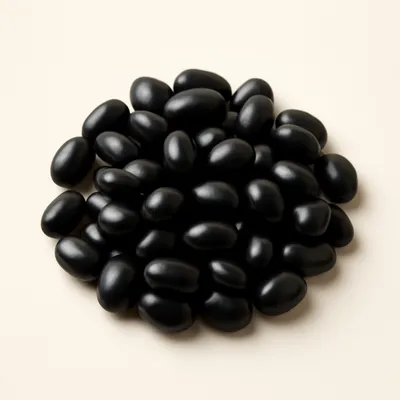
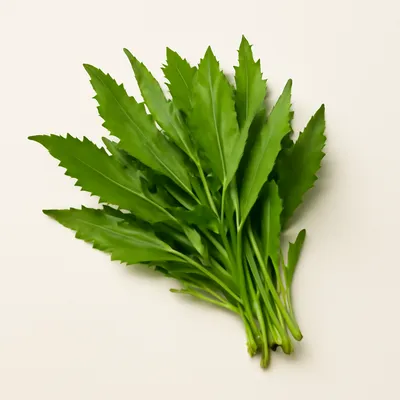
Cook 250g black beans (soaked overnight) with 1/2 white onion, 2 garlic cloves, and 2 sprigs of fresh epazote (a pungent native herb essential to bean cooking) in 1.5L water 90 minutes until soft. Drain (keep liquid), then mash or blend the beans with 30g lard and a pinch of salt into a thick paste, loosening with bean broth as needed.
- 38 min
Heat a clay comal (or heavy cast iron) over medium until water dropped on it dances. Roll the masa into 8 balls of 90g each. Press each between plastic to a 12cm oval, 8mm thick — much thicker than a tortilla.
- 412 min
Lay each oval on the comal and cook 90 seconds per side until the surface dries and faint blisters appear — they should still be pale, not browned. Pull off and immediately pinch a 5mm raised rim around the edge with your fingertips while still hot.
Watch outIf you wait, the masa cools and the rim cracks — pinch within 20 seconds of pulling off the comal.
- 55 min
Return memelas to comal, raised-rim up. Smear each with 1 tsp asiento (the dark, garlicky fat skimmed off carnitas), then 2 tbsp warm black bean paste. Cook 2 more minutes until the bottom crisps to a deep gold and the bean paste sizzles.
- 62 min
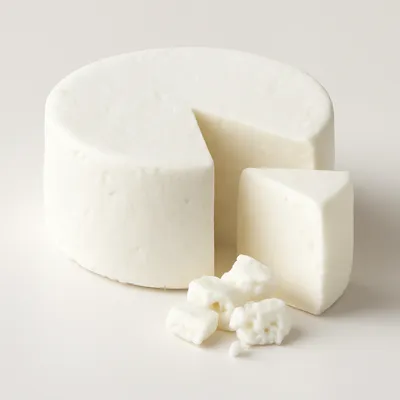
Top with 50g crumbled queso fresco, 2 tbsp salsa verde (tomatillo-serrano), and 2 tbsp shredded raw onion. Eat hot, folded in half if small or open-faced if large, straight from the comal.
Archive tool suggestions — not reviewed
These legacy suggestions have not been evidence-reviewed and are not presented as required tools.
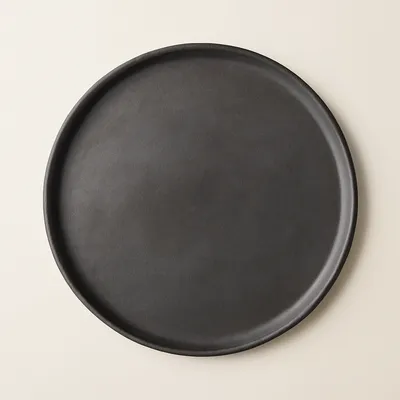
A flat round griddle of steel, cast iron, or unglazed clay, 30-50 cm across, the workhorse of the Mexican kitchen. It sits directly over a flame to toast tortillas (the puff happens in 30 seconds when the heat is right), char chiles for moles, blister tomatoes for salsas, and warm reheated leftovers. Clay comales (especially from Oaxaca) season with each use and impart a faint smoky tang that no metal version can fake.
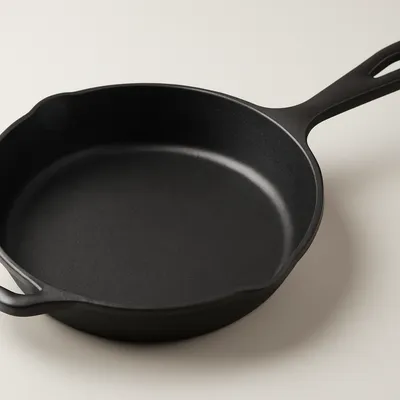
A heavy, single-piece cast iron pan, 25-30 cm across, weighing 1.5-2.5 kg. Once preheated, the thick mass holds 230°C+ even when a cold steak hits the surface — that's the secret to a deep crust. A well-seasoned skillet (multiple thin layers of polymerized oil baked into the iron) is essentially nonstick, gets better with use, and lasts a century. Lodge skillets from Tennessee have been in continuous production since 1896.