
Oromo-region root-tuber dish — the anchote tuber (Coccinia abyssinica), uniquely the only member of the gourd family (Cucurbitaceae, kin to cucumber and squash) that grows an edible starchy tuber — boiled and mashed with niter kibbeh and Ethiopian cardamom. Yam-like in texture, it is a celebration food of the western Oromo highlands.
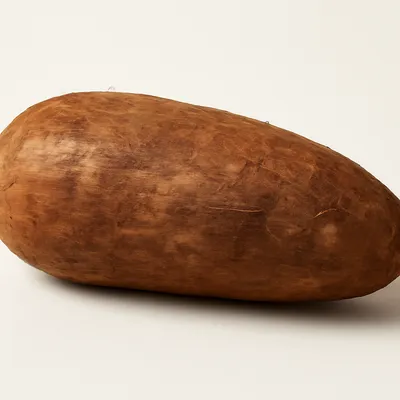


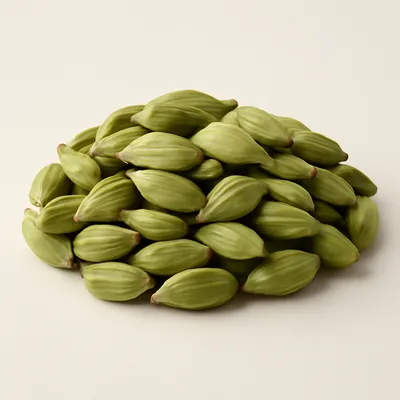


Anchote (Coccinia abyssinica) is a root-tuber crop indigenous to the highlands of western Ethiopia — particularly the Wallagga (Wollega) zone of western Oromia, extending south toward Dembi Dolo, between roughly 1,300 and 2,800 m. Though it belongs to the gourd family alongside cucumber and squash, it is the only member of that family known to produce an edible starchy tuber, which makes it distinctive. Yam-like in texture but with a mild natural sweetness, it has long been a festive and Sunday-lunch food of the western Oromo. In Wallagga the crop is cultivated, harvested and processed largely by women, and is culturally regarded as 'a relative of women,' tied to a web of meaning linking the tuber, women and pottery in Oromo cosmology. It is central to weddings, the New Year and the September Meskel feast (an especially prepared festive version has its own name). The dish is made by boiling the tubers and mashing them with niter kibbeh (Ethiopian spiced butter) and Ethiopian cardamom (korarima), served as a side or main with grilled meats and Ethiopian coffee. Owing to its high calcium content, anchote is traditionally used in folk medicine to help knit fractured bones and reset dislocated joints, and to nourish nursing mothers and infants — these are inherited folk beliefs rather than clinically established effects, and the association with fertility is largely symbolic and cultural. It is hard to find outside Ethiopia; available at specialty markets in Addis Ababa and Oromo-diaspora cities in the U.S. and Europe.
Spoon a portion of anchote: the mashed yam is glossy-golden from niter kibbeh, dotted with darker bits of toasted onion; the Ethiopian cardamom's perfume rises with the steam. The texture is slightly chunky — pieces of intact yam visible among the smoother mashed body. Bite: nutty starch, spiced butter, cardamom warmth, the slight bitter of toasted onion. Eaten with kitfo or tibs on the side and strong Ethiopian coffee to follow. Oromo highland Sunday lunch.
The dish turns on a simple boil-then-mash. Long boiling gelatinizes the tuber's starch, turning the firm flesh soft and slightly sticky — yam-like rather than fluffy — and the mild sweetness emerges from the cooked starch itself, with no sugar added. Two spices define it. Niter kibbeh (Ethiopian spiced clarified butter) is slow-simmered with ginger, garlic, basil, fenugreek and other spices, then strained; melted into the hot mashed tuber, its spice compounds disperse evenly through every bite. Korarima (Ethiopian cardamom) provides a peppery-floral note distinct from green cardamom — it is why authentic anchote tastes unmistakably Oromo-Ethiopian rather than like generic mashed tuber.
Variations
Wallagga Oromo original uses fresh-dug anchote tuber and homemade niter kibbeh; Addis Ababa restaurant version often substitutes yam (more available); some preparations top with shredded ayib (Ethiopian fresh cheese) for protein; others add chopped raw garlic for kick.
On the Palate
Where Anchote sits in the Ethiopian flavor cloud
Ingredients
Serves 4


How it's made
5 steps · 25 min active + 50 min waiting
- 130 min
(Home adaptation — substituting yam for anchote.) Peel 1.2kg yam (or sweet potato) and cut into 4cm chunks. Cover with cold water + 1 tsp salt in a heavy pot. Bring to boil; simmer 25-30 min until very tender when pierced with a fork.
Watch outThe tuber is ready when a fork meets no resistance at the center — any firmness means more time.
- 24 min
Drain; return chunks to the warm pot. Add 4 tbsp niter kibbeh (or melted butter + 1 tsp ground turmeric + 1 tsp ground ginger + 1 tsp ground cardamom for a spiced-butter substitute).
- 32 min
Add 1 tsp ground Ethiopian cardamom (korarima — substitute with 1/2 tsp green cardamom + 1/4 tsp black cardamom), 1 tsp salt, 1/2 tsp ground white pepper.
- 46 min
Mash with a potato masher to a slightly-chunky consistency — not a smooth puree; should have texture. Adjust salt; mound onto a serving plate.
Watch outMash until the lumps are broken but the mash still holds a coarse, spoonable body.
- 513 min
Top with 2 tbsp niter kibbeh-toasted onion (sauté 1 chopped onion in 2 tbsp niter kibbeh until dark brown, 8 min) and a sprinkle of mitmita (Ethiopian chili spice). Serve warm with grilled meat (tibs or kitfo) on the side and Oromo coffee to follow.
Watch outCook the onion in the spiced butter until genuinely dark-brown and sweet, about 8 min — pale onion tastes raw on top.
Archive tool suggestions — not reviewed
These legacy suggestions have not been evidence-reviewed and are not presented as required tools.


