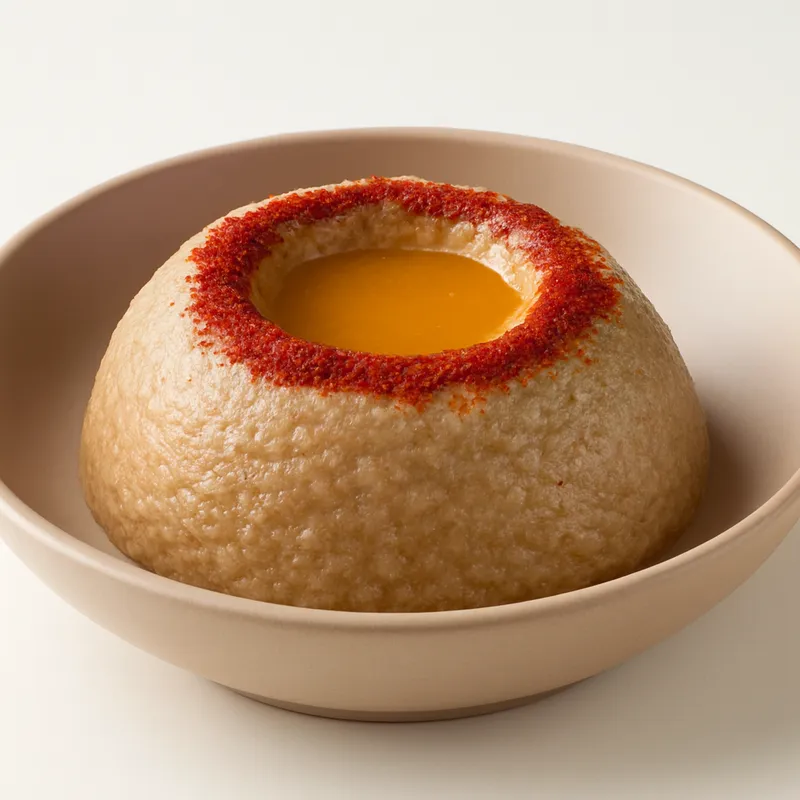
A Tigrayan and Eritrean fasting-season legume paste, built mainly on fava beans with a small share of fenugreek and lentil. The dried legumes are milled, soaked, cooked, cooled completely, then whipped into a pale, light, almost mousse-like spread. It replaces meat during the long Orthodox fasting periods — high-protein, earthy — and is smeared on sour injera, usually with a spoon of chili-tomato sauce in the center.
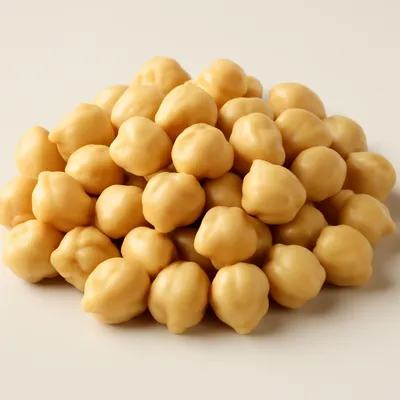





Hilbet comes from the Tigray-Tigrinya people of northern Ethiopia and southern Eritrea, and is counted as a Habesha vegan food. Ethiopian Orthodox Tewahedo fasting forbids all meat, dairy, and eggs for 180-plus days a year, and this high-protein legume paste stands in for the missing meat. Its makeup should be stated plainly: by a Tigray study of the traditional process, the authentic ratio is fava-bean-dominant with smaller amounts of fenugreek and lentil — roughly 5:1:1 — the fava the backbone, the fenugreek a small fraction that sets the whole flavor. (Some diaspora and city recipes swap chickpeas for the fava; not wrong, but a different lineage.) Fenugreek's local name in Amharic is abish. The paste is usually a side, served alongside genfo, dabo, and other fasting dishes rather than as a main.
A pale, whipped fava paste, light and fluffy, spooned onto sour injera with a dab of chili-tomato sauce. First the warm nutty fava and an almost mousse-like lightness; then fenugreek's signature lifts through — a maple-sweet edge over a faint bitterness and curry-like warmth. Mild on its own, it works against the sour injera and the chili. The test of a good batch is the texture: light and aerated, melting, never heavy or dense, and never bitter over the sweetness.
Everything rides on cooling before whipping. Fenugreek is rich in galactomannan, a water-soluble fiber (galactose-to-mannose near 1:1, strongly water-binding) that gives the paste its slick, whippable body; fava and lentil starch fill out the density. Two controls matter: first, soak the fenugreek in cold water and discard the soak water — its bitterness comes from trigonelline and protodioscin (a water-soluble steroidal saponin), much of which leaches out, taming the bitter edge; second, the cooked legume mash must be cooled completely, ideally chilled overnight, before whipping — fenugreek turns bitter if stirred while warm, so whipping it cold yields a fluffy, un-bitter paste. The maple-curry aroma is not a sulfur compound but sotolon, a furanone in fenugreek — curry-like when concentrated, maple-and-caramel when dilute, and one of the very compounds behind real maple syrup's smell.
Variations
The same paste shifts by ingredient. The Tigrayan and Eritrean original is fava-based with fenugreek and a little lentil; diaspora and urban kitchens sometimes swap chickpeas for the fava, reading sweeter and lighter. Toppings vary too: some center a chili-based hot sauce, others a tomato-tinged spicy sauce, with a stuffed green chili on the side; some households whip in ground sunflower seeds for extra nutty body.
On the Palate
Where Hilbet sits in the Ethiopian flavor cloud
Ingredients
Serves 4How it's made
4 steps · 20 min active + 30 min waiting
- 125 min
Soak 200 g chickpeas overnight, then boil 25 min until very soft.
Watch outBoil the chickpeas until a bean crushes to paste between your fingers with no grit — undercooked ones leave the mash gritty and won't blend smooth.
- 22 min
Sprout 60 g fenugreek seeds in damp cloth 2 days; rinse, drain.
Watch outSprout only until a tiny white tail just breaks through — go longer and the fenugreek turns bitter and grassy.
- 35 min
Blend chickpeas + fenugreek + 2 garlic + 1 tsp ginger + 1 tsp salt + 50 ml oil into smooth paste.
Watch outBlend until it turns pale and glossy with no visible bits — stop while it still holds a soft scoopable body, not runny.
- 42 min
Spread on injera; eat by tearing injera and scooping. Serve with mitmita chili powder on side.
Archive tool suggestions — not reviewed
These legacy suggestions have not been evidence-reviewed and are not presented as required tools.