
An Afghan home-comfort dish of short-grain rice and split mung beans cooked together with onion and turmeric until soft and sticky, ladled into deep bowls and crowned with a creamy off-white sauce of reconstituted quroot pounded with garlic and dried mint — often served alongside meatballs simmered in a tart tomato sauce. The defining mother's-kitchen dish: what an Afghan child eats when sick, and what every grown adult craves on a cold night.

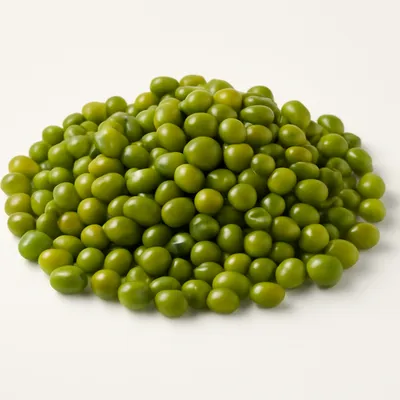



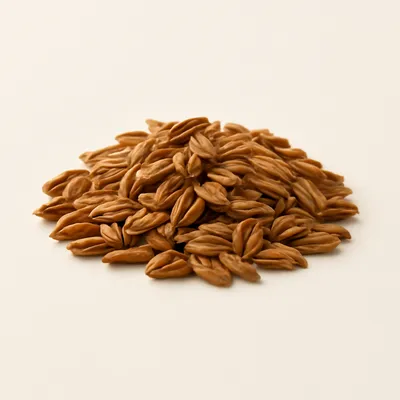
The dish is where two food routes meet in Afghanistan. The soft rice-and-lentil porridge descends from South Asia — its very name traces to the Sanskrit khichdi family of cooked rice-and-pulses — while the quroot topping is a Central Asian steppe invention: the whey left after churning sheep's or goat's milk into butter, sun-dried into a rock-hard curd that keeps for months through the harsh northern winter and travels well on horseback. These two winter-stable pantry staples met in the mud-walled storerooms of Kabul and became the everyday cold-weather comfort dish. From Herat to Kabul the method is broadly the same; a cook's skill is judged by how smoothly the quroot sauce dissolves and how tender and sticky the rice cooks.
The first spoonful is gentle — soft rice, soft beans, a hum of turmeric and cumin. Then the quroot hits: a sharp lactic tang shot through with raw garlic heat and the cooling slap of dried mint. The contrast is the whole point. Each bite oscillates between mild porridge and intense sour-savory sauce, and a meatball in tomato sauce adds a layer of savory depth. Eaten in deep bowls with a spoon, often with naan torn into the bowl.
Split mung beans have had their tough seed coat removed, so they soften to roughly the same tenderness as short-grain rice in the same pot. Short-grain rice is high in starch and releases it as it cooks, thickening the whole pot into a sticky, mushy porridge — the stickiness is the goal here, not a flaw. Turmeric and cumin bloom in hot oil for ~30 seconds (any longer and turmeric turns bitter). The quroot sauce is built cold, never cooked — heat would break the reconstituted dairy. The final drizzle of mint-infused oil delivers aromatic compounds directly to the nose at the moment of eating.
Variations
The most common pairing is a separate pot of meatballs (kofta) simmered in a tart tomato sauce, ladled over the porridge; some households instead drop a single lamb shank into the cooking water for a richer broth. It is satisfying eaten plain too. Cooks may add chickpeas or fava beans alongside the mung, enrich the quroot sauce with butter, or crown festive bowls with crisp fried onions.
On the Palate
Where Kichiri Quroot sits in the Afghan flavor cloud
Ingredients
Serves 4



How it's made
8 steps · 35 min active + 40 min waiting
- 132 min
Rinse 1 cup long-grain rice and 1/2 cup split mung beans until water runs clear. Soak both together in cold water for 30 minutes; drain.
- 28 min
In a heavy pot heat 3 tbsp oil over medium. Add 1 large diced onion; cook 8 minutes until soft and pale gold.
- 31 min
Stir in 1 tsp turmeric, 1 tsp ground cumin, 1 tsp salt; cook 30 seconds until fragrant.
Watch outThe turmeric and cumin bloom fast — 30 seconds, no more, or the turmeric turns bitter.
- 43 min
Add the drained rice and mung beans, stir to coat in spiced oil, then pour in 5 cups hot water. Bring to a boil.
- 536 min
Reduce heat to low, cover, and simmer 35 minutes until both rice and beans are completely soft and the mixture has the texture of loose porridge. Stir once at the 20-minute mark to prevent sticking.
Watch outDone means rice and beans have broken down into a loose, sticky porridge that slides off the spoon in a soft sheet.
- 620 min
While the rice cooks, soak 80g quroot in 1 cup warm water for 20 minutes until softened. Crush 3 garlic cloves with 1 tsp salt to a paste.
- 73 min
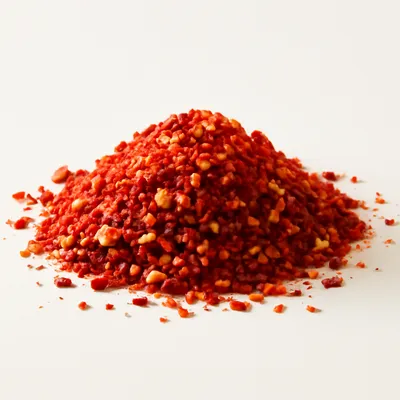
Pound the softened quroot with the garlic paste in a mortar (or blitz in a small food processor) until smooth. Stir in 2 tsp dried mint, 1/2 tsp red chili flakes, and 1 tbsp warm oil.
- 82 min
Spoon the porridge into shallow bowls. Pour the quroot sauce in a generous ring over the surface. Drizzle with a final tsp of oil sizzled with a pinch more dried mint.
Watch outSizzle the last spoon of oil with dried mint just until fragrant, then drizzle it on hot so the mint aroma lifts off the bowl.
Archive tool suggestions — not reviewed
These legacy suggestions have not been evidence-reviewed and are not presented as required tools.
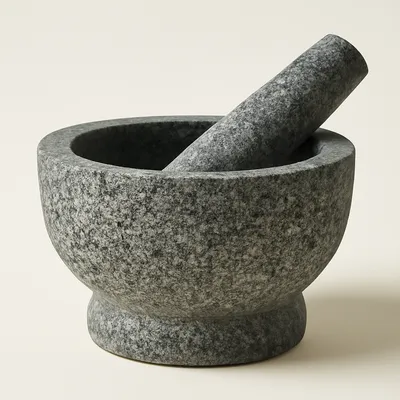
The simplest tool in any kitchen: a heavy bowl and a club to bash things in it. Different cuisines use different stones — Thai cooks pound green papaya in a tall granite mortar (krok hin); pesto Genovese requires the soft-pored Carrara marble; Indian masalas grind down on rough basalt. The bash-don't-cut motion releases volatile oils that a blade keeps sealed in the cell wall.

Round metal pot, 14-26 cm diameter, with vertical walls and a long handle, designed for sauces, soups, oatmeal, rice, boiled vegetables. The vertical walls minimize evaporation (vs. a sauté pan). Sizes: 1 qt for melting butter, 2-3 qt for sauces, 4 qt for soups. Stainless-steel-clad aluminum or copper is best for conduction; cast-iron is too thick for delicate sauces.


