An elaborate baked rice timbale from Naples and one of the grand dishes of Campanian cooking. Cooked rice, bound with egg and cheese and sometimes tinted with saffron, is pressed against a buttered, breadcrumb-coated ring or tube mould to form a shell; the hollow centre is filled with a Neapolitan ragù, tiny meatballs (polpettine), peas, cubes of mozzarella or fior di latte and hard-boiled egg, often with chicken livers, sausage, dried mushrooms and provola. More rice seals the top, which is dusted with breadcrumbs, dotted with butter or lard and baked until a crust forms. The timbale is then turned out of the mould and cut at the table, revealing the molten filling within the rice case. It is served as a substantial primo or main, above all for Sundays and feast days.






Sartù is a documented dish of the Bourbon-era Neapolitan court, traced to the 18th century under Ferdinand I of the Two Sicilies. It is bound up with the monzù — French-trained cooks (the name a Neapolitan corruption of «monsieur») who worked in the royal and noble households, their presence in Naples tied to the court of Maria Carolina of Austria. Rice itself had arrived earlier from Spain but found little favour with Neapolitans, who preferred pasta and dismissed plain rice as «sciacquapanza» (belly-rinse), bland fare also prescribed by the Salerno medical school for the sick; the monzù answered this by enriching rice with ragù, meat, cheese, eggs and vegetables and baking it into a luxurious mould fit for the aristocratic table. The dish was set down in 1837 by Duke Ippolito Cavalcanti in his «Cucina teorico-pratica», which gave the recipe its written authority. The name is commonly said to come from the French «sur tout» (above all, or covering everything) — variously explained as the rice's place at the head of the courses or as the breadcrumb crust that cloaks the timbale — though the derivation is traditional rather than firmly settled. Sartù di riso is recognised today as a Prodotto Agroalimentare Tradizionale of Campania.
The first thing is the crust: a thin golden shell of breadcrumbed rice, crisp where it met the buttered mould, giving way to a layer of soft, savoury rice beneath. Cut into it and the centre spills — dark glossy ragù, soft little meatballs, sweet peas, strings of melted mozzarella pulling away, wedges of hard-boiled egg, and the deeper notes of chicken liver or sausage if used. It eats rich and layered, the firm cooked rice framing a molten, almost stew-like core. A good sartù holds its shape when sliced, the wall standing up around distinct fillings; a poor one collapses into a heap, or comes out dry and stodgy from too little ragù or overbaking.
Egg and cheese are what turn loose rice into a wall that can be sliced. Beaten egg coats the grains; as the timbale bakes and the interior climbs past roughly 65°C the egg proteins begin to coagulate, firming through about 80°C as the dominant white protein ovalbumin sets, locking the starch-rich grains into a solid matrix, while the melted cheese stiffens on cooling to reinforce it. The buttered, breadcrumb-lined mould does double duty: the fat and crumbs Maillard-brown against the hot metal into a crisp shell, and that same greased crumb layer keeps the rice from sticking so the timbale releases cleanly when turned out. Sealing the filling inside a rice case lets the centre stay moist and molten — the cheese melting, the ragù bubbling — while the exposed outside dries and crisps. A rest after baking lets the set structure firm further so the walls hold and the slice stays clean rather than slumping. Bake around 180°C.
Variations
The clearest split is between the red sartù made with tomato ragù and the «sartù in bianco» — a white version without tomato, lighter and regarded as the older or alternative style. Richer feast renderings load the centre with chicken livers, sausage, provola and dried porcini alongside the meatballs and peas, while leaner home versions keep to ragù, peas, egg and mozzarella. Families and cooks differ over the fillings, over fior di latte versus provola, and over whether the rice is tinted with saffron. The dish belongs to the wider Neapolitan timballo tradition and is a close cousin of the timballo di maccheroni, the baked macaroni mould of the same court cooking.
On the Palate
Where Sartù di Riso sits in the Italian flavor cloud
Ingredients
Serves 8


How it's made
9 steps · 2 hours active + 1 hour waiting
- 190 min
Make a slow Neapolitan ragù: brown beef (and a little sausage) in a soffritto with onion, then simmer long and gently with tomato passata until dark and thick.
- 225 min
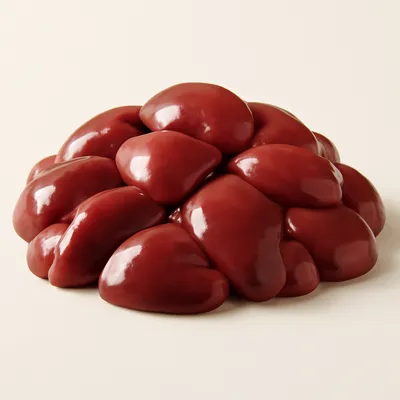
Roll small meatballs (polpettine) from seasoned minced beef and fry or brown them until just cooked; soak any dried mushrooms and trim chicken livers if using.
- 320 min
Boil the rice until just al dente, drain, and stir through some of the ragù, beaten egg and grated Pecorino or Parmigiano so it binds; let it cool slightly.
Watch outBind the drained rice with beaten egg and cheese while warm — that's the glue that later sets the timbale into a sliceable wall.
- 45 min
Butter a ring or deep mould generously and coat it all over with breadcrumbs to line it.
Watch outButter the mould and line it thoroughly with breadcrumbs — the greased crumb crisps into a shell and stops the rice sticking so it releases.
- 510 min
Press most of the rice against the base and walls of the mould to form an even shell, leaving a hollow centre.
- 610 min
Fill the centre with ragù, meatballs, peas, cubes of mozzarella, sliced hard-boiled egg and any livers, sausage or mushrooms.
- 75 min
Cover with the remaining rice to seal, dust the top with breadcrumbs and dot with butter or lard.
- 855 min
Bake at about 180°C until set and a golden crust forms, roughly 45 to 60 minutes.
Watch outBake until set with a golden crust — the egg has to climb past ~65C inside to lock the grains firm enough to hold its shape.
- 915 min
Rest for 10 to 15 minutes, then turn the timbale out of the mould and cut into wedges to serve.
Archive tool suggestions — not reviewed
These legacy suggestions have not been evidence-reviewed and are not presented as required tools.